
Livraison le jour même ou le lendemain

Qualité garantie

Débloquez vos offres de bienvenue: Livraison GRATUITE | Jusqu'à -80 % | 30 jours d'essai gratuits à JoyPlus
Téléchargez l'application
Making the switch from capsules to a bean-to-cup coffee machine is a real game-changer for any coffee lover. The promise is tempting: unparalleled aroma, the freshness of on-demand grinding, and a much more controlled environmental impact. However, the market is a jungle of technical terms and marketing claims where it's easy to get lost.
As the Head of Product Selection at Joybuy, my mission is to clear the path and help you make the right investment. But before you take the plunge, beware of these three classic pitfalls that can prove costly.
To avoid making a mistake, focus on the features that truly matter for the taste of your coffee and the machine's lifespan.
This is what turns the bean into grounds. A quality coffee machine with a grinder is the starting point for a great espresso.
The stability of the water temperature is just as crucial as the pressure.
Love cappuccinos or lattes? The quality of the milk foam is a non-negotiable criterion.
Rather than an endless list, we've selected models for specific user profiles. The goal: to help you find the machine that will truly fit into your daily life.
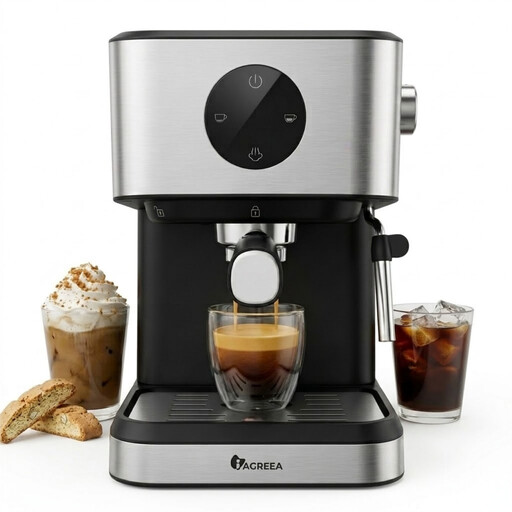
Why it's a match: This semi-automatic espresso machine is made for those who want to master every step: grinding their coffee separately, tamping the portafilter, and controlling the extraction time. It's the most authentic approach to learning the art of coffee.
By focusing on the essentials (stable pressure, manual control), it bypasses the complexity of automatic systems, which are often expensive to maintain. You're in full control, so there are no unpleasant surprises.
Its all-stainless steel design and 20-bar pump (which ensures stable extraction pressure) give it a durability and performance rarely seen in this price segment.
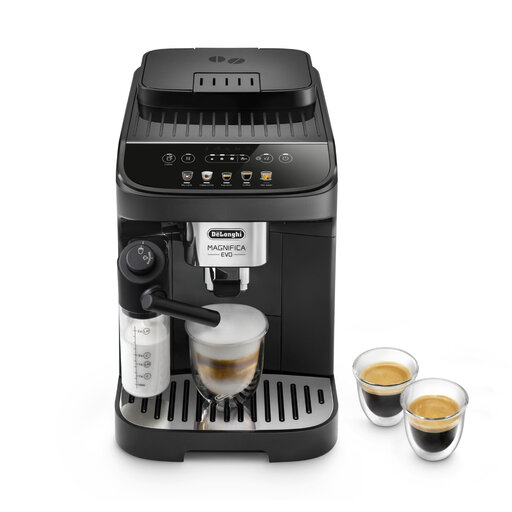
Why it's a match: Perfect for busy mornings and families, this all-in-one machine prepares cappuccinos and other milk-based drinks at the touch of a button. Its key strength? Absolute simplicity.
Its LatteCrema system, with its automatic cleaning cycle, tackles the problem of milk circuit maintenance head-on—the Achilles' heel of many automatic machines.
The MyLatte function allows you to use just the amount of milk needed, preventing waste. The icing on the cake is that the carafe is dishwasher-safe, which radically simplifies cleaning.

Why it's a match: This bean-to-cup machine combines a high-performance grinder, a dual heating system, and a control screen for advanced customisation. It's aimed at those who want to delve deeper into the world of coffee without sacrificing ease of use.
Its dual heating system (Dual Boiler) separately manages coffee extraction and steam production. The result: no compromise on temperature and no waiting time, a hidden flaw in many single Thermoblock machines.
Its conical steel grinder, with 30 adjustment levels, offers a grind precision worthy of much more expensive models. This is the decisive advantage for exploring different coffee origins and perfecting your espresso.
We have put together a complete selection of machines that meet our demanding specifications and rigorous safety standards.
With regular maintenance, a good bean-to-cup coffee maker can easily last between 5 and 10 years. The key factors? Build quality and, above all, the diligence of your maintenance routine. The availability of spare parts (guaranteed for 10 years by De'Longhi on some models, for example) is an excellent indicator of a machine's longevity.
Absolutely, and it's non-negotiable. Limescale is public enemy number one for any coffee machine. Descaling every 2 to 3 months (depending on your water hardness) and a weekly cleaning of the brew group (if it's removable) will prevent the vast majority of breakdowns and ensure the taste doesn't degrade over time.
Yes, a bean-to-cup espresso machine makes noise when it grinds the beans. The process usually lasts between 5 and 10 seconds. The noise is comparable to a blender being used for a few moments. High-end models are often better soundproofed, but none are completely silent. It's the small price to pay for unparalleled freshness.