Hosts who want to serve without spreading
Ready-filled rusks save you from preparing a topping at the last minute. Auchan’s product listing presents Cracotte chocolate as an option that doesn’t need spreading.


If you want something crunchy and already chocolatey, with no spreading required, Cracotte chocolate-filled rusks fit the bill. However, the chocolate is inside: Auchan describes them as wheat sticks with a chocolate filling. If you’re after an outer chocolate layer, look at coated biscuits instead and be prepared to choose something other than a rusk. For a summer barbecue, also check the allergens, packaging and storage instructions for the product you choose.
Ready-filled rusks save you from preparing a topping at the last minute. Auchan’s product listing presents Cracotte chocolate as an option that doesn’t need spreading.
If a visible layer of chocolate is what matters, an inside filling won’t be enough. A coated or chocolate-topped biscuit is a closer match, although it won’t be a rusk.
If you’re transporting and serving these products at a summer barbecue, take account of the storage instructions, the condition of the packaging and the allergens listed for the product you’ve bought.
When choosing a crunchy treat to serve at a summer barbecue, start with what matters most to you: an outer coating, serving with no preparation, or precautions relating to the packaging and ingredients.
| What to look for | What to check | Who is it for? |
|---|---|---|
| Filling or coating | Read the product description: “filled” means there’s a filling inside, while “coated” or “topped” describes an outer layer. | If I want a chocolate layer on the outside, a filled rusk won’t meet my needs; around 45% of consumers prioritise this coating when choosing. |
| Ready to serve | Check that the filling is already there and that the packaging suits the way you plan to serve it. | When I’m putting together a buffet, I prefer a chocolate product that doesn’t need spreading at the last minute; around 33% of consumers put ease of serving first. |
| Storage and ingredients | Check the storage instructions, the condition of the packet and the allergen information for the product you’ve bought. | For outdoor serving, I want to keep packets in the recommended conditions and know about allergens before offering them; around 22% of consumers prioritise these precautions. |
According to Auchan’s product listing, Cracotte chocolate has a filling inside. A coated biscuit, on the other hand, has an outer layer, so the two formats won’t meet the same needs.
Decide whether you want a chocolate centre or an outer coating, then read the product description rather than relying on the word “chocolate” on the front of the packet.
Carrefour’s listing for Cracotte chocolate gives wheat, milk and soya as ingredients, and says it may contain nuts. Check the ingredients for every other product you serve.
Read the labels on the packets you’ve bought before offering them, and make sure guests who need the information can access the ingredient details.
Auchan’s listings for the chocolate products mentioned here say to store them in a dry place, and to protect the coated biscuit from heat. A table in full sun won’t meet this requirement.
Keep packets sealed, in the shade and somewhere dry until you’re ready to serve, following the instructions for the product you’ve bought.
An example of a crunchy product with chocolate already inside, listed among the rusks at Auchan.
A biscuit to consider if an outer coating matters more to you than the rusk format.
A useful point of comparison for the classic rusk formats listed by Auchan.
Chocolate biscuits to consider as alternatives to rusks.
This selection is for anyone looking for a chocolate-coated biscuit to serve without spreading at a barbecue, if you’re happy to choose a format other than a rusk.
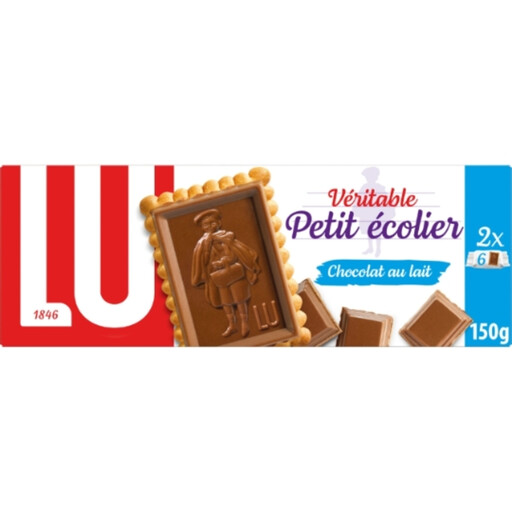 Image unavailable
Worth considering if you’re after a chocolate-coated biscuit rather than a filled rusk. The product name describes butter biscuits covered in milk chocolate, in a 150 g pack; these aren’t rusks.
If you’re serving them outdoors, check the allergens and packaging on the packet you’ve bought. Follow the storage instructions, particularly the advice to protect them from heat and sunlight.
No. Auchan describes this product as wheat sticks with a chocolate filling, so the chocolate is inside rather than in an outer coating.
Look for an outer covering in the product name or description, referred to, for example, as a coating or icing. Auchan describes the Oreo product mentioned here as a filled biscuit covered in milk chocolate-flavoured icing; it isn’t a rusk.
Read the label on every packet you’ve bought. Carrefour’s listing for Cracotte chocolate-filled rusks gives wheat, milk and soya as ingredients, and says they may contain nuts. Don’t assume the same applies to another biscuit.
Follow the instructions on the packet and keep it sealed until you’re ready to serve. The Auchan listings mentioned here say to store these chocolate products in a dry place and to protect the coated biscuit from heat.
Not necessarily. The DGCCRF explains that the term “chocolate” has a precise definition and that the cocoa content must be shown on the label. If a product is described as having “milk chocolate-flavoured” icing, check its name and ingredients to find out what the icing contains.