
Livraison le jour même ou le lendemain

Qualité garantie

Débloquez vos offres de bienvenue: Livraison GRATUITE | Jusqu'à -80 % | 30 jours d'essai gratuits à JoyPlus
Téléchargez l'application
A dead battery: every driver's nightmare, especially when you're in a hurry or in the middle of nowhere. The battery jump starter has emerged as a lifesaver: a compact device that can get you back on the road in minutes. The problem? The market is flooded with models featuring obscure spec sheets and often-exaggerated marketing claims.
As the Head of Product Selection at Joybuy, my mission is to help you cut through the clutter. Together, we'll decode the most common traps so you can choose the right model without being fooled by marketing jargon.
Before you even start comparing models, it's crucial to distinguish genuinely useful features from the technical mumbo-jumbo designed to impress.
To make the right choice, focus on these few objective technical specs.
Don't be blinded by peak amps. Look for the cranking amps if the manufacturer deigns to disclose it, or rely on the compatibility recommendations (e.g., "for petrol engines up to 7.0L and diesel up to 5.0L"). Rule of thumb: a jump starter designed for a diesel engine will almost always be powerful enough for most petrol vehicles, as diesel engines are more demanding to start.
Watt-hours (Wh) are the most reliable indicator of the total energy your jump starter can actually deliver. The higher the Wh number, the more jump-start attempts you'll have, or the more power you'll have to charge your portable devices. If this data isn't provided, a capacity of 15,000 to 20,000 mAh is a decent baseline for versatile use, keeping the limitations of this measurement in mind. Most models also double as a power bank thanks to their USB ports, which are handy for charging a smartphone or tablet.
A good portable battery booster must include several protection systems to prevent any accidents. The most important are:
These safety features are non-negotiable, especially for novices.
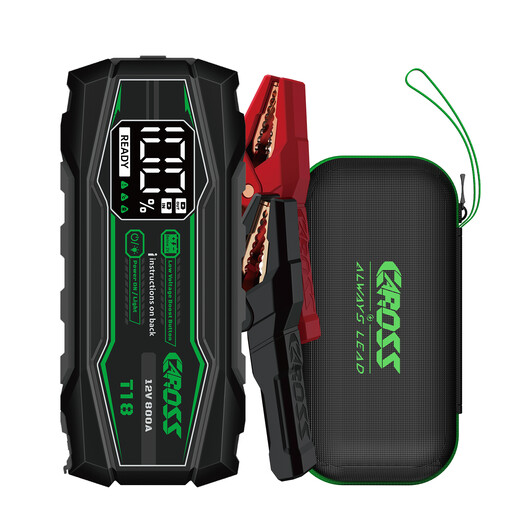
Why we love it: Perfect for drivers of city cars and mid-size petrol sedans. It's the ultimate compact emergency solution, easy to slip into the glove box, without the superfluous gadgets that drive up the price.
It doesn't try to impress with an oversized peak amp rating. Its 800A is paired with clear, realistic compatibility (up to 6.0L petrol, 3.0L diesel engines), which prevents unpleasant surprises.
Its 2.3-inch digital screen, which clearly displays the charge level and device status, is a reassuring bonus. It includes all essential protections (anti-spark, reverse polarity) as well as a "Boost" function for the most stubborn batteries.
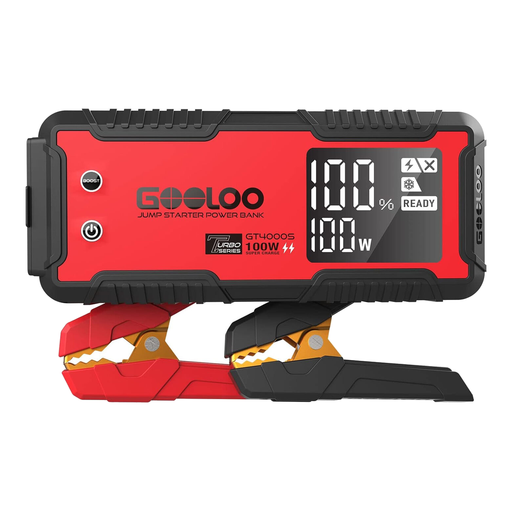
Why we love it: Essential for owners of SUVs, diesels, or commercial vans who rely on their vehicle daily. Its high power and express charging make it a reliable ally for heavy use, and it can also charge other devices.
Its 4000A power isn't just a marketing claim: it's justified by its compatibility with very large engines (up to 10L diesel). Most importantly, it stands out with its 100W two-way fast charging—a concrete, verifiable technical feature that speaks louder than a raw amperage figure.
Its ultra-fast charging (1h 12m for a full charge) is a key advantage. In an emergency, 5 minutes of charging is enough for a jump-start. It can even charge a laptop via its USB-C port, making it a true portable power station.
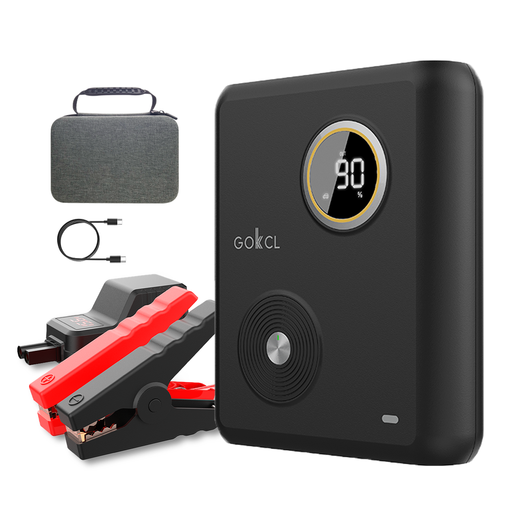
Why we love it: The ideal solution for owners of RVs, boats, or for those who store their jump starter in a vehicle for long periods. Its sodium-ion technology gives it rock-solid durability and reliability, even in extreme conditions.
It doesn't compete on mAh capacity, but on longevity and stability. Its promise isn't a number, but a fact: a 5-year standby time and resistance to extreme temperatures (-40°C to +80°C), which are far more tangible benefits for nomadic or professional use.
The sodium-ion technology is its trump card: no risk of thermal runaway (unlike lithium), an advertised lifespan of up to 6,000 cycles, and the ability to be "revived" even after a complete discharge. It's an investment built to last.
Explore our full selection of products that meet our strict selection criteria and current safety standards.
Most lithium-ion models lose their charge over time. It's therefore recommended to recharge them every 3 to 6 months to ensure they're ready when you need them most. Newer models, particularly sodium-ion based ones, stand out for their ability to hold a charge for several years.
Yes, almost all 12V jump starters are compatible with motorcycle, scooter, or ATV batteries. The only thing to watch out for is the size of the clamps: make sure they are small enough to attach to the terminals, which are often smaller on a two-wheeler's battery. A motorcycle jump starter is therefore rarely a specific product; it's the same device used for a car.
No, and this is a common misconception. A jump starter is not a battery charger. Its role is to provide a very intense, brief burst of energy to start the engine, and nothing more. It does not recharge the battery. Once the engine is running, the alternator takes over to recharge the battery as you drive.