
Livraison le jour même ou le lendemain

Qualité garantie

Débloquez vos offres de bienvenue: Livraison GRATUITE | Jusqu'à -80 % | 30 jours d'essai gratuits à JoyPlus
Téléchargez l'application
A dead battery: every driver's nightmare. Fortunately, a battery booster, also known as a portable jump starter, is the perfect solution to get you back on the road independently. But be warned: the market is flooded with often-misleading marketing claims. Before you invest, it's crucial to know how to decipher spec sheets to avoid buyer's remorse.
As a product expert at Joybuy, I'm here to help you see things more clearly. Let's break down the common mistakes to avoid and the criteria that truly matter for making the right choice.
Marketing materials often highlight impressive numbers that don't always reflect real-world performance. Here are two major red flags to watch out for:
To choose a car jump starter that's truly right for you, focus on these three fundamental parameters.
The power you need depends heavily on your engine type.
Always check the compatibility stated by the manufacturer, often expressed in litres (L) of engine displacement for gas and diesel engines.
A good jump starter must be safe to use, even for a novice. Electronic protections are a non-negotiable feature. Ensure the model you choose includes at least:
An LED indicator or a beep to confirm that everything is connected correctly is a real safety bonus.
Beyond jump-starting, a portable battery charger can prove useful in daily life. Evaluate the following options based on your needs:
To illustrate these criteria in practice, here are a few options suited for different types of users.
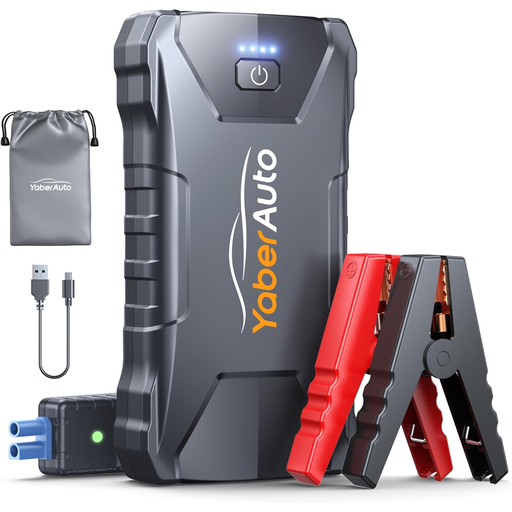
Why it's a great choice: Perfect for drivers of city cars or gas-powered sedans who want a compact and affordable emergency solution. Its feather-light weight (340g) and compact size allow it to be slipped into the glove box, always within reach for an emergency without cluttering the cabin.
This model doesn't rely on flashy marketing numbers. It clearly states its compatibility (up to 7.0L gas / 5.5L diesel) and integrates 10 safety protections, including an audible alert for incorrect connections, which is especially reassuring for occasional use.
Its extreme compactness and ease of use. It also features a 3-mode LED flashlight and a USB port to charge a smartphone, covering all the essentials in a pinch.

Why it's a great choice: Designed for owners of SUVs, vans, RVs, or large-displacement diesel vehicles. Its high power output is a foolproof guarantee for starting demanding engines, even in freezing weather, where more modest models would fail.
It doesn't just boast a 4,000A peak amperage. It specifies its ability to start all gas engines and diesel engines up to 10.0L. Its "BOOST" button to force-start severely depleted batteries is a practical feature that makes a real difference with stubborn batteries.
Robustness and raw power. Its solid, all-metal clamps inspire confidence and are built to last. It also offers a large power bank capacity with a fast-charging USB port, making it highly versatile for long trips.
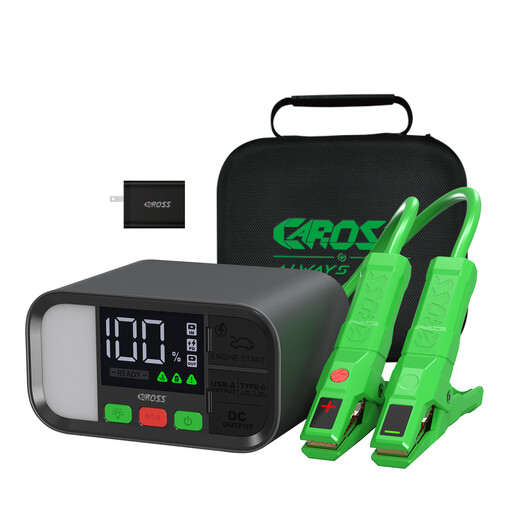
Why it's a great choice: For the user who loves technology, safety, and versatility. It's more than a jump starter: it's a true portable power station capable of recharging a laptop via its PD 65W output, a feature that is still rare and highly valued by professionals on the go.
It focuses on a tangible innovation: Smart Connect technology with non-polarized clamps. There's no more risk of mixing up the terminals, as the system automatically detects polarity. This is a major breakthrough in safety and simplicity.
The ultra-fast 65W PD two-way charging, which allows you to recharge the jump starter itself in record time and power demanding devices. Its large 3-inch screen and aluminium chassis give it a premium finish and perfect readability.
We have curated a complete selection of products that meet our quality criteria and current safety standards.
The lifespan of a lithium jump starter is typically between 3 and 5 years, or 500 to 1,000 charge/discharge cycles. To preserve it, we recommend recharging it every 3 to 6 months, even when not in use, and storing it in a cool, dry place away from extreme temperatures.
Yes, most jump starters are designed to be stored in a vehicle. However, it's best to avoid direct sun exposure in the summer or freezing conditions in the winter. Manufacturers specify an operating and storage temperature range (e.g., -20°C to 60°C). Keeping it in the glove box or trunk is the best practice.
Yes, absolutely. A jump starter rated for a more power-hungry diesel engine will have no trouble starting a gas engine. The reverse, however, is not guaranteed: a booster designed for a small gas engine will likely lack the power for a diesel. Opting for a diesel-compatible model is therefore a safe bet for versatility.