
Livraison le jour même ou le lendemain

Qualité garantie

Débloquez vos offres de bienvenue: Livraison GRATUITE | Jusqu'à -80 % | 30 jours d'essai gratuits à JoyPlus
Téléchargez l'application
A dead battery: every driver's nightmare. That dreadful silence after turning the key, often far from home, has a knack for turning a normal day into a total ordeal. Whether you drive a small city car, a family RV, or a work van, no one is immune. Fortunately, there's a simple and incredibly effective solution: the battery booster.
This compact device, also known as a car jump starter or car starting aid, gives you back your freedom. In just a few minutes, it brings your engine back to life without needing jumper cables from another vehicle or waiting for a tow truck. But with an overwhelming number of options on the market, how do you choose the right model? This guide is here to break down the key features and present our selection of the best devices to ensure you're never caught off guard again.
Before you jump on the first model you see, let's review the few technical specs that will make all the difference when you need it most.
This is THE number one criterion. Expressed in amps (A), peak amperage represents the maximum discharge the booster can deliver to force the engine to start.
Expressed in milliampere-hours (mAh), the internal battery's capacity plays a dual role: it determines the number of starts possible on a single charge, and also the device's runtime when used as a car power bank. A good car battery starter should be versatile and able to recharge your portable devices (smartphone, tablet, etc.). The presence of USB-A and, ideally, USB-C ports is therefore a real bonus for broad compatibility.
You don't mess around with automotive electronics. A good booster must be a fortress of safety features to prevent any handling errors. Check that your model includes at least these essential protections:
Thanks to these safeguards, using a car jump starter becomes child's play, even for a complete novice.
Enough theory, let's get practical! Here is our selection of equipment that will win over the most prepared drivers.
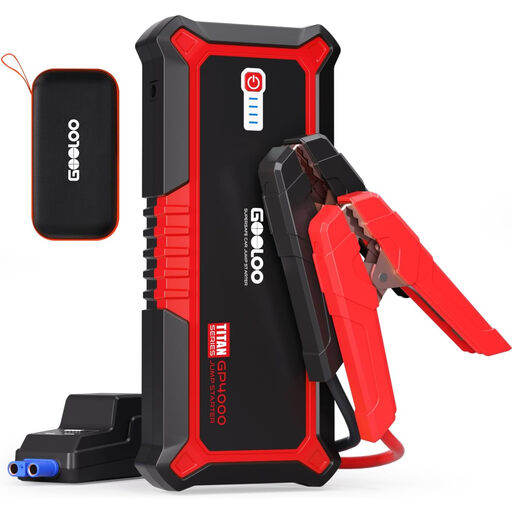
Why it stands out: With its 4000 A peak current, the GOOLOO GP4000 is a true powerhouse, ready for (almost) any situation. It's not afraid of any gas engine and can tackle diesel blocks up to 10.0 L. Its secret weapon? The "BOOST" function, capable of reviving even the most stubborn, nearly-dead batteries. A decisive advantage in desperate situations.
Advantages:
car power bank via its USB ports (including one with fast charging) so your devices never run out of juice.For whom? For owners of large vehicles (SUVs, work vans, RVs) or those managing a diverse family fleet. It's also the choice for peace of mind for those living in regions with harsh winters who want a single, ultra-powerful solution.
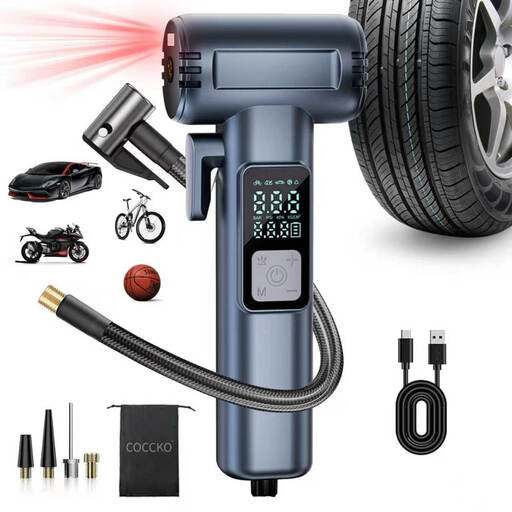
Why it stands out: Much more than a simple inflator, this device is a true Swiss Army knife for road safety. Capable of reinflating a tyre in the blink of an eye (up to 10.3 bar / 150 PSI), it also hides two potentially life-saving tools: a window breaker and a seatbelt cutter.
Advantages:
For whom? For the methodical driver who loves multifunction tools. It's the ideal companion to a battery booster to build the ultimate safety kit to keep in the trunk.
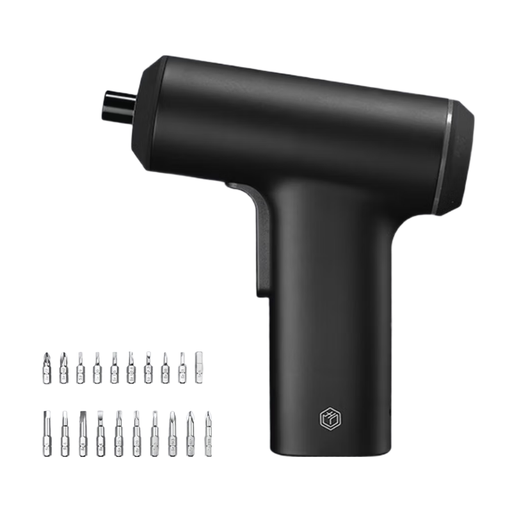
Why it stands out: Because car maintenance isn't just about breakdowns, this electric screwdriver is the perfect partner for small jobs. Whether it's tightening a plastic cover in the cabin or assembling the latest piece of furniture, its design and simplicity are appealing. Its real bonus: the LED light ring that illuminates the work area without creating any shadows, a major asset for working in the dark corners of an engine or under a dashboard.
Advantages:
For whom? For the occasional DIYer as well as the car enthusiast who likes to get their hands dirty with small maintenance tasks (changing a bulb, securing a body panel, etc.).
The common thread among all these devices? They all charge via USB. To power your booster, smartphone, or other gadgets, a reliable and high-performance cable is an essential link. Feel free to check out our selection of 5V USB Cable to complete your toolkit.
A diesel engine, by its design, requires higher compression and therefore much more energy to start. Aim for a booster of at least 1500 A. For large displacement engines (over 3.0 L), work vans, or RVs, a heavy-duty model from 2000 A to 4000 A isn't a luxury: it's a guarantee that you'll start in any weather, even in the dead of winter.
This is a very bad idea. The lithium batteries inside them can't stand extreme temperatures, whether it's the summer heat in a car's cabin or a winter freeze. Prolonged exposure can damage the battery and drastically reduce its lifespan. The best practice: store it at home in a temperate place, and remember to recharge it every 2 to 3 months so it's always ready to go, as all manufacturers recommend.
No, it's important to distinguish between the two. A battery booster is a sprinter: it delivers a massive, instantaneous burst of current to start the engine. It is by no means a charger, which is a marathon runner: it recharges a battery slowly and deeply. Once your engine is running, the alternator takes over to recharge the vehicle's battery. While some boosters offer a maintenance charging function, this is only a secondary feature and not their primary mission.