
Livraison le jour même ou le lendemain

Qualité garantie

Débloquez vos offres de bienvenue: Livraison GRATUITE | Jusqu'à -80 % | 30 jours d'essai gratuits à JoyPlus
Téléchargez l'application
A dead battery is every driver's nightmare. Whether it's on a freezing winter morning or after returning from holiday, the dreaded silence of an engine that refuses to start means stress and hassle. The battery booster, also known as an emergency starter or jump starter, has become the essential accessory for getting back on the road independently, without having to call a friend for a jump.
The problem is, the market is flooded with models, each with more enticing promises than the last. Between impressive amperage ratings and a multitude of extra features, it's easy to make the wrong choice. As product experts at Joybuy, our mission is to help you cut through the noise. We'll explain how to avoid marketing traps and choose a truly reliable device.
The Illusion of Peak Amps?: Many manufacturers proudly display ratings of 3000?A, 4000?A, or even higher. However, this figure (the peak amp) only corresponds to a maximum discharge over a fraction of a second. It's purely a marketing gimmick. The only value that truly matters is the starting current (or cranking amps), which determines the real ability to start an engine, especially a diesel battery starter in freezing weather. Don't be fooled?: a high peak amperage in no way guarantees a successful start.
Versatility at the Expense of Performance?: A booster with a compressor, torch, and car power bank looks great on paper. The problem? On entry-level models, these features are often inefficient gadgets. What good is a compressor that takes forever to inflate a tyre or a power bank that runs out after charging 20% of your smartphone? Remember the priority: its ability to start your car. The rest is secondary.
Advertised Capacity and Forgotten Self-Discharge?: A large capacity in milliampere-hours (mAh) is reassuring, but be wary. The real enemy is self-discharge. A portable battery charger that loses 20% of its charge every month in your boot will likely be useless when you need it most. Be sure to check the battery technology and the manufacturer's recommended charging frequency.
To avoid making a mistake, focus on the specs that really matter and define the quality of a car battery booster.
Starting Current and Engine Compatibility?: This is THE number one criterion. Ensure the booster is compatible with your vehicle's engine type (petrol or diesel) and its displacement. A diesel engine, for example, is much more demanding to start. A good 12V booster will always clearly state the maximum engine displacements it can handle (e.g., up to 8.0L petrol / 6.0L diesel).
Battery Capacity (mAh) and Connectivity?: The capacity, expressed in mAh, determines the number of starts you can perform on a single charge, as well as its performance as a car power bank. A capacity of 15,000 to 20,000 mAh is a solid foundation for most cars. Also, check for fast-charging USB ports (QC 3.0 or PD) if the power bank function is important to you.
Built-in Safety Features and Clamp Quality?: A quality jump starter must include a full suite of protections against short circuits, reverse polarity, overcharging, and overheating. Don't overlook the clamps: they must be sturdy, fully insulated, and the cables thick enough to handle the power without overheating.
Rather than an endless list, here are recommended options for different profiles, chosen for their excellent performance-to-use ratio.
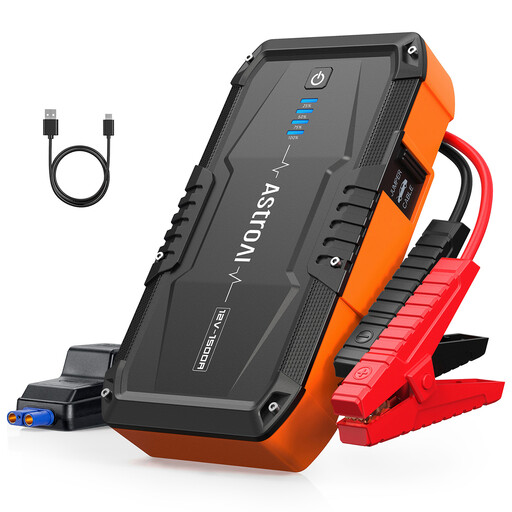
The Verdict : Perfect for drivers of city cars or compact sedans (petrol engines up to 6.0L, diesel up to 3.0L). Its compact size allows it to be stored in the glove box. It gets straight to the point : reliable starting power and all the necessary safety features for peace of mind during occasional use.
No unrealistic promises here. Its power is calibrated for its target audience, avoiding misleading "peak amps" marketing. The focus is on starting power, without useless gadgets.
"BOOST" mode for completely dead batteries ; sturdy, all-metal clamps for durability and safety ; 8 built-in protection levels.
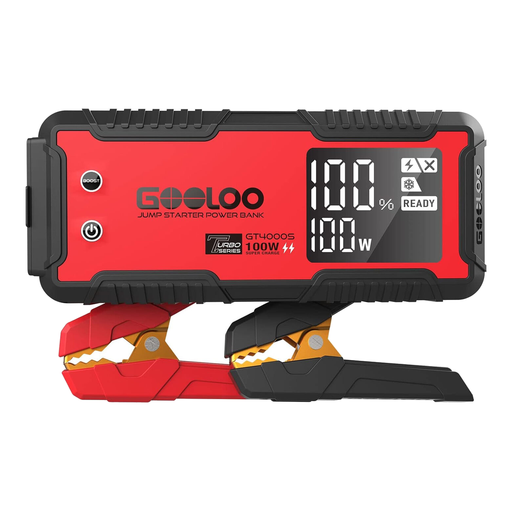
The Verdict : The solution for large engines (SUVs, 4x4s, vans, RVs) for both petrol and diesel (up to 10.0L). Its real trump card? The 100 W two-way fast charging, a precious time-saver for pros who can't afford to wait.
Here, 4000 A isn't a bluff : it's necessary for extra-large engines. The 100 W fast charging isn't a gimmick, but a game-changing pro feature.
Full recharge in 1.2 hours (100 W charger included) ; large, easy-to-read 3.2-inch LED screen ; 15V/10A DC port to power other devices.
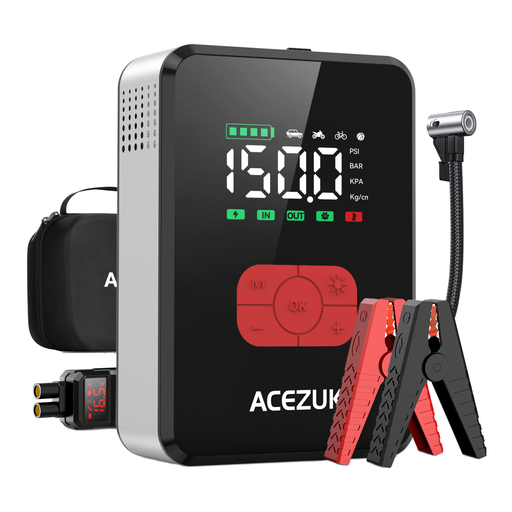
The Verdict : For those who want a true Swiss Army knife without making compromises. It combines monstrous starting power (compatible with all engines up to 12L) with a genuinely effective 150 PSI air compressor, complete with a screen and auto-stop function.
This model avoids the "gimmick" trap by integrating a high-performance compressor that doesn't detract from its primary function : exceptional starting capability.
Colossal 7000 A current ; 150 PSI digital compressor with preset modes ; smart clamps with a built-in screen for live diagnostics.
Discover our full selection of boosters that meet our quality criteria and current safety standards.
Peak current (peak amps) is the maximum power the booster can deliver for a microsecond. It's primarily a marketing term. Starting current (cranking amps or CA) is the power delivered for 30 seconds at 0°C (32°F), which is a much better representation of the real ability to start a stubborn engine. The easiest way? Trust the advertised compatibility in litres (L) for petrol and diesel engines.
This depends on its technology and self-discharge rate. Most modern lithium-ion boosters have a low self-discharge rate and can retain over 80% of their charge for 6 to 12 months. As a precaution, it's advisable to check and recharge the device every 3 to 4 months to ensure it's ready when you need it most. Some newer sodium-ion based models boast even lower self-discharge rates.
This is a critical point. Always check the operating and storage temperature range specified by the manufacturer. Lithium batteries are sensitive to extreme temperatures. Leaving the booster in a car in direct sunlight can degrade its battery and even pose a risk. Conversely, freezing cold can temporarily reduce its power. If you plan to leave it in your vehicle permanently, opt for a model designed to withstand extreme temperatures (e.g., from -20?°C to 60?°C or -4°F to 140°F).