
Livraison le jour même ou le lendemain

Qualité garantie

Débloquez vos offres de bienvenue: Livraison GRATUITE | Jusqu'à -80 % | 30 jours d'essai gratuits à JoyPlus
Téléchargez l'application
A dead battery is every driver's nightmare. That dreadful silence when you turn the key, the inability to start, and the prospect of waiting for a tow truck… it's a real hassle that means stress and wasted time. Fortunately, a battery booster is the simple and incredibly effective solution to get you back on the road in minutes, without depending on anyone.
This guide is here to help you choose the perfect jump starter for your needs. Together, we'll break down the technical specs that really matter and present our selection of the best models, helping you make an informed choice, free from marketing jargon.
Before rushing to buy the first model you see, let's review the key technical criteria that make all the difference, whether you drive a car, a motorcycle, or a commercial van.
Power, measured in amperes (A), is the number one criterion. There are two key values to consider?:
For a standard-sized petrol engine, a booster from 800?A to 1500?A is more than enough. However, a diesel battery booster requires more muscle due to the higher compression ratio of these engines. For a diesel vehicle, it's advisable to look for models offering at least 1500?A. A 2000?A booster will ensure worry-free starts, even in the dead of winter.
The capacity of the booster's internal battery, measured in milliampere-hours (mAh), determines the number of starts possible on a single charge, as well as its runtime as a portable battery.
Indeed, many models double as a power bank to charge your electronic devices (smartphone, tablet) via USB ports. Other handy features can make a difference, such as a built-in LED light with multiple modes (flashlight, strobe, SOS)—an invaluable asset during a nighttime breakdown.
A good jump starter must include multiple protections to prevent any damage to the vehicle's battery or the device itself. Check for safety features against?:
Thanks to these safeguards, even a novice in mechanics can use a booster without any risk.
Here are a few models that stand out for their design, performance, and reliability, suited for different types of vehicles and uses.
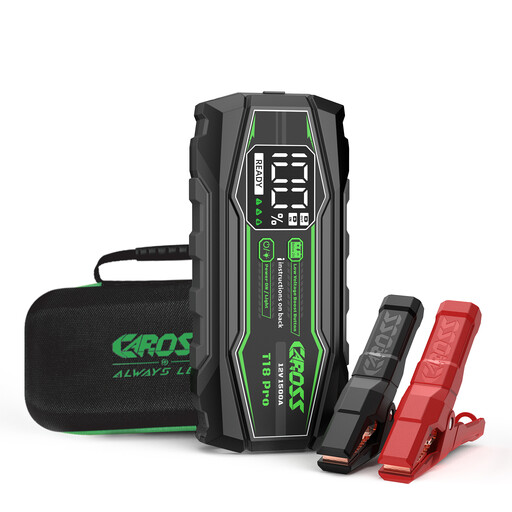
Why it stands out
This model offers an excellent balance of power and versatility. With 1500?A of peak current and a 16,000 mAh battery, it can start most petrol vehicles and many diesel engines. Its 2.3-inch LED screen clearly displays the battery status and usage information, making it incredibly easy to use.
Advantages
Who is it for??
For drivers of saloons, SUVs, or small vans looking for a reliable, powerful, and user-friendly ally to be prepared for any situation.
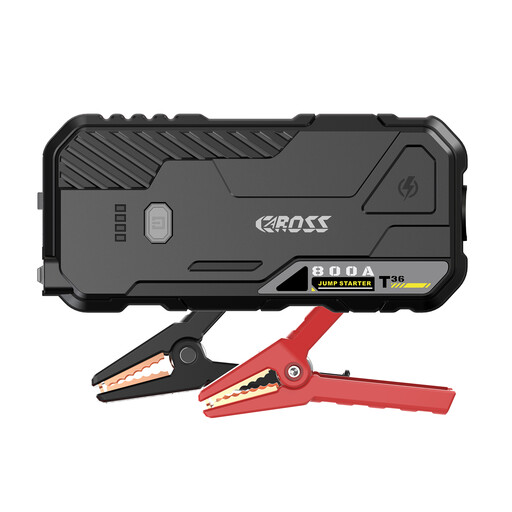
Why it stands out
Compactness is the key advantage of this portable battery booster. Designed to fit in a glove box, it remains effective with its 800?A of peak power. Its robust, fire-retardant shell and soft rubber coating ensure a secure grip and heavy-duty durability.
Advantages
Who is it for??
Ideal for drivers of city cars, compacts, or motorcyclists who want maximum efficiency in a minimal footprint.
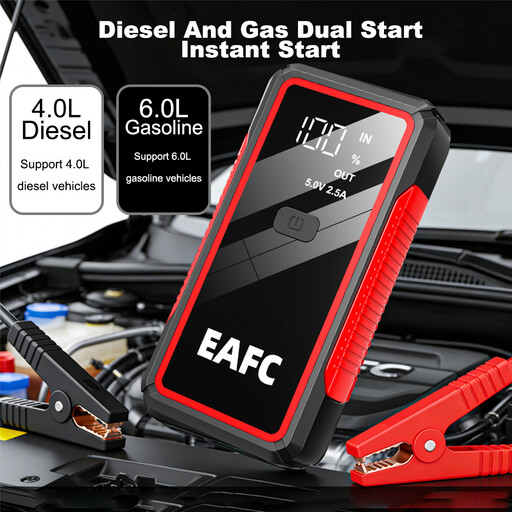
Why it stands out
With a peak power of 2000?A, this booster is built for the toughest jobs. It can start petrol engines up to 6.0L and diesel engines up to 4.0L without breaking a sweat. Its wide operating temperature range (from -10?°C to +85?°C) makes it particularly reliable, whether in harsh winters or scorching summers.
Advantages
Who is it for??
For owners of large SUVs, pickup trucks, commercial vans, or anyone living in regions with unpredictable climates who cannot compromise on power.
The choice of a booster depends on your vehicle, where you live, and your driving habits. If the models in our selection don't check all your boxes, don't worry!
Explore our full range of car protection to find the gear that will give you complete peace of mind on the road.
Diesel engines are more demanding to start. They require more energy to overcome their high compression. It is therefore crucial to choose a booster with sufficient peak current. For most diesel cars and SUVs, aim for at least 1500?A. For larger engines (vans, pickup trucks) or if you live in a cold region, a 2000?A booster or higher is a wise precaution.
No, they are two very different tools. A booster is designed to deliver an electrical 'shock'—a very intense, brief burst of energy to force the engine to start. It's a one-time assist. It is not made to slowly recharge a battery over several hours. For that, you need to use a battery charger, which is its primary function.
Absolutely. Modern boosters are packed with safety systems (protection against reverse polarity, short circuits, power surges, etc.). These safeguards are specifically designed to protect your vehicle's sensitive electronic components, such as the onboard computer. The key is to follow the instructions carefully, but their design makes user error almost impossible.