
Livraison le jour même ou le lendemain

Qualité garantie

Débloquez vos offres de bienvenue: Livraison GRATUITE | Jusqu'à -80 % | 30 jours d'essai gratuits à JoyPlus
Téléchargez l'application
A dead battery: every driver's nightmare. That dreaded silence when you turn the key, the dashboard lights dimming… It's a breakdown as frustrating as it is unexpected, and it always happens at the worst possible moment. Fortunately, there's a simple and effective solution to get you back on the road on your own: the battery booster. This compact device, also known as a portable car starter, brings your engine back to life in minutes, without needing another car and jumper cables.
But with an overwhelming number of options on the market, how do you find the right one? This guide is here to help. As the Head of Product Recommendations at Joybuy, my mission is to decode the technical specs for you and help you choose the equipment that will truly meet your needs, without the unnecessary marketing jargon.
Before we dive into our top picks, here are the essential criteria to scrutinise to make the right choice.
The number one criterion for a booster is its peak current, measured in amps (A). It's this intense burst of current that will force your engine to start.
Always remember to check the booster's compatibility with your engine's displacement (expressed in litres), information that is always provided by the manufacturers.
Modern jump starters are true Swiss Army knives for the motorist. Ask yourself how you plan to use it:
A multifunctional device can thus become the centrepiece of your emergency start kit.
The majority of current boosters use lithium-ion batteries, prized for their compact size and power. However, new technologies like sodium-ion are emerging, standing out for their durability and better resistance to extreme temperatures.
It is imperative to check that the device has multiple safety protections: against short circuits, reverse polarity, overcharging, or overheating. High-quality, "smart" clamps are a crucial safety guarantee.
Here are three options that stand out for their performance and versatility, catering to different user profiles and vehicle types.
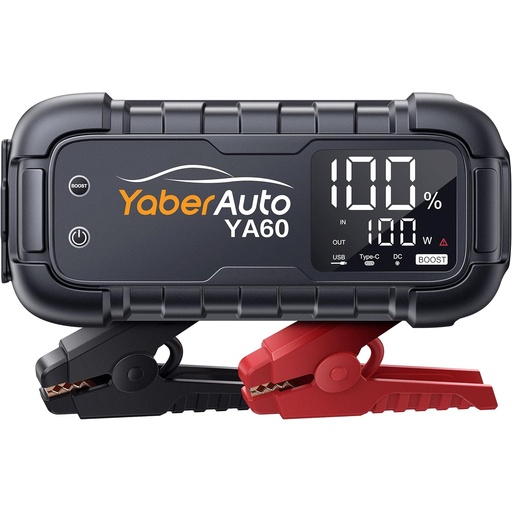
Why it stands out: Its colossal peak power and ultra-fast two-way charging make it a powerhouse for the most extreme situations.
Advantages:
Who is it for? Owners of large vehicles (trucks, motorhomes, large diesel SUVs) and professionals who demand uncompromising starting power and a mobile charging solution for their equipment.
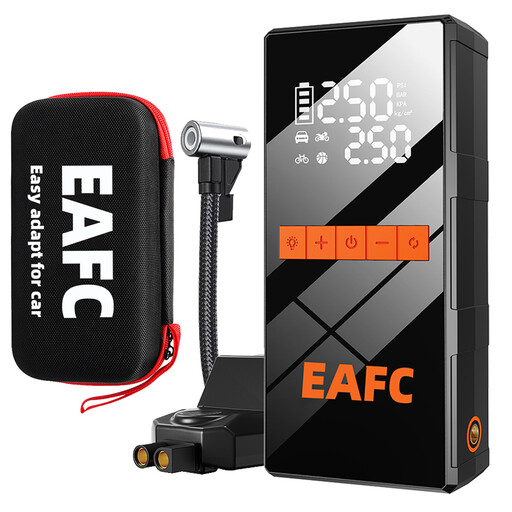
Why it stands out: It's the ultimate driver's multi-tool, combining four essential functions in a compact design.
Advantages:
Who is it for? The forward-thinking driver, campers, and road-trippers looking for an all-in-one device to handle any eventuality (low battery, flat tyre).
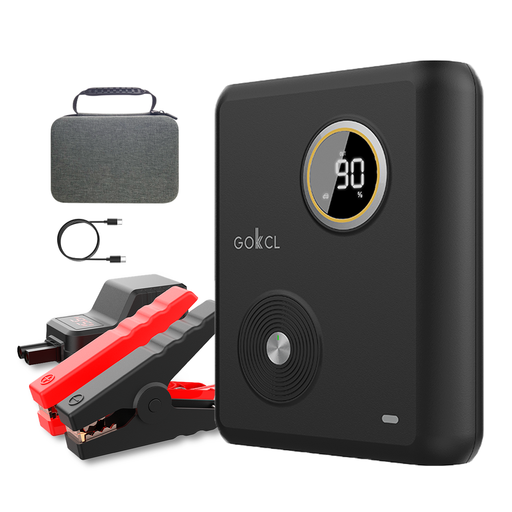
Why it stands out: Its sodium-ion battery technology gives it exceptional durability and resistance to extreme temperatures.
Advantages:
Who is it for? Drivers living in regions with very cold or very hot climates, and those looking for a "set it and forget it" solution with a very long lifespan.
Do the three models presented not check all your boxes? Every vehicle and every driver has specific needs. To explore a wider range, from more compact models to professional-grade solutions, feel free to browse our complete category.
? Discover all our jump starters
1. What power level should I choose for my battery booster? It all depends on your engine. For a standard petrol car, 1000A is usually sufficient. For a diesel engine or a large SUV, aim for at least 1500A to 2000A. Always refer to the manufacturer's recommendations regarding the maximum engine displacement (L).
2. Can you leave a battery booster in the car permanently? Yes, but under certain conditions. Most lithium boosters are designed to withstand temperatures from about -20°C to +60°C. Just avoid leaving it in direct sunlight inside the car in summer. Sodium-ion models, like the GOKKCL GK03, offer a much wider operating temperature range (-40°C to +80°C), making them ideal for permanent storage in the vehicle.
3. Can a booster fully recharge a car battery? No, a battery booster is designed to deliver a brief but intense burst of current to start the engine. It is not a substitute for a car battery charger, whose role is to slowly and fully recharge a battery over several hours. Once the engine is started with the booster, the alternator takes over to recharge the battery while you drive.