
Livraison le jour même ou le lendemain

Qualité garantie

Débloquez vos offres de bienvenue: Livraison GRATUITE | Jusqu'à -80 % | 30 jours d'essai gratuits à JoyPlus
Téléchargez l'application
A dead battery: one of the most common and frustrating problems for any driver. That dreadful silence when you turn the key, especially when you're in a hurry or in the middle of nowhere... a situation we'd all rather avoid. Fortunately, there's a simple solution so you never have to depend on another car or a tow truck again: the battery booster.
This guide is designed to help you choose the perfect car jump starter for your needs. Our mission: to give you all the key information to select a reliable device, without drowning you in technical jargon.
Before diving into our top picks, let's review the essential criteria for making the right choice.
This is the number one criterion. A jump starter's power, or peak current (measured in amps, A), must be sufficient to start your engine on the first try.
Always check the maximum engine displacement (in litres, L) recommended by the manufacturer for both gas and diesel engines.
Modern boosters are much more than just a jump-starting aid. They are true Swiss Army knives that often include very practical features:
Safety is not optional. A good battery booster must include multiple protections to prevent any accidents. Check that your chosen model is equipped with safety features against:
An LCD screen or clear indicators also provide simplicity and peace of mind, allowing you to monitor the booster's charge status and the progress of the operation.
Here are three options that stand out for their power, features, and reliability, suitable for different types of vehicles and uses.
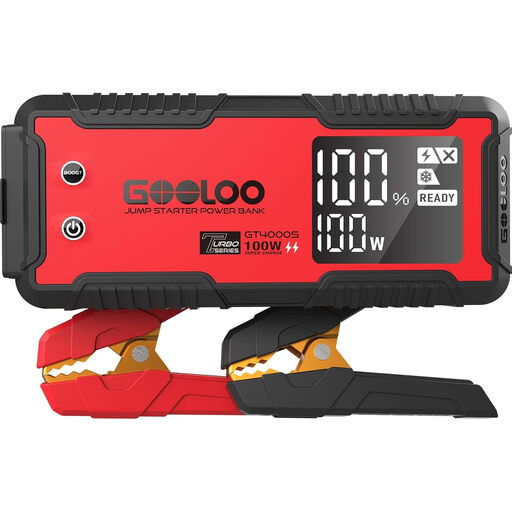
Why it stands out?: The GOOLOO GT4000S stands out from the crowd with its 4000?A peak power and 100?W bidirectional fast-charging technology. According to the manufacturer, it can fully recharge in just 1.2 hours, and a 5-minute charge is enough for an emergency jump-start. Capable of powering a laptop, it's the ultimate versatile tool for professionals on the go.
Highlights?:
Who is it for?? For owners of large vehicles (SUVs, trucks, RVs, boats) and those who demand a super-powerful starting solution, while also benefiting from express charging.
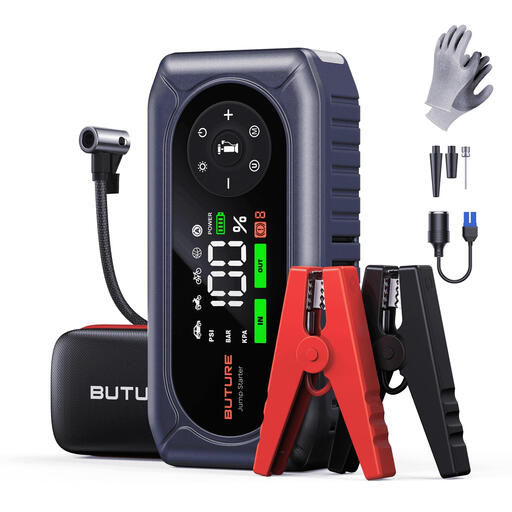
Why it stands out?: The BUTURE BC02 is the ultimate Swiss Army knife for drivers. It combines a massive 4500?A of starting power with a 150?PSI digital air compressor. This 5-in-1 design makes it the ideal road trip companion for handling almost any unexpected situation.
Highlights?:
Who is it for?? Ideal for prepared drivers who want a single device to manage both dead batteries and tire pressure, without compromising on starting power.
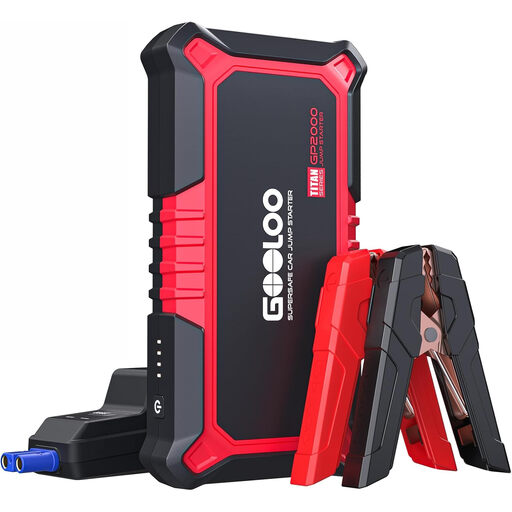
Why it stands out?: The GOOLOO GP2000 is the perfect compromise for everyday use. With its 2000?A of peak power, it meets the needs of the vast majority of cars and SUVs on the road. Its lightweight and compact design allows it to be stored in the glove box, while still offering the essential functions of a power bank and flashlight.
Highlights?:
Who is it for?? Perfect for drivers of standard-sized cars, motorcycles, and SUVs looking for a reliable, effective, and easy-to-use portable starter for everyday mishaps.
These three models are solid choices, but the market is full of alternatives. If you have specific needs or are simply curious to explore other possibilities, feel free to browse our full category.
? Discover our full range of the most powerful battery starters
Diesel engines have a higher compression ratio and require more power to start, especially in cold weather. As a general rule, choose a booster with at least 2000?A for a diesel engine. For larger vehicles like vans or RVs, a 3000?A model or higher is a safer bet.
Although boosters are designed to be stored in a vehicle, it is not recommended to leave them there permanently, especially in extreme temperatures (high heat in summer or freezing cold in winter). Very high or low temperatures can damage the internal battery and reduce its lifespan. It's best to recharge it every 3 to 6 months and store it in a temperate place when possible.
No, a battery booster (or jump starter) is not a charger. Its role is limited to providing a very intense but brief pulse of current to force the engine to start. Once the engine is running, the vehicle's alternator will take over and recharge the battery. To fully recharge a dead battery, you need to use a dedicated battery charger.