
Livraison le jour même ou le lendemain

Qualité garantie

Débloquez vos offres de bienvenue: Livraison GRATUITE | Jusqu'à -80 % | 30 jours d'essai gratuits à JoyPlus
Téléchargez l'application
A dead battery. It's every driver's nightmare: on a freezing winter morning or after a long holiday, you're met with silence. Or worse, the dreaded "click" from the starter, signalling a day of hassle. Fortunately, there's a solution to avoid this stress: the battery booster, or jump starter. This accessory has become a must-have for getting your car started in minutes, without relying on anyone else.
But be warned, the market is a jungle where marketing promises often hide unreliable devices. To avoid buyer's remorse, here are the three main pitfalls to watch out for.
To make the right choice, forget the marketing hype and focus on these technical points. This is your guarantee of investing in a reliable device that's truly suited to your vehicle and ensures safety during a breakdown.
There are two values to know, but only one truly matters:
Remember: a powerful booster isn't the one with the biggest number on the box, but the one that delivers stable and sufficient starting amperage for your engine.
The golden rule: a diesel engine is much more demanding to start than a petrol one, especially in winter. Follow the manufacturer's recommendations, but keep these guidelines in mind:
While most boosters use Lithium-ion batteries, new technologies like Sodium-ion are emerging. Their promise? Better performance in extreme temperatures and a longer lifespan.
But regardless of the technology, a good portable battery charger is above all a safe device. It must include several essential protections:
These safeguards are non-negotiable. They protect the user, the booster itself, and, most importantly, your car's sensitive electronics.
To move from theory to practice, here are three models that meet specific needs, all selected for their reliability and safety.
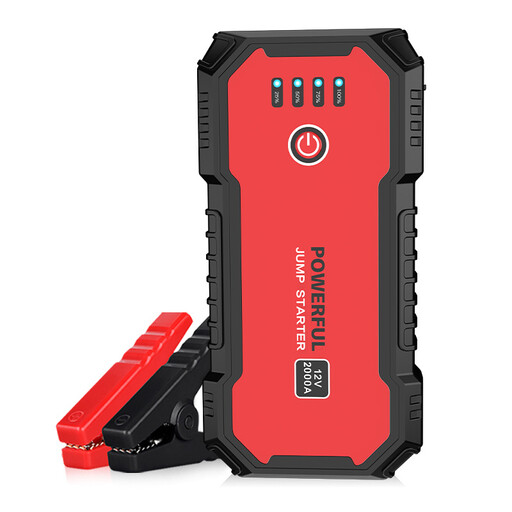
WHO IS IT FOR? Perfect for drivers of city cars and saloons (petrol or small diesel) who want a "just-in-case" emergency solution. Compact and affordable, it slips into the glove box and is easily forgotten... until the day it saves you.
No unnecessary gadgets. This booster gets straight to the point: delivering 1500A of power, perfectly calibrated for the majority of cars on the road, without inflating the price.
Its feather-light weight (around 430g) and its fast-charging USB port (QC3.0) for recharging a smartphone make it a travel companion that's as discreet as it is useful.
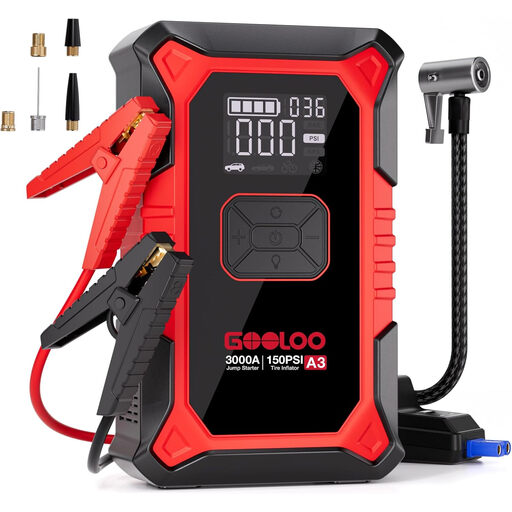
WHO IS IT FOR? Designed for those whose vehicle is a work tool (commercial vehicles, 4x4s) or an adventure companion (motorhomes, vans). Its 3000A power tackles large engines (up to 9.0L petrol / 6.5L diesel) and its built-in compressor is a real bonus for checking tyre pressure, wherever you are.
Here, "all-in-one" doesn't mean compromise. It combines a super-powerful booster with a genuine air compressor (150 PSI), without one function cannibalising the other. A versatile tool built to last.
Its "BOOST" function forces a start even on a completely dead battery. The compressor's digital pressure gauge makes inflating tyres simple and precise.
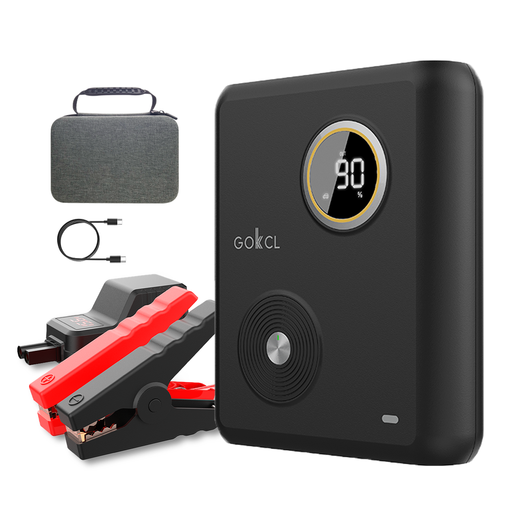
WHO IS IT FOR? For those who want to buy once and have peace of mind for years to come. Ideal if you leave the booster in your car permanently, whether you live in a cold or hot climate.
It tackles the Achilles' heel of conventional boosters: battery degradation. Its Sodium-ion technology promises virtually zero self-discharge (~1% per month) and resistance to extreme temperatures (-40°C to 80°C). No more nasty surprises with a dead booster.
Its record-breaking lifespan (up to 6000 cycles) and its ability to "revive" itself even after a complete discharge make it a cost-effective long-term investment. A truly hassle-free device.
Discover our full selection of jump starters that meet our criteria for reliability and safety.
It all depends on the technology. A standard lithium-ion model loses about 5-10% of its charge per month, so remember to recharge it every 2-3 months. The newer, more stable sodium-ion batteries lose only about 1% per month and can hold a charge for over a year.
Yes, if the model is designed for it. Check its operating temperature range (indicated by the manufacturer). A good booster should tolerate temperatures from -20°C to +60°C, which is sufficient for most climates. The most resilient models are a plus, as the heat inside a car on a sunny day can damage a standard lithium battery.
No, that's complete overkill. A 3000A jump starter is reserved for large SUVs, commercial vehicles, and powerful diesel engines. For a city car or a compact petrol car, a 1500A model is more than enough. There's no need to pay more for power you'll never use. The most important thing is to choose a model that's right for your engine, not the most powerful one on the shelf.