
Livraison le jour même ou le lendemain

Qualité garantie

Débloquez vos offres de bienvenue: Livraison GRATUITE | Jusqu'à -80 % | 30 jours d'essai gratuits à JoyPlus
Téléchargez l'application
A poorly organised bathroom can quickly become a congested space: towels that stay damp, hooks that come unstuck, an oversized wall cabinet or a towel rail that blocks a door from opening. To avoid disappointing purchases, it is better to look beyond style and promises of quick installation.
The most common mistakes concern actual capacity, compatibility with humidity and the strength of the mounting surface. Here are the criteria to check before choosing a towel rail that suits your home, whether you are renting, a homeowner or simply looking for compact storage.
A no-drill towel rail may suit many bathrooms, but adhesives do not bond equally well to every surface. Smooth tiles, glass, painted wood or painted walls can provide good adhesion, provided they are clean, dry and sufficiently even.
By contrast, a textured, dusty or damp wall, a freshly painted surface or wallpaper can considerably reduce the hold. A product listing that promises tool-free installation does not remove the need to check the usage restrictions.
The stated load usually refers to a maximum weight measured under specific conditions. A dry towel and a large wet towel do not put the same strain on a hook. Repeated movement, steam and a poorly prepared surface can also reduce the lifespan of the fixing.
For a bathroom adhesive hook, leave a margin between the stated weight and your everyday use. The maximum load should be treated as a limit not to exceed, rather than a capacity to use continuously.
A 60 cm wall-mounted towel rail can hold several towels, but it requires a sufficiently clear wall. A freestanding model takes up more floor space while avoiding the need to drill into the wall. In a small bathroom, a few centimetres can make the difference between comfortable movement and a walkway that is constantly obstructed.
Measure the available width, depth and height, then check the opening of doors, drawers and the shower enclosure.
For an adhesive solution, clean the surface with a degreasing product, dry it completely and follow the pressure or waiting time specified by the manufacturer. Command strips are designed for tool-free installation on certain smooth surfaces. The product information specifically states that uneven, wet or freshly painted surfaces are excluded.
Over-door models can be useful for renters, but check the door thickness and the space available between the door and the wall. A removable fixing will not necessarily suit every configuration.
A metal towel rail offers a stable structure and a pared-back look. However, its resistance to corrosion depends on the finish, manufacturing quality and care. Wipe away water droplets regularly and avoid abrasive products, which could damage the coating.
For hooks, water-resistant plastic and metal with a nickel-plated finish are two common options. Also check whether the product information mentions use in damp rooms, as well as the load limits.
For one person, a hook or small rail may be enough. Families will generally benefit from comparing the following options:
An electric heated towel rail adds a heating function and involves energy consumption as well as installation requirements. A simple towel rail is primarily intended to hang and air laundry: these two uses should not be confused.
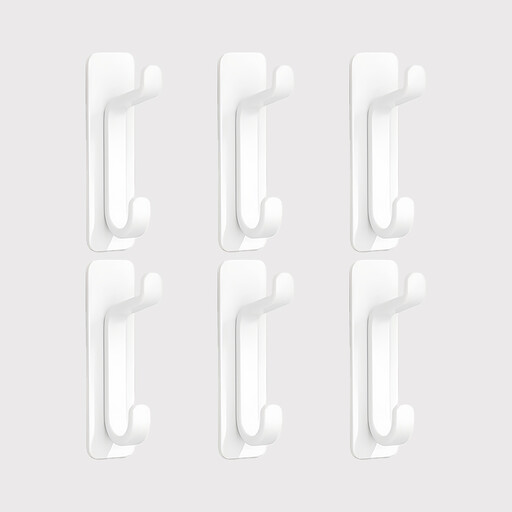
Why this choice suits this profile : This pack of six hooks lets you build up your storage gradually, without installing a full rail straight away. It is suitable for renters and anyone who wants to organise several small accessories on a door or compatible surface.
The multi-pack prevents the entire load from being concentrated on a single fixing point. You must still use the recommended surface and observe the load stated on the packaging.
Pack of 6 pieces, advertised stainless steel construction and no-drill installation.
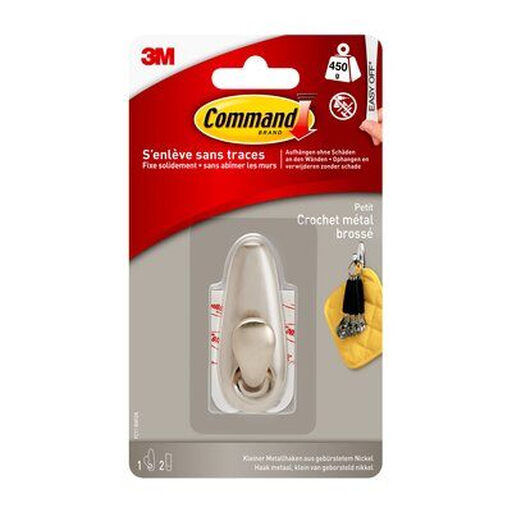
Why this choice suits this profile : Its brushed nickel finish blends easily into a bathroom with matching accessories. This hook is ideal for discreetly storing a lightweight towel or small items.
The stated load is limited to 450 g : this guidance prevents it from being used for a large wet towel or a heavy object.
Brushed nickel-plated metal, tool-free installation and possible reuse with replacement adhesive strips.
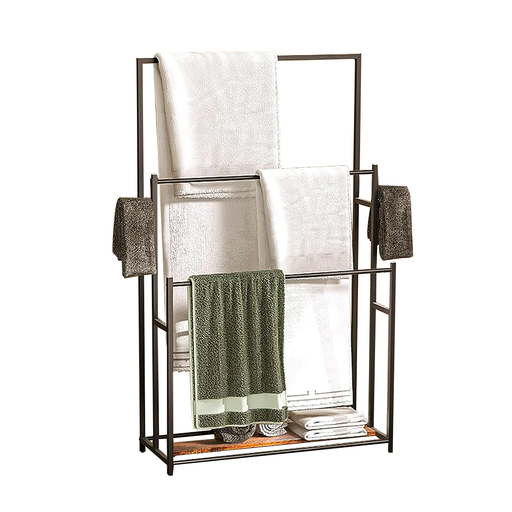
Why this choice suits this profile : This freestanding towel rail meets the needs of a household that has to hang several items without drilling into the walls. It can also be moved to suit the bathroom layout.
Its freestanding design avoids relying on adhesive applied to an uneven wall. However, measure the available floor space and check its stability before loading it.
Large size, no need to drill into the wall and capacity suited to family use.
We have put together a comprehensive, real-time updated list of products that meet these strict selection criteria, as well as European safety requirements.
Before fitting a bathroom adhesive hook, remove dust, soap residue and grease marks. Press firmly for the recommended time, then allow the fixing to set before hanging a towel on it. Do not add a significant load immediately after installation.
For a screwed wall-mounted towel rail, use wall plugs suitable for the type of wall: tiles, plasterboard, concrete and wood each require different accessories. In all cases, avoid placing the fixing in an area that is constantly exposed to splashes of water.
Regular wiping helps limit limescale deposits. For metal, use a soft cloth and a non-abrasive cleaner. Inspect the adhesive fixings periodically, particularly when they are installed near a shower or bath.
It can hold on smooth, clean and dry tiles, provided the product is designed for that surface. Grout lines, raised areas and textured tiles can reduce adhesion. Always check the maximum load and the surfaces excluded by the manufacturer.
An individual hook, a short rail or a model installed behind the door helps minimise the space taken up. If you cannot drill into the wall, compare the dimensions of an adhesive hook with those of a compact freestanding towel rail. The priority is to preserve a comfortable walkway.
Choose a finish described as suitable for damp rooms, keep the product away from constant splashes and dry areas where water tends to collect. Good bathroom ventilation also helps reduce ambient humidity.