
Livraison le jour même ou le lendemain

Qualité garantie

Débloquez vos offres de bienvenue: Livraison GRATUITE | Jusqu'à -80 % | 30 jours d'essai gratuits à JoyPlus
Téléchargez l'application
A well-organised bathroom is the key to a more serene daily routine. Yet, between accumulating bottles, towels with no home, and a general lack of room, getting organised can quickly become a headache. The market offers a multitude of solutions, but not all are created equal. As the Head of Product Selections at Joybuy, my mission is to help you navigate the options and make a truly informed choice, free from marketing hype.
Before you commit, let's break down the 3 most common pitfalls that can turn a promising purchase into a costly disappointment.
For successful bathroom organisation, it's therefore crucial to rely on concrete criteria.
Rather than relying on looks, let's scrutinise the features that truly make a difference in the long run.
The bathroom is, by definition, the most humid room in the house. The choice of material is therefore not just a matter of style; it's a guarantee of durability.
Optimising space, especially in a small bathroom, requires measurements that are accurate down to the millimetre.
Your choice will depend on your room's layout and your needs.
tower cabinet, low cabinet): Easy to install, it generally offers a large storage capacity. It's ideal if you have floor space to spare.wall shelf): Perfect for small spaces, it frees up floor space and creates a sense of airiness. Ensure your wall is sturdy and use appropriate wall anchors.To put theory into practice, here are a few solutions that meet specific needs, selected according to the criteria we've just established.
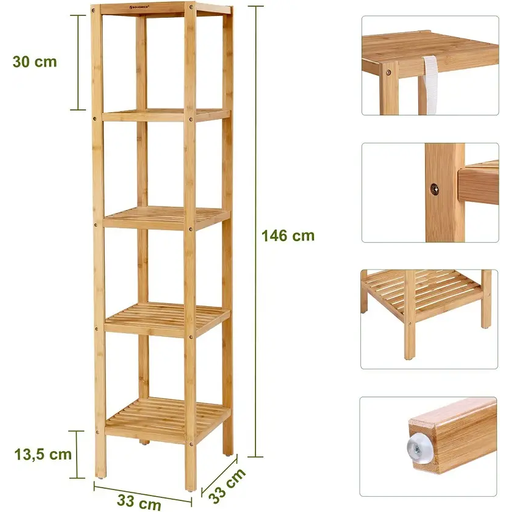
Why we chose it: Perfect for small areas, this tower cabinet makes use of vertical space. With its minimal footprint (33 x 33 cm), it slips into the tightest corners to offer valuable vertical storage.
Its bamboo structure is the perfect answer to the unsuitable material trap. Bamboo naturally handles humidity, ensuring better longevity in a bathroom.
Maximum storage on a minimal footprint. The open shelves allow for quick and easy access to everyday products.
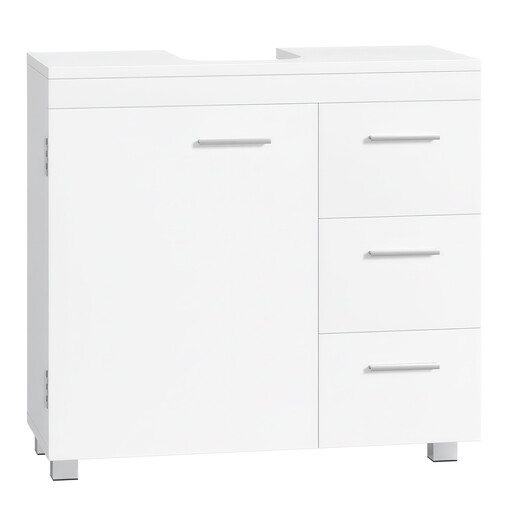
Why we chose it: Specifically designed to utilise the wasted space under a pedestal sink, this cabinet offers a complete solution for concealing clutter with its drawers and closed compartments.
It targets pedestal sinks, which limits the risk of an unpleasant surprise from the "universal" fit myth. The internal shelf is adjustable, offering flexibility for different P-trap heights.
A combination of open and closed storage (3 drawers, 2 compartments) for optimal organisation. An anti-tip kit is included for added safety.
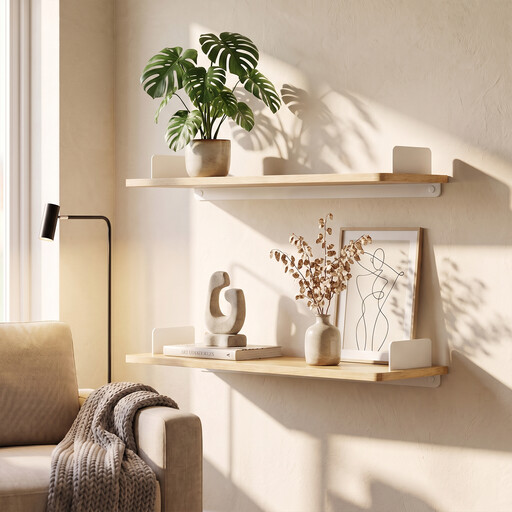
Why we chose it: For those who see storage as a decorative element in its own right, these wall shelves blend form and function. Their minimalist, award-winning design (Muse Design Award) showcases your items while decluttering the space.
It avoids the wall-loading pitfall thanks to quality materials: FSC-certified solid rubberwood and aluminium alloy brackets. The stated load capacity (up to 20 kg) is clearly specified, subject to proper installation.
Premium, durable materials (varnished solid wood, aluminium) that are resistant to both moisture and rust. The design makes this organiser a true piece of wall decor.
Explore our complete selection of storage units, all chosen for their durability and functionality, and find the perfect solution for your bathroom.
Its lifespan depends primarily on the material and its maintenance. A solid bamboo or treated metal cabinet can last for many years. A good quality, moisture-resistant MDF unit can also have an excellent lifespan. Conversely, a standard particleboard cabinet in a poorly ventilated room can start to degrade (swell) in under two years. A simple action, like wiping away standing water droplets, will significantly extend its life.
Fixing a shelf to a tiled wall requires a few precautions. You will need a specialised tile drill bit. Mark the hole's location (preferably on a grout line, which is easier), then drill very slowly without using your drill's hammer mode to avoid cracking the tile. Once the hole is drilled, insert a wall anchor suitable for the wall material behind the tile (plasterboard, brick, etc.) before screwing in the bracket.
No, and this is a common mistake. Before any purchase, it is imperative to measure your setup: the height and width of the pedestal, as well as the depth and position of the P-trap. Then, compare these dimensions with the unit's technical diagram, which is usually available on the product page. Some models offer a wider cut-out or an adjustable internal shelf for more flexibility.