
Livraison le jour même ou le lendemain

Qualité garantie

Débloquez vos offres de bienvenue: Livraison GRATUITE | Jusqu'à -80 % | 30 jours d'essai gratuits à JoyPlus
Téléchargez l'application
A well-organised bathroom is the secret to a stress-free morning routine. Yet, finding the perfect storage solution often feels like an uphill battle. Between tempting marketing promises and the actual quality of products, it's all too easy to make a purchase you'll regret. As a product expert for our editorial team, my mission is to decode the market for you and guide you towards solutions that genuinely meet your needs, far from the most common pitfalls.
Clutter builds up so quickly: bottles pile up on the edge of the tub, towels struggle to dry, and there's a desperate lack of space for daily essentials. Before you fall for the first shelf you see, let's analyse the three classic mistakes that turn a good buy into an almost instant regret.
To avoid these traps, you need to focus on the essentials. Forget the marketing jargon and instead look at these few technical points that will make all the difference in the lifespan and practicality of your storage solution.
This is the starting point. Your choice will obviously depend on your living situation (renter or owner) and the type of your walls.
In a bathroom, moisture reigns supreme. The choice of material is therefore not an option—it's a non-negotiable.
In a bathroom, especially a small one, every square inch is precious.
To help you visualise how these criteria apply, here are a few options tailored to different user profiles.
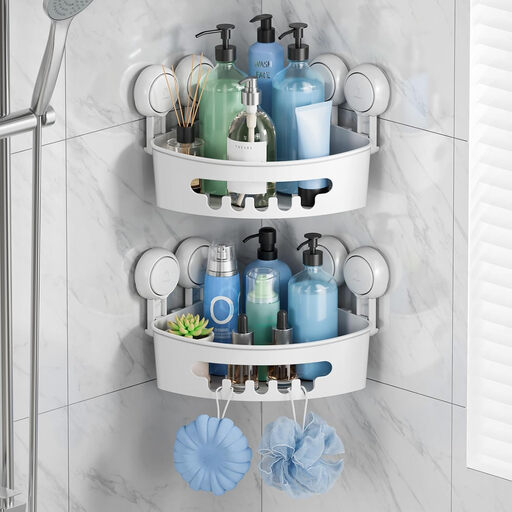
Why we love it: This is THE solution for optimising a shower corner without taking out the drill. Ideal for rentals, this system can be installed, removed, and repositioned at will, without leaving a single trace.
No more anxiety about a falling suction cup. This patented system ensures powerful suction on smooth surfaces. A simple press evacuates the air and locks the fixture, preventing the sudden crashes typical of low-end models.
Installation takes literally seconds, with no tools required. Its ABS plastic design and wide drainage slots ensure water doesn't stagnate and rust remains a distant memory.
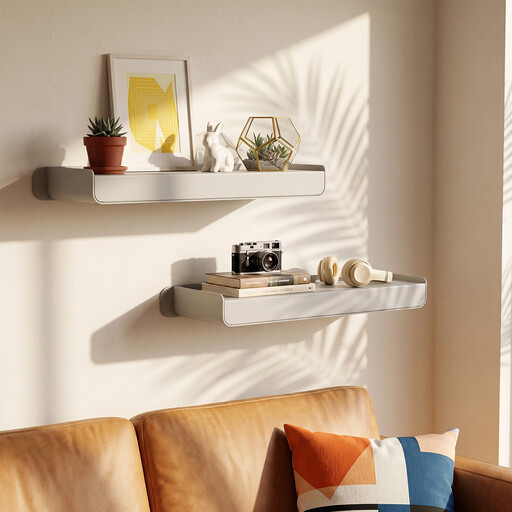
Why we love it: For those who see storage as an integral part of their decor and invest in durability. Yes, you have to drill, but that's the price for robustness and elegance that stand the test of time.
Crafted from quality aluminium, it is naturally impervious to rust. It's a long-lasting choice that won't degrade with humidity, unlike low-grade alloys disguised under a coat of paint.
An award-winning minimalist design (German Design Award 2022) that won't go unnoticed. The manufacturer claims a load capacity of up to 20 kg, enough to confidently place your beauty products, plants, or even a few books.
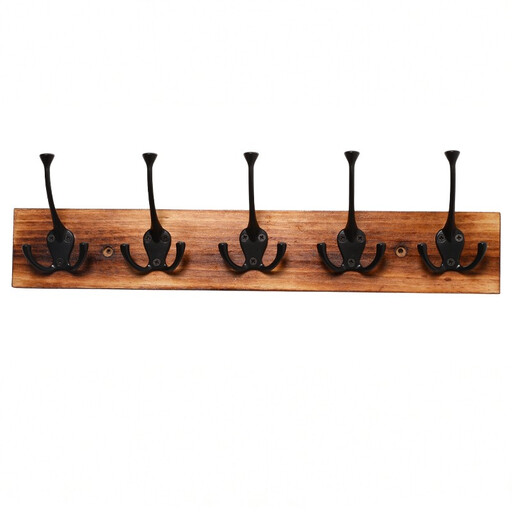
Why we love it: For its versatile nature and authentic charm. This wood and metal rack is a true chameleon: perfect in the entryway for keys, practical in the kitchen for utensils, and elegant in the bathroom for towels.
No false pretences here. The solid wood with a distressed look and the solid metal hooks offer a warm and sturdy alternative to composite materials and flimsy metals that bend or rust at the first opportunity.
Its extreme versatility. With five double hooks, it offers ten hanging points to organise a multitude of items. By mounting it on the wall, it frees up precious floor or counter space.
We have selected a full range of products for you that meet our quality charter and current safety standards.
The secret lies in surface preparation. It must be perfectly clean, dry, and smooth (non-porous tile, glass, mirror). Absolutely avoid grout lines or textured surfaces. Clean the surface and the suction cup with alcohol to remove any greasy residue. Press firmly in the centre to expel all the air. If the adhesion weakens over time, wash the suction cup in warm water to restore its flexibility.
It all depends on the material. A rust-proof shower caddy made of aluminium or 304-grade stainless steel can last for many years without showing signs of corrosion. In contrast, a low-quality chrome-plated steel product can start to rust in less than a year in a shower environment. Regular maintenance, such as drying it from time to time, can also extend its lifespan.
Yes, absolutely. You just need to take a few precautions. Use a specific drill bit for tile or ceramic to drill the hole without cracking the tile. It's advisable to start at a low speed and without your drill's hammer mode. Once you've drilled through the tile, you can switch to a bit suitable for the wall behind it (brick, concrete block, etc.) and insert the appropriate wall plug.