
Livraison le jour même ou le lendemain

Qualité garantie

Débloquez vos offres de bienvenue: Livraison GRATUITE | Jusqu'à -80 % | 30 jours d'essai gratuits à JoyPlus
Téléchargez l'application
A well-organised bathroom doesn’t necessarily depend on how many products you need to store. The real problem is often a cabinet that’s the wrong size, a material that doesn’t cope well with humidity or a layout that’s impractical for everyday use. Before buying a bathroom storage cabinet, it’s worth checking a few practical details rather than relying on a product photo or a marketing promise.
A cabinet described as moisture-resistant isn’t necessarily designed to withstand repeated splashes of water. MDF, PVC and composite panels can be suitable for a well-ventilated bathroom, as long as you keep them away from the shower and wipe up any splashes promptly.
A narrow bathroom cabinet may look compact on a product page, but just a few extra centimetres can block a door or restrict access. Measure the available width, depth and height, and don’t forget skirting boards, pipes and the clearance needed in front of drawers.
A bathroom storage tower or tall cabinet makes good use of vertical space, but its centre of gravity is often quite high. An anti-tip device and the option to secure the cabinet to the wall are therefore important safety features, especially if you have young children at home.
In a small space, a cabinet 15 to 25 cm deep can provide storage beside the toilet or fit between a basin and a wall. A model measuring 18 × 20 × 80 cm is better suited to everyday toiletries and toilet paper than to large bath towels.
Also think about the clearance needed to open the storage. A bathroom cabinet with drawers needs enough space in front of it, while an open bathroom shelf remains accessible even in a narrow passageway.
Also check the maximum load for each shelf or drawer. For example, a stated capacity of 10 kg per shelf doesn’t necessarily mean the whole cabinet can hold 10 kg on every level at the same time.
A basin cabinet needs to leave enough room for the plumbing and have a cut-out that suits your set-up. Adjustable shelves can accommodate both tall bottles and small boxes. Drawers are handy for accessories, while open compartments make towels and toilet paper easy to reach.
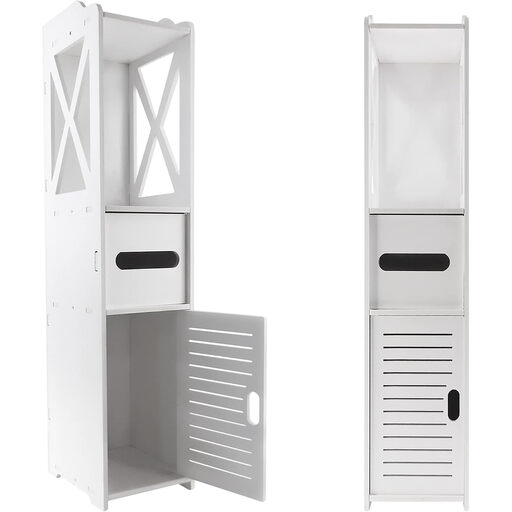
Why it suits this profile : Measuring 18 × 20 × 80 cm, this cabinet fits neatly in a toilet, a small bathroom or between two units. The drawer keeps smaller accessories separate from bulkier products.
Its compact footprint reduces the risk of choosing a cabinet that’s too deep for a walkway. The PVC, described as moisture-resistant, is easy to clean with a damp cloth.
A compact design, 3 + 1 storage levels, a dedicated space for toilet paper and a push-fit assembly.
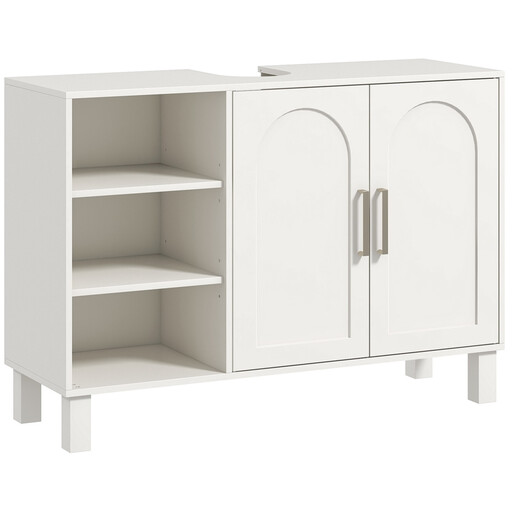
Why it suits this profile : This cabinet combines open and closed storage, with a 15 × 20 cm U-shaped cut-out at the back designed to fit certain wall-mounted basins. Adjustable shelves make it easy to store bottles, towels and cleaning products.
The product details include the dimensions of the internal spaces and state that the legs are 9,9 cm high. This makes it easier to check that it will fit your set-up before you order.
Dimensions of 90 × 30 × 63 cm, adjustable shelves and a layout that combines open and closed storage.
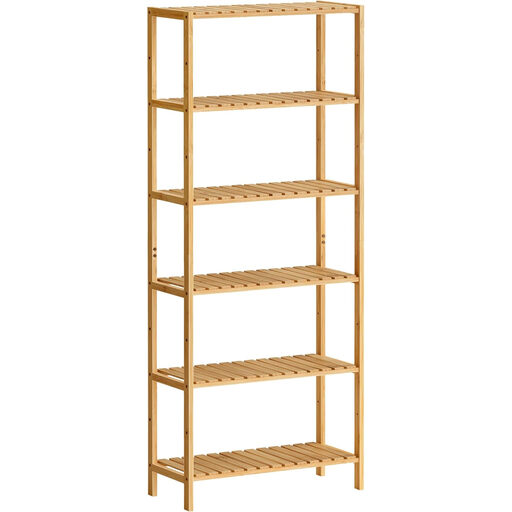
Why it suits this profile : This bamboo shelf lets you organise different types of items in one place. It can also be used in a kitchen, hallway or utility room. Its adjustable shelves accommodate containers of different sizes.
Its open-frame design helps air circulate and water drain away. Each shelf is rated for a maximum load of 10 kg, so be sure to stay within this limit when filling it.
Six adjustable shelves, an easy-wipe surface and a main frame supplied pre-assembled, according to the product description.
Before you start assembling the cabinet, check the contents of the parcel, the dimensions and the instructions. For a tall cabinet, always secure the anti-tip device provided to a suitable surface. If you’re renting, a no-drill adhesive shelf can help you avoid DIY work, but make sure you prepare the surface properly and stick to the stated maximum load.
Don’t let water collect around the base of the cabinet. In most cases, a slightly damp cloth is all you need for cleaning. Abrasive products, on the other hand, can damage the finish. If you have an acrylic bathroom organiser, place heavier cosmetics in the bottom drawers and make sure the non-slip feet are stable.
We’ve brought together a full range of products, updated in real time, that meet these strict selection criteria as well as European safety requirements.
A depth of 15 to 25 cm is generally suitable for narrow spaces and storage beside the toilet. However, measure the distance between the cabinet and the door, then check that drawers and doors can open without getting in the way.
It depends on the material and the manufacturer’s guidance. Even a cabinet described as moisture-resistant shouldn’t be exposed to repeated direct splashes. Good ventilation and regular wiping will help protect the panels and finish.
Place it on a level floor, keep heavier items on the lower shelves and use the anti-tip kit if one is supplied. Also follow the maximum load stated for the shelves, drawers and cabinet as a whole.