
Livraison le jour même ou le lendemain

Qualité garantie

Débloquez vos offres de bienvenue: Livraison GRATUITE | Jusqu'à -80 % | 30 jours d'essai gratuits à JoyPlus
Téléchargez l'application
White marks on your taps, a dull film on your shower screen, soap scum in the bath or stubborn limescale in the toilet bowl: choosing the right bathroom limescale remover depends first and foremost on the surface you need to treat and how often you clean. A product designed for glass isn't necessarily suitable for the toilet, while a powerful limescale-removing toilet gel can damage certain materials.
So before you buy, it's worth looking beyond the promise of "fast action". The ingredients, how to apply it and the safety precautions are often more revealing than the fragrance or the design of the bottle.
A no-rinse anti-limescale spray is very handy after a shower, when deposits are still light. However, it won't replace a limescale remover designed to tackle old, thick layers. Conversely, an acidic toilet gel would be overkill for a simple water mark on a basin.
To avoid buying the wrong product, make sure you distinguish between:
Claims like "eliminates 99.9% of bacteria" or "removes 100% of limescale" are statements that appear on a product page. They cannot be applied to every situation. According to information provided by manufacturers, some products only claim to work on bacteria or limescale under specific conditions of use.
If hygiene matters to you, check on the packaging:
A pleasant fragrance is not proof of effectiveness. Similarly, a product marketed as a bathroom disinfectant must be used in accordance with its label, without attributing to it performance it doesn't claim.
Acidic formulas can attack certain metals and are not suitable for marble, natural stone, painted surfaces or delicate grout. Even when a product is described as multi-purpose, check the list of compatible surfaces and test it on an inconspicuous area first.
Never mix a limescale remover with bleach, ammonia or another cleaner. Dangerous gases can form. Wear gloves if the label recommends it, ventilate the room and keep bottles out of reach of children.
On a shower screen or basin, a spray spreads quickly and makes wiping easy. A creamy formula or gel will stay longer on a vertical surface or under the toilet rim. So the product should be chosen based on where the deposit is:
A "no-rinse" product reduces the number of steps, but you still need to wipe the surface with a clean microfibre cloth to minimise streaks. For a toilet bowl, the usual routine is to apply the product under the rim, leave it to work for the recommended time, then scrub before flushing.
Also check the volume and the dosing system. A precision nozzle can reduce splashes and prevent waste, while a refillable bottle can be a good option for frequent cleaning.
The presence of surfactants, fragrances or disinfectant agents should be considered alongside the associated warnings. A product containing hydrochloric acid, like some toilet gels, can cause skin burns and eye damage. It's not necessarily unusable, but it does require careful application and proper storage.
In a home with children, opt for storage in a closed cupboard or up high. If your home has a septic tank, explicitly check the compatibility stated by the manufacturer rather than relying solely on the fragrance or colour of the liquid.
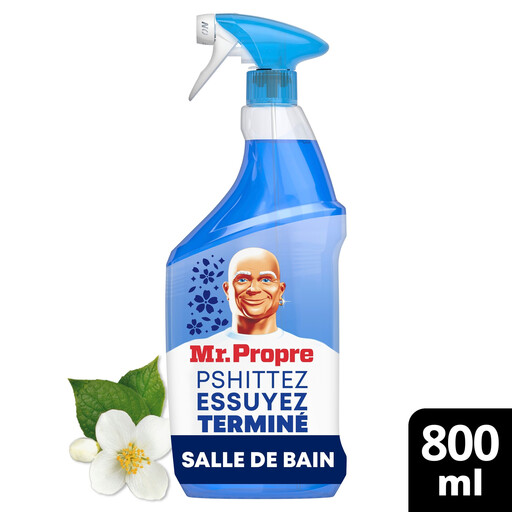
Why this choice suits this profile: Its 800 ml spray format is ideal for everyday cleaning of basins, showers and bathroom surfaces. The product page indicates it should be sprayed on and then wiped off, with no rinsing required.
It is used on soap scum and light limescale, without being marketed as an intensive descaling gel for toilets.
800 ml format, white flowers fragrance and a wipe-off spray formula, as per the description provided.
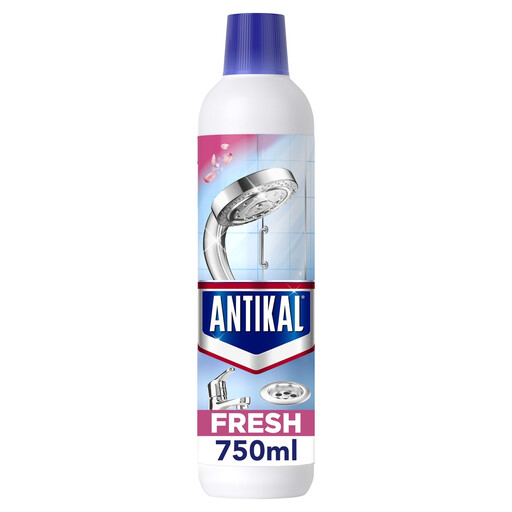
Why this choice suits this profile: Its creamy texture and precision nozzle make it ideal for tackling localised deposits on bathroom and kitchen surfaces.
The targeted nozzle prevents you from spraying a large amount of product unnecessarily around the room.
750 ml gel, precise application and fresh fragrance as stated on the product page.
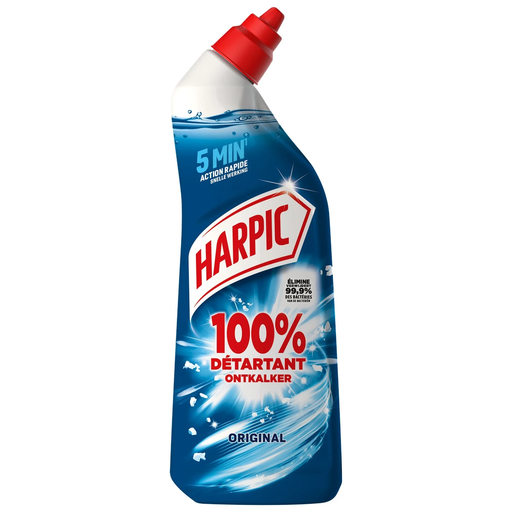
Why this choice suits this profile: This gel is specifically designed for the toilet bowl. It is applied under the rim and, for targeted stains, has a stated action time of five minutes.
It prevents you from using a surface spray on deposits that are under water or under the rim. Its corrosive formula does, however, require strict precautions.
Hydrochloric acid listed in the ingredients, nozzle designed for application under the rim and EN 1276 and EN 13697 standards stated on the product page.
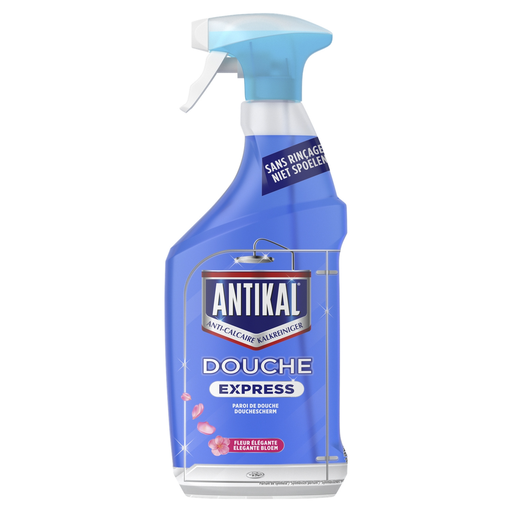
Why this choice suits this profile: Its spray-on, wipe-off, no-rinse application is ideal for those who want to regularly maintain shower screens, chrome, tiles and bathroom walls.
It aims to prevent water marks as part of frequent cleaning, rather than treating old deposits that require intensive descaling.
800 ml format, anti-drip technology and anti-fog properties as stated in the product description.
We have compiled a comprehensive, real-time updated list of products that meet these demanding selection criteria and European safety regulations.
Start with an anti-limescale spray or an anti-soap scum cleaner that is compatible with glass. For old build-up, choose a formula that clearly states it is suitable for the surfaces in question. Do not use it on natural stone without checking first, and always test on a small, inconspicuous area.
No, unless the label explicitly allows it for those surfaces. Toilet gels can contain concentrated acids and may be corrosive to certain metals, stones or coatings. For a shower, basin or taps, a bathroom cleaner will generally be more suitable.
The shelf life depends on the formula and the manufacturer's recommendations. Check the date or information on the packaging, keep the lid closed and avoid extreme temperatures. If the appearance, smell or texture of the product changes noticeably, it's best not to use it.