
Livraison le jour même ou le lendemain

Qualité garantie

Débloquez vos offres de bienvenue: Livraison GRATUITE | Jusqu'à -80 % | 30 jours d'essai gratuits à JoyPlus
Téléchargez l'application
A musty smell in a cupboard, condensation on the windows, black marks around the shower… These are common problems in homes across France. But simply buying the first moisture absorber or anti-mould cleaner you come across won’t always solve the problem.
The right choice depends on the area affected, the level of damp and what needs to be done: absorb moisture, clean the surface or replace a seal. Here are the common pitfalls to avoid and the most suitable solutions for your home, kitchen and bathroom.
A moisture absorber can collect excess moisture in a cupboard, small room or cellar. But it can’t replace good ventilation or repairs to a leak. In a particularly damp bathroom, a simple sachet may soon reach its limits.
So check the coverage area: some models are designed for 1 to 2 m², while others are suitable for a room of 10 or 20 m².
Claims such as ‘odour-fighting’, ‘anti-mould’ or ‘disinfectant’ don’t guarantee that a product is suitable for every surface. Bleach-based cleaners require particular care and must never be mixed with an acidic product, including limescale remover.
Before use, read the label and instructions, and check the hazard symbols.
Applied over a poorly removed old layer, or to a damp or greasy surface, sanitary silicone sealant may not adhere evenly. The bathroom seal may then peel away or turn black in no time.
Preparation makes all the difference: remove the old seal, clean and degrease the surface, leave it to dry and check that the sealant is suitable for the material.
For a non-electric dehumidifier, check the stated coverage area and the size of the refill. A moisture absorber with active crystals may be suitable for a bedroom, bathroom or room of 20 m². A small sachet is better suited to a drawer, wardrobe, car or storage box.
How long it lasts depends on the temperature and humidity level. Treat the stated lifespan as a guide, not a guarantee that it will last the same amount of time in every home.
Before using an anti-mould cleaner or limescale remover, identify the surface: glazed tiles, glass, ceramic, metal, natural stone, plastic or painted surfaces. If the instructions recommend it, test the product on an inconspicuous area first.
For sealant, also check the list of compatible materials. Some sanitary sealants adhere to enamel, porcelain, glass, ceramic or glazed tiles, but not to acrylic, polyethylene, polypropylene, PTFE or certain synthetic materials.
Biocidal or chlorine-based products must be used according to the label instructions, in a well-ventilated room. Wear gloves and, if specified, eye protection. Never mix bleach with vinegar, acid or limescale remover.
Keep crystal refills out of reach of children and pets. Dispose of collected liquid and used refills according to the manufacturer’s instructions and local regulations.
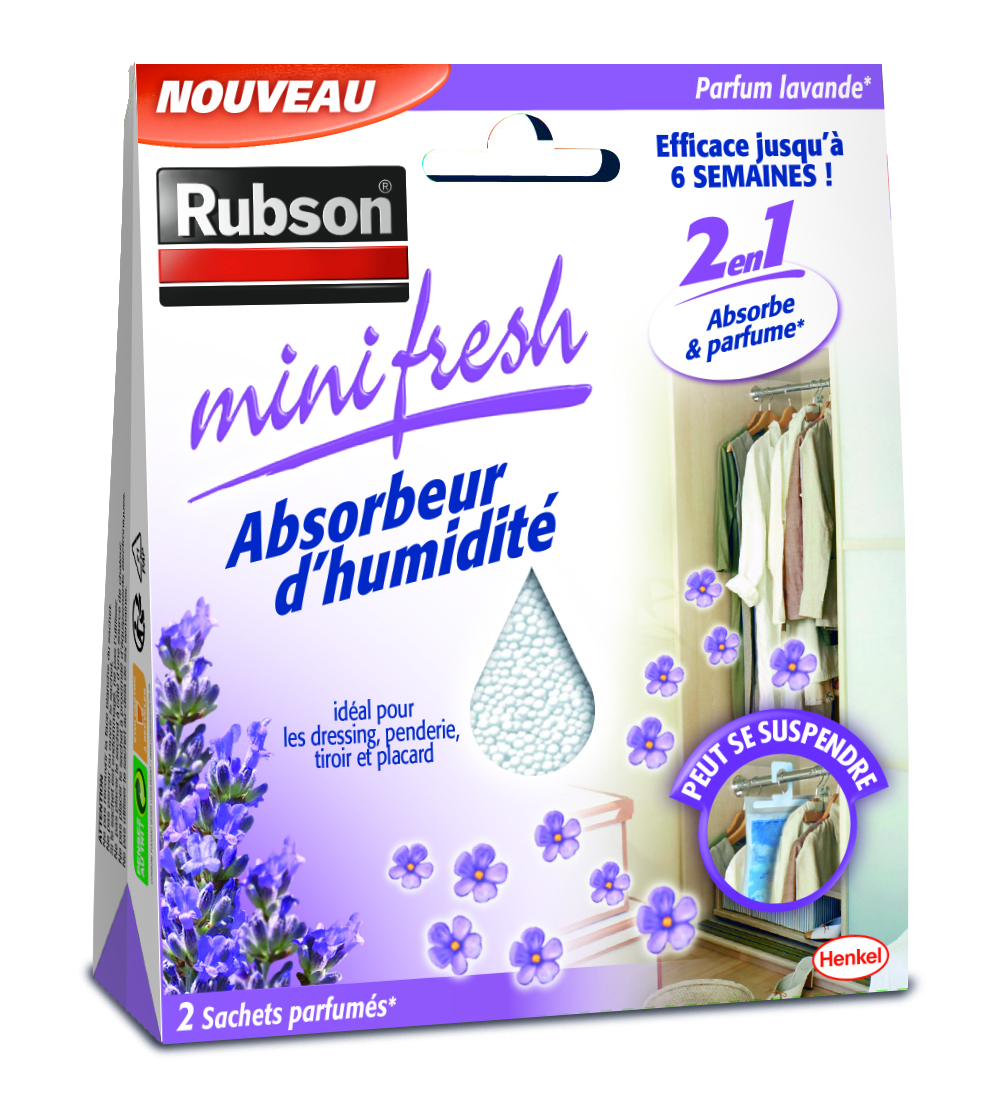
Why it suits this kind of user : Two 50 g sachets to place in a cupboard, drawer, car or small space of 1 to 2 m², with no electrical appliance needed.
Its format is clearly designed for small spaces, reducing the risk of using it in a room that’s too large.
Ready to use straight away. The sachet can be placed or hung, and is said to last for up to 6 weeks, depending on conditions.
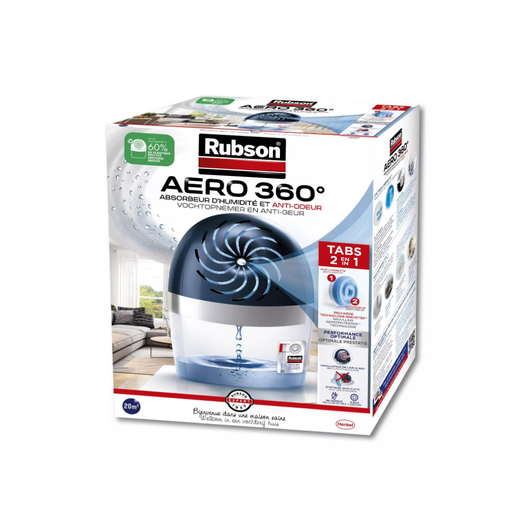
Why it suits this kind of user : Its 360° air circulation, refill indicator and pouring spout make it a good choice for larger rooms.
The stated coverage of up to 20 m² helps you choose an absorber that’s right for the space, rather than relying on a small sachet in a large room.
Quiet operation with no electricity required, a 450 g refill and a replacement indicator.
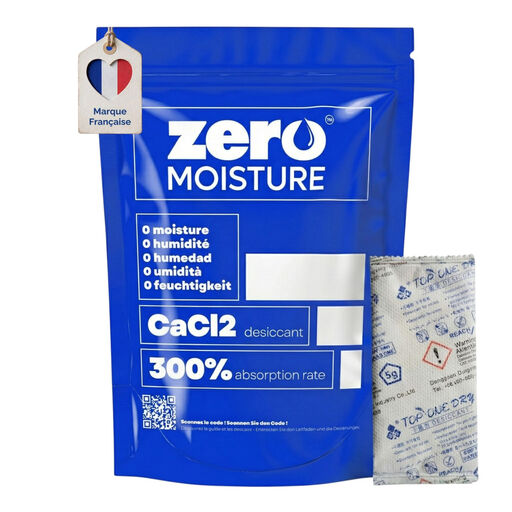
Why it suits this kind of user : These small sachets are easy to distribute around a wardrobe, cellar, car, fridge or near filament spools.
The individual sachets let you target several areas, instead of treating a whole space that doesn’t need it.
Pack of 50 sachets, each weighing 5 g, with a double-layer wrapper. The manufacturer states that it complies with REACH.
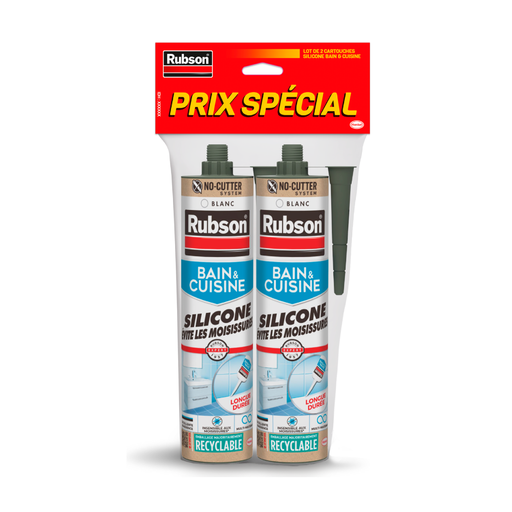
Why it suits this kind of user : The two 280 ml cartridges are enough to reseal several areas around a kitchen sink, washbasin, shower or bath.
It’s a reminder that the surface must be clean and dry, and that you should check for incompatible materials before applying the sealant.
Flexible, water-resistant silicone, a pre-cut nozzle and a formula enhanced with antifungal agents, according to the product listing.
We’ve put together a comprehensive, regularly updated selection of products that meet these demanding criteria and comply with European safety regulations.
It can reduce damp in a suitable space, but it won’t fix a leak, poor ventilation or water ingress. If the marks quickly return, look for the cause first rather than adding more absorbers.
It depends on the size of the room, the temperature and the humidity level. Some sachets are said to last for several weeks, while a 300 or 450 g refill may last longer in moderate conditions. Check the indicator or the condition of the product rather than relying on a fixed estimated lifespan.
No. Never mix them or apply one after the other without thoroughly rinsing the surface. Chlorine-based products can react with acidic products and release dangerous gases. Rinse thoroughly, ventilate the room and always follow the label instructions.