Who is this option for?

People with a windowless bathroom

If condensation mainly appears after showers, first check that your existing extractor is working and look at your options for airing the room. If you’re considering an appliance, you’ll also need a suitable electrical location, with enough space to use it and collect the water.

Households that sometimes dry laundry indoors

Drying laundry adds moisture to indoor air, as ADEME notes. Consider where you can dry clothes with suitable ventilation or extraction, then decide whether a dehumidifier could be a useful extra.

People dealing with persistent damp

Recurring condensation, marks or damaged surfaces are signs that you should investigate the cause. Qualitel recommends seeking professional advice if the damp persists. Buying a portable appliance shouldn’t delay this.

What should you check before choosing?

Portable dehumidifier

When to consider it: for humidity spikes caused by showers or laundry, alongside working ventilation, and only if there’s a suitable place for it.

What to expect: the appliance takes up space, makes noise while running and requires you to empty its tank or install drainage in accordance with its instructions.

Airing the room and drying laundry

When to do it: after showers and when laundry can be dried in a well-ventilated room or one with an extractor, in line with ADEME’s advice.

Limit: these measures won’t fix a faulty extractor, and opening a window isn’t an option in the bathroom in question.

Assessing the ventilation or building

When to request an assessment: if damp keeps coming back, leaves marks or causes damage. Qualitel recommends getting professional advice when it persists.

What to bear in mind: this means investigating the cause in your home, which a portable appliance can’t do.

Priority What to check How this applies to my needs
Electrical location Check where you plan to position the appliance in relation to the shower or bath. Check the instructions, electrical class and IP rating for that location; seek qualified advice if you’re unsure. In my windowless bathroom, I need to be able to install the appliance without exposing it to splashes or assuming that a ‘for bathrooms’ label means it can go anywhere.
Water collection Compare the tank capacity with how often you’re willing to empty it. For continuous drainage, check the connection, hose route and any limits set out in the instructions. If I’m drying laundry for several hours, I’d like to know in advance who will empty the tank or where the water can drain.
Capacity and controls Check the stated capacity and, where given, the temperature and relative humidity at which it was tested. Look at the humidity settings and the space needed around the appliance. I want to manage humidity spikes after showers, without assuming that the stated litres-per-day figure will be achieved in my room.
Noise Check the stated noise level and which operating mode it applies to. Consider when the appliance would be running and how close it is to living spaces. If it’s audible near my bedroom or living room, that could affect how I use it.
Ventilation and laundry Check whether the bathroom extractor is working and where laundry can be dried. ADEME notes that air-drying laundry adds moisture indoors, while mechanical ventilation removes it continuously. Before adding an appliance, I want to tell the difference between temporary humidity after showers and a problem that keeps returning despite airing and extraction.

What mistakes should you avoid?

  • Assuming ‘for bathrooms’ means ‘safe to use near the shower’

    According to Promotelec, the requirements for electrical equipment depend on where it’s positioned in the bathroom. A product description alone can’t confirm whether a model is suitable for the spot you have in mind.

    Check the exact location, read the instructions for the electrical class and IP rating, and have the installation checked if you’re unsure whether they’re suitable.

  • Choosing based only on litres per day

    A capacity figure measured under specific temperature and humidity conditions doesn’t, on its own, tell you how the appliance will perform in your bathroom.

    Compare the test conditions, then check the noise level, tank, controls, drainage and available space.

  • Forgetting where the collected water will go

    You’ll need to empty a tank; continuous drainage depends on a suitable connection and hose route. De’Longhi notes, for example, that a kinked hose or one routed upwards can prevent drainage on the relevant models.

    Choose between emptying the tank and using drainage after checking the outlet and the model’s instructions.

    Without suitable drainage, regular emptying takes time.

  • Using the appliance to mask a long-term damp problem

    A dehumidifier can collect water without fixing poor extraction or another underlying cause in your home. Qualitel recommends a professional assessment if the damp persists.

    If condensation keeps returning or you notice marks and damage, have the ventilation or building assessed rather than relying on the appliance alone.

Which brands can offer useful points of comparison?

Wood’s

For the MDX20P, Wood’s lists a 6 l tank and a hose connection: two features worth considering if regularly emptying the tank would be inconvenient.

  • The choice between using the tank and connecting a hose could help you plan water collection for the room.
  • These features don’t determine whether the planned electrical location in your bathroom is suitable for the model.

Duux

Duux’s Bora 20/30L product details list a 4-litre tank and the option to connect a hose for continuous drainage.

  • The hose connection is worth considering if you have an accessible drainage point.
  • A product being described as suitable for bathrooms doesn’t remove the need to check its instructions and intended location.

De’Longhi

De’Longhi France states that the DEXD216RF has a capacity of 16 l/24 h, measured at 30 °C and 80 % relative humidity.

  • The conditions given alongside this figure help you understand it, rather than mistaking it for a guaranteed result in every room.
  • For continuous drainage, De’Longhi says to position the hose as instructed; the electrical location still needs to be checked separately.

Electric dehumidifiers available on Joybuy

These electric models may suit you if you’re considering an appliance to help manage humidity from showers or laundry. Before choosing one for a bathroom, check its instructions for permitted locations, the space needed around it and how the water is collected.
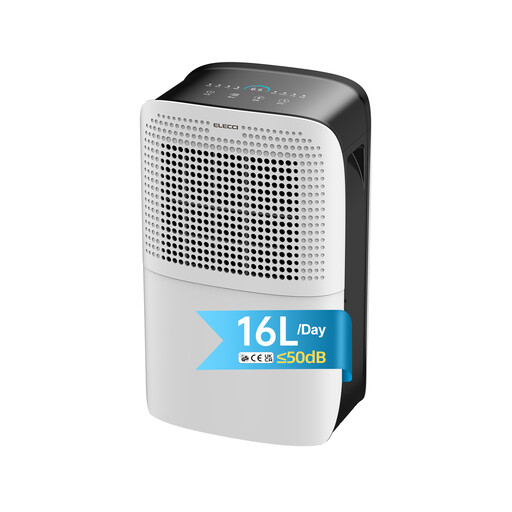
ELECCI 16L/D dehumidifier with drainage hose

ELECCI 16L/D, 3.1 L tank and drainage hose

Worth considering if you’d rather not empty the tank after showers: this model is listed with a continuous drainage hose. The product title also mentions four modes, a 24-hour timer and R290 refrigerant. Check the intended electrical location and keep the appliance away from splashes.

View on Joybuy
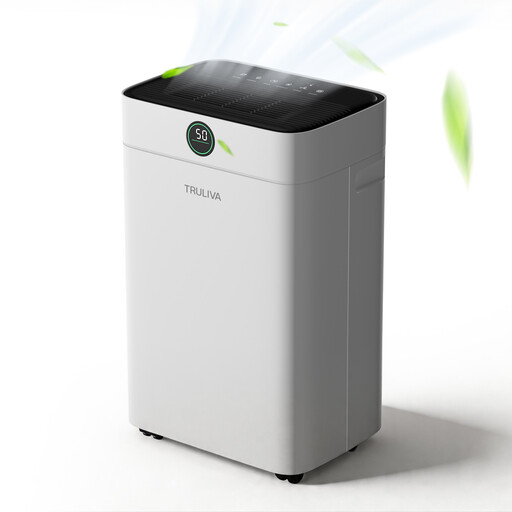
TRULIVA 25L/Day dehumidifier with laundry mode

TRULIVA 25L/Day, laundry mode and 2.8 L tank

The laundry mode may be useful if you occasionally dry clothes indoors, but it doesn’t replace suitable ventilation or extraction. The product title mentions a continuous drainage hose and R290 refrigerant. Check that you can route the hose appropriately and that the intended electrical location is permitted.

View on Joybuy
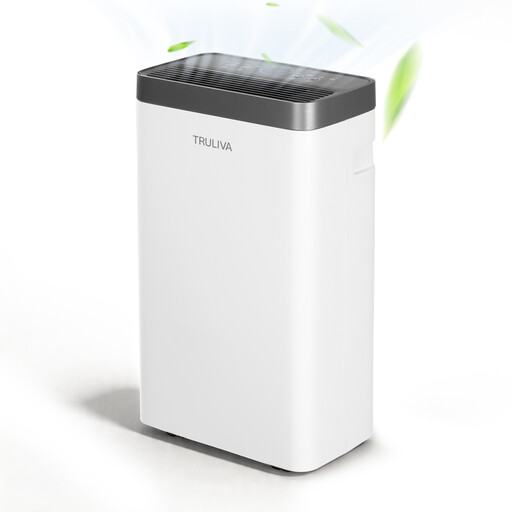
TRULIVA AP10-2012EE dehumidifier with continuous drainage

TRULIVA AP10-2012EE, laundry mode and continuous drainage

This model combines a laundry mode with a 24-hour timer, which may be useful if you plan to run it outside shower times too. The product title states that it’s suitable for areas of around 32 m². Check the instructions for clearance around the appliance, drainage and whether the intended bathroom location is suitable.

View on Joybuy
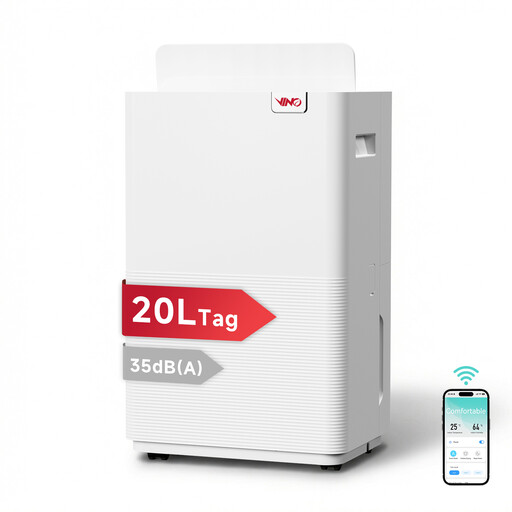
VINO 20L dehumidifier with WiFi controls

VINO 20L WiFi, three modes and 2.5 L tank

Worth considering for household use that includes drying laundry: the product title lists Auto, Dry and Sleep modes, as well as R290 refrigerant. WiFi controls don’t change the rules for electrical locations. If noise matters to you, check the stated noise level for the mode you plan to use before choosing.

View on Joybuy
Comfee' MDDN-10DEN7 dehumidifier

Comfee' MDDN-10DEN7, 10 L/24 h, approx. 40 m³

The stated room size, also given as 16 m², may help you assess this model for a modestly sized bathroom; it doesn’t confirm that the appliance is suitable for your intended location. The product title mentions R290 refrigerant and automatic dehumidification. Check the instructions for splash protection and the conditions behind the stated capacity.

View on Joybuy

Frequently asked questions

Can I position a dehumidifier near the shower?

Not without checking whether that location is suitable for the specific model. Promotelec explains that the requirements for electrical equipment vary depending on where it’s positioned in the bathroom. Check the instructions, electrical class and IP rating, and seek qualified advice if you’re still unsure whether they’re suitable for your installation.

Does a dehumidifier replace ventilation?

No. It can collect water as an extra measure, but it doesn’t replace air being extracted from your home. ADEME says that mechanical ventilation continuously removes moisture and pollutants. If your bathroom extractor seems faulty, have it assessed.

When should I choose continuous drainage instead of a tank?

Consider it if the model supports it and you can route the drainage in line with its instructions. Check the connection and hose position: in its drainage guidance, De’Longhi notes that the hose mustn’t be kinked or directed upwards where this would prevent the intended operation.

When should I get the home assessed rather than choose an appliance?

Have the ventilation or building assessed if the damp persists, or if recurring condensation is accompanied by marks or damaged surfaces. Qualitel recommends consulting a professional when damp continues, so they can investigate the cause.

What setting should I choose on a humidistat?

As a general guide for a home, Qualitel puts relative humidity at between 40 % and 60 % under normal circumstances. This doesn’t, on its own, describe the spike just after a shower: measure the humidity, follow the appliance instructions, and check that the room is being aired and extracted properly too.