For batch washing, choose a capacity that suits the amount of laundry you actually accumulate. According to ADEME, 7 kg is usually enough. A front-loading model is a good choice if you have room to open the door, while a top-loader is worth considering if space is limited. If you’re thinking about a washer-dryer, check its drying capacity separately, as this may be lower than its washing capacity.
Who is this choice for?
Households that wash everyday laundry in batches
If you wait until you have enough laundry for a full load, compare the drum capacity with the amount you usually build up. ADEME advises against half-loads, while recommending that you leave enough room for clothes to move around.
Households with limited space
The available width may make a top-loader a better fit. As UFC-Que Choisir points out, the space in your home often determines whether you choose this style or a front-loader. Make sure the capacity is also suitable for your batch loads.
Households looking to dry clothes in the same appliance
If you don’t have room for a separate tumble dryer, a washer-dryer could be the answer. However, check both capacities: Bosch, for example, lists a 9 kg washing capacity and a 5 kg wash-and-dry capacity for the WNA144V0FR.
Which features should you prioritise?
Start with your usual load, then measure the space available. These checks will help you choose between a front-loader and a top-loader. If an integrated dryer is also important, check its capacity separately before comparing the energy label data for your shortlisted models.
| Feature |
What to check |
Who is it for? |
| Usable capacity |
Compare the stated capacity in kilograms with the laundry you accumulate between washes, then check the appliance dimensions. |
If you need to fit several days’ laundry into one load, your usual laundry volume matters more than choosing the biggest drum. Around 33% of consumers prioritise this fit. |
| Water and electricity |
Check the label for kWh per 100 cycles and litres per cycle, using the same Eco 40-60 programme for each model. |
If I batch my laundry to avoid small loads, I want to be able to compare the consumption figures declared by each appliance. Around 33% of consumers prioritise managing resource use. |
| Spin performance and noise |
Compare the exact model’s spin efficiency class and spin noise level, and make sure the appliance is installed on a level surface. |
Spin performance matters if you dry clothes indoors, while an appliance near living areas makes noise worth considering. Around 20% of consumers prioritise these needs. |
| Integrated drying |
For a washer-dryer, check the washing and wash-and-dry capacities separately. |
If there’s no room for a separate tumble dryer, being able to dry clothes in the same appliance becomes the deciding factor, even if you need to adjust the size of the load. This is the top priority for around 14% of consumers. |
Which mistakes should you avoid?
-
Choosing the biggest drum just in case
A large capacity won’t benefit you for everyday washing if the drum is often only partially full. ADEME says that 7 kg is usually enough and advises against half-loads, which can use just as much electricity.
Estimate how much laundry you accumulate between washes, without packing the drum so tightly that clothes can’t move around.
-
Comparing only the capacity or energy class
These figures alone won’t distinguish between two appliances with the same capacity. The energy label also lets you compare water and energy consumption, programme duration, spin performance and noise.
Compare the exact models using the same Eco 40-60 programme, then check their dimensions against the space available.
-
Confusing washing capacity with drying capacity
A full-capacity wash load may not be suitable for drying all at once. Bosch says that the WNA144V0FR takes 9 kg for washing, but 5 kg for washing and drying.
If you regularly want to dry a large load in one go, check the combined cycle capacity before choosing a washer-dryer.
-
Blaming all vibrations on the model you choose
How noisy the spin cycle seems depends on more than the sound level shown on the label. Electrolux France recommends placing the appliance on a hard, level floor, among other things.
Follow the installation instructions for your model and check that it is level before the first wash.
Brands to consider
Bosch
Two Bosch models illustrate different options: the front-loading WGB244A2FR for washing, and the washer-dryer WNA144V0FR if you need integrated drying.
- Bosch lists a 9 kg capacity and a 1,400 rpm spin speed for the front-loading WGB244A2FR.
- For the WNA144V0FR, Bosch lists a 9 kg washing capacity and a 5 kg wash-and-dry capacity. Don’t base your drying requirements on the washing capacity alone.
Electrolux
Top-loading models are worth considering if the available width influences which style you choose.
- Check the width and capacity of a specific model before comparing it with a front-loader.
- A good fit for your space doesn’t necessarily mean the drum will hold all the laundry you’ve saved up.
Miele
Miele’s range includes front-loading washing machines and washer-dryers. Consider which style suits you depending on whether you need to dry clothes in the same appliance.
- Miele presents a washer-dryer as an option when there isn’t room for two appliances.
- For the model you’re considering, compare the drying capacity with your usual load, and check its dimensions and cycle data separately.
Washing machines selected on Joybuy
These models cover top-loading, front-loading and washing and drying in one appliance. Choose based on your laundry load, the space available and whether you genuinely need a dryer.
 Image unavailable
Haier T Series 7 THASN276TM6-S, 7 kg
A top-loader is worth considering if a front-loading model isn’t right for your space. This model has a stated capacity of 7 kg and a spin speed of 1,200 rpm. Check its dimensions and compare the capacity with the amount of laundry you actually accumulate.
View on Joybuy
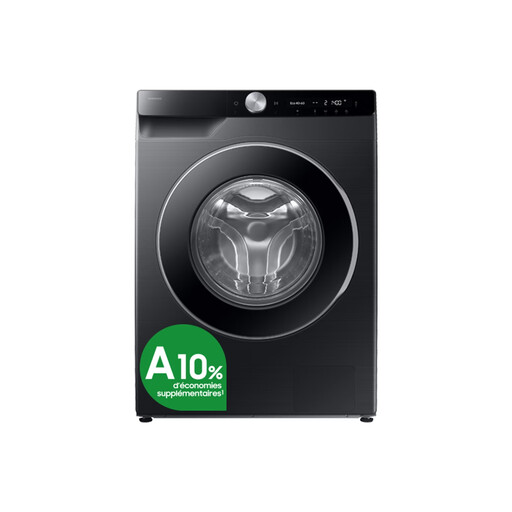 Image unavailable
Samsung WW90DG6U85LBU3 AI Wash 6000 Series, 9 kg
This 9 kg washing machine could be a good option if your batch loads make use of the capacity. Check there’s enough room for installation and to open the door, then compare its Eco 40-60 energy label data with those of the other models you’re considering.
View on Joybuy
 Image unavailable
Electrolux EW7FI259160V SteamCare SmartSelect, 9 kg
This 9 kg front-loader is worth considering for batch washing if there’s enough room to open the door. Its name indicates a 1,600 rpm spin speed. Also check the spin efficiency class and noise level on the exact model’s energy label; don’t assume performance based on spin speed alone.
View on Joybuy
 Image unavailable
Samsung WD11DG6B85BEU3, 11 kg wash and 6 kg dry
This washer-dryer is designed for situations where washing and drying need to be done in one appliance. Its stated capacity is 11 kg for washing and 6 kg for drying, so a full wash load can’t all be dried in one go. Compare the energy label data for washing and the combined cycle separately.
View on Joybuy
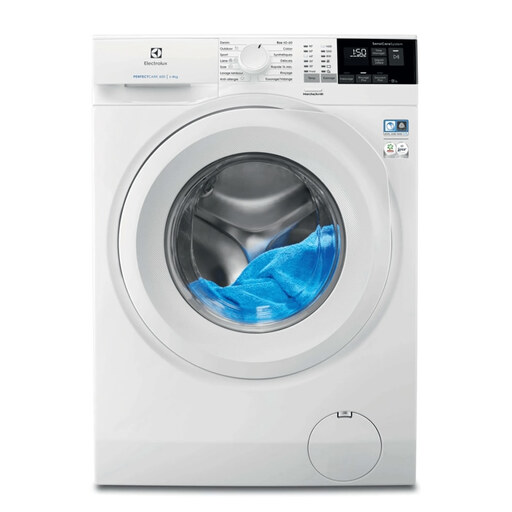 Image unavailable
Electrolux EW6F4109RA, 9 kg
This front-loader has a stated capacity of 9 kg and a spin speed of 1,400 rpm, making it suitable for batch loads. Check the dimensions against your available space, and consult the exact model’s energy label before comparing energy consumption.
View on Joybuy
Frequently asked questions
How do you compare the energy and water use of two washing machines?
Check the energy labels for kWh per 100 cycles and litres of water per cycle for the exact models, using the same Eco 40-60 programme. According to ADEME and the European Commission, the label also provides useful information for comparing noise and spin performance. Make sure these figures suit the capacity you need.
Can a 9 kg washer-dryer also dry 9 kg?
Not if the 9 kg refers only to its washing capacity: you’ll need to check the wash-and-dry capacity. Bosch, for example, lists a washing capacity of 9 kg and a wash-and-dry capacity of 5 kg for the WNA144V0FR. You’ll need to reduce a full wash load before running the combined cycle.
Will a low noise rating prevent vibrations during the spin cycle?
No. The noise figure on the energy label is no substitute for correct installation. Electrolux France notes that a hard, level floor is important during the spin cycle. Check the installation instructions for your chosen model.
What should you do with your old washing machine when buying a new one?
In France, under the “one-for-one” take-back scheme, retailers must take back an equivalent used appliance free of charge when selling a new one, according to the DGCCRF. Check the arrangements offered so you can organise collection when your new appliance is delivered.


