Households preparing weekday dinners
You need enough fridge space for several containers as well as your usual shopping. Que Choisir’s guidance on fridge capacity and Anses’s storage recommendations can help you work out what you need.


Start by counting your portions and measuring the space you need for chilled and frozen food separately, taking your usual shopping into account. If you mainly need more room for meals to keep in the fridge, compare the fridge capacities of fridge-freezers. If you need more space for frozen portions, consider an additional freezer and the room it will take up. Capacity doesn’t replace the good cooling and storage practices recommended by Anses.
You need enough fridge space for several containers as well as your usual shopping. Que Choisir’s guidance on fridge capacity and Anses’s storage recommendations can help you work out what you need.
You want to store frozen portions and find them easily. The freezer compartment’s capacity and how easy it is to access matter just as much as the overall capacity. Que Choisir also highlights the importance of ease of use when choosing a freezer.
You’re deciding whether to replace your only appliance or make better use of the space you already have. Compare fridge and freezer capacities separately, as well as the space each option will take up.
Consider this if: your containers and shopping fit without overloading the appliance, and its coldest zone is suitable.
The trade-off: this option doesn’t give you any extra capacity.
Consider this if: you need to replace your appliance and want to keep chilled and frozen food in one place.
The trade-off: the split between the two compartments may not suit your freezing needs.
Consider this if: your current fridge works for you, but you’ve run out of space for portions to freeze.
The trade-off: an extra appliance needs space and comes with electricity costs and maintenance.
Consider this if: you mainly need more fridge space and have room for a larger appliance.
The trade-off: a greater overall capacity doesn’t guarantee more fridge space or storage that suits your containers.
| Your priority | What to check | Who it matters to |
|---|---|---|
| Fridge space | Stated fridge capacity; space left for containers after your usual shopping. | I prepare several meals and want to keep them chilled without having to move everyday food out of the way. Around 36% of consumers prioritise fridge space and storing prepared meals. |
| Freezer capacity | Freezer compartment capacity; the shape of and access to drawers or the freezer chest. | I freeze portions and want to find them easily, rather than relying on a fridge-freezer’s overall capacity alone. Around 29% of consumers prioritise freezing capacity. |
| Storage and space | External dimensions and access to the installation spot; internal dimensions that fit your containers. | I need to fit the appliance into a small kitchen and store containers in different sizes. Around 21% of consumers put storage and the space an appliance takes up first. |
| Running costs | Energy label consumption in kWh/year; maintenance requirements for the exact model. | I’m comparing an extra appliance with the one I already own and want to take its running and maintenance costs into account. Around 14% of consumers prioritise running costs. |
In France, the Ministry of the Economy states that an energy label is compulsory for new fridges sold in shops or online. Compare the stated energy consumption of appliances that meet the same need, and take their respective capacities into account.
For batch cooking, Anses recommends putting food in the fridge no later than two hours after preparing it. If you have a large quantity—more than one litre or one kilogram—divide it into smaller portions to speed up cooling. Cover leftovers and keep raw and cooked food separate.
Frozen portions and chilled containers go in separate compartments, so the total capacity doesn’t tell you how the space is divided.
Check the fridge and freezer capacities separately, then make sure the internal dimensions will fit the containers you plan to use.
An additional freezer is another appliance to install and run.
Compare the new model’s energy label, and measure the space, access route and clearance needed to open it.
The Haier HCE200E is listed as having manual defrost, while Liebherr describes the FNd 522i Plus as NoFrost. These features apply to those specific models, not to all upright or chest freezers.
Check the defrosting method on the exact model’s product page before choosing.
An appliance’s capacity doesn’t replace cooling food promptly after preparation or checking its temperature. According to Anses, freezing food at home at −18 °C stops bacteria from multiplying, but most micro-organisms survive.
Plan your portions and how you’ll store them in line with food storage recommendations, not just the amount of space available.
Fridge-freezers are worth considering if you want to keep chilled and frozen food in one appliance. The WB70E973W is an example of a large-format model, but it doesn’t represent the whole range.
The RB38C600ESA/EF is an example of a fridge-freezer listed as 60 cm wide, with an overall capacity of 390 l.
The FNd 522i Plus NoFrost upright freezer is worth considering if you’re keeping your fridge and want to organise frozen portions.
The HCE200E chest freezer is worth considering if you have floor space and plan to store bulky containers.
These Joybuy appliances are for households looking to store fresh meals and frozen portions together, or add more freezing capacity. Check the capacity of each compartment and make sure the appliance will fit in your kitchen.
 Image unavailable
Worth considering if you want to keep chilled and frozen food in one appliance.
Stated capacities: 235 l for the fridge and 125 l for the freezer, with three freezer drawers. The product page lists Total No Frost, My Zone and Humidity Zone compartments, as well as easily accessible drawers.
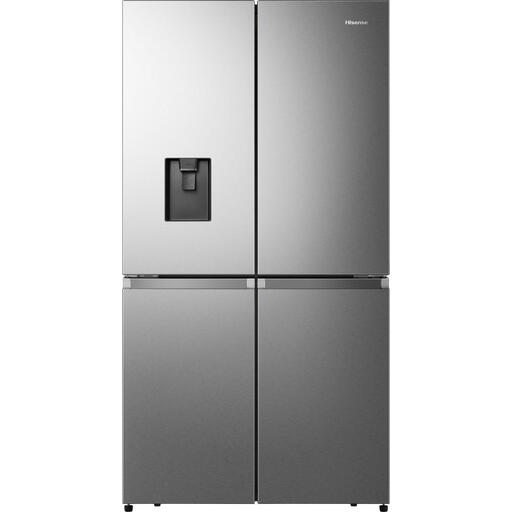 Image unavailable
Worth considering if you’re looking for a large fridge capacity and want the option to change how one compartment is used.
The product page lists 390 l of fridge space and a convertible My Fresh Choice compartment, adjustable from around −20 °C to +5 °C. It also lists Total No Frost and freezer drawers.
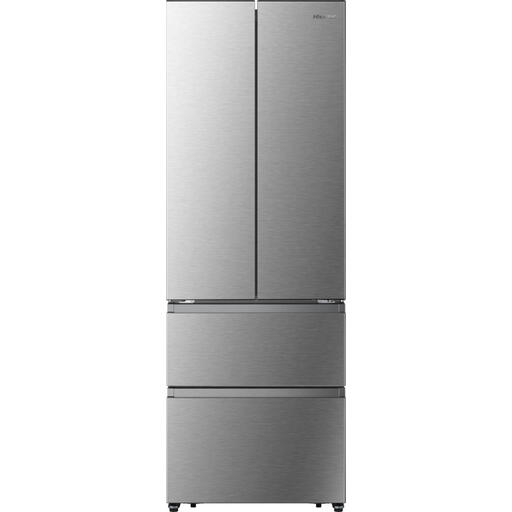 Image unavailable
Worth considering if you want to compare fridge space with the room available for frozen portions.
The product page splits the stated 485 l capacity into 336 l for the fridge and 149 l for the freezer. It lists Total No Frost, four glass shelves, six door balconies and two freezer sections.
 Image unavailable
Worth considering as an additional appliance if your current fridge meets your needs and you have space above the lid.
The stated capacity is 291 l. The appliance can be used as a fridge or a freezer, but not as both at the same time. The product page lists a removable basket, a five-level digital control and a defrost drain.
 Image unavailable
Worth considering if you want to compare two dedicated compartments for fresh meals and frozen portions.
The stated capacities are 333 l for the fridge and 192 l for the freezer. The product page lists No Frost, Multi-Airflow, glass shelves and a reversible door.
Count the portions you’ll need to store at the same time, measure their containers and allow room for the food you usually keep. Compare fridge and freezer capacities separately. As a general guide, Que Choisir recommends 100 to 150 l of usable fridge capacity for one person, plus 50 l for each additional person. This guide alone won’t determine the capacity you need for batch cooking, and it doesn’t quantify your freezing needs.
Anses recommends putting food in the fridge no later than two hours after preparing it. For a large quantity of more than one litre or one kilogram, divide it into smaller portions to speed up cooling. Cover leftovers, keep raw and cooked food separate, and avoid overfilling the appliance.
Don’t assume that a larger fridge will extend how long food keeps. For the ready meals and prepared dishes covered by its guidance, Anses recommends eating them within three days of purchase. This isn’t a set timeframe for every home-cooked recipe, so follow the guidance for the ingredients and dishes you’re preparing.
No. According to Anses, freezing food at home at −18 °C stops bacteria from multiplying, but most micro-organisms survive. The agency advises freezing food as soon as you buy or prepare it, rather than waiting until its use-by date is nearly up, and not refreezing food that has been defrosted.
In France, an energy label is compulsory for new fridges sold in shops or online, according to the Ministry of the Economy. Compare the stated annual consumption in kWh for appliances that meet similar needs, and check their compartment capacities too: appliances with different capacities can’t be compared on energy consumption alone.