People who prepare several meals in advance
If you store fresh ingredients, prepared meals and leftovers, compare the space available in each compartment rather than looking only at the fridge freezer’s total capacity.


Start by thinking about where you regularly run short of space: fresh food or frozen portions. A fridge freezer covers both needs in one appliance; a fridge alone makes sense if fresh storage is your priority, while a dedicated freezer is worth considering if your existing freezer compartment is too small. Before adding a second appliance, check that you have room for it and consider its ongoing electricity use.
If you store fresh ingredients, prepared meals and leftovers, compare the space available in each compartment rather than looking only at the fridge freezer’s total capacity.
If your current freezer compartment fills up as you prepare meals, compare its usable capacity with that of a dedicated freezer. Then check where you could put the appliance and its annual energy consumption.
A temporary lack of space doesn’t necessarily justify a second appliance. The ADEME notes that refrigeration appliances run continuously, and having more appliances than you need can increase your electricity use.
If you prepare meals in advance, start by looking at what regularly takes up space in your fridge and freezer. Then decide whether you need a different balance of capacity or an additional appliance.
Consider this if: you need space for both fresh food and frozen items in one appliance.
Bear in mind: both uses share the capacity and footprint of a single appliance.
Consider this if: your main need is space for fresh ingredients and leftovers, and you already have enough freezer space or don’t need much.
Bear in mind: this option won’t give you any extra space for frozen portions.
Consider this if: your frozen meals regularly fill the freezer compartment you already have.
Bear in mind: a dedicated appliance takes up space and uses electricity continuously. Make sure its layout suits how often you need to access your food.
| Criterion | What to check | What shoppers are looking for |
|---|---|---|
| Capacity split | Compare the usable litres in the fresh and frozen compartments separately, and check there’s room for the containers you usually use. | I prepare meals and want leftovers to be easy to reach, but I don’t want all the space taken up by frozen food. Around 36% of shoppers would put this balance at the top of their list. |
| Frozen storage | Note whether the freezer compartment regularly fills up; check the net capacity and layout of an upright or chest freezer. | My frozen portions build up from one cooking session to the next, so I need to be able to store them and find them easily. This capacity would be a priority for around 29% of shoppers. |
| Ongoing energy use | Check the kWh/year figure on the energy label and compare appliances of the same type with enough capacity for your needs. | I sometimes run out of space, but would rather not run a second appliance if a different layout would do the job. Around 21% of shoppers would prioritise this trade-off. |
| Installation | Check the dimensions, access routes, door opening and installation requirements. If it’s going in a cold room, check the ambient temperature range the model can operate in. | My kitchen or the room I have in mind has restrictions that could rule out an appliance, even if it has enough capacity. For around 14% of shoppers, being able to install it would be the deciding factor. |
The European Commission says that energy labels for domestic refrigeration appliances include information such as annual energy consumption and storage volumes. Consider these figures together: an energy class or a large total capacity alone won’t tell you whether the appliance has the right balance of fresh and frozen storage for your needs.
Two appliances with a similar total capacity may offer different amounts of space for fresh and frozen food. One compartment could be full while there’s still room in the other.
Compare the usable capacity of each compartment with the portions and leftovers you usually store before deciding you need more space overall.
An extra fridge or freezer runs continuously, even if you only need more storage on certain days. The ADEME points out that larger appliances and having more than you need can increase energy consumption.
Keep an eye on how you store food over several shopping and meal-prep cycles. If you don’t regularly run out of room, reconsider how you organise your food or the balance between compartments.
The stated capacity doesn’t guarantee the appliance will fit through the access route or that its doors will open in your kitchen. A built-in model must also fit its housing and meet the installation requirements.
Measure the space and access routes, then check the manual for the required clearances and door-opening space.
The permitted ambient temperature depends on the model. Beko says that some freezers in its range are suitable for cold rooms, but this doesn’t apply to every appliance.
Compare the actual room temperature with the range stated in the product details or manual for the specific model.
These models show some of the configurations you can compare; their features don’t apply to every appliance from the same brand.
The freestanding KGN492IAF fridge freezer is an example of a large-capacity model with separate fresh and frozen storage.
The built-in ENC8MC18S and EUN7NE18S models let you compare a fridge freezer with a dedicated freezer.
Beko’s chest freezer range is worth exploring if frozen portions and stored food regularly take up a lot of space.
These Joybuy models combine fridge and freezer storage in one appliance. If you’re considering a fridge-only model or a dedicated freezer instead, start by looking at how you divide your food between fresh and frozen storage before comparing other configurations.
 Image unavailable
Worth a look if you want to store fresh food and frozen portions in one appliance. This model is listed with Total No Frost and an E energy class. Check how the compartments are divided before deciding whether its total 360 L capacity is right for you.
 Image unavailable
Consider this if you regularly need a lot of space for fresh and frozen food. This four-door model is listed with Total No Frost and an E energy class. Check how the 467 L is divided and make sure you have enough room to install it.
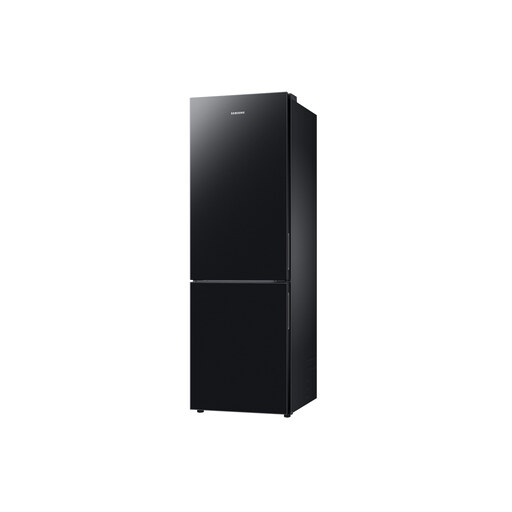 Image unavailable
One configuration to compare if you want to store fresh and frozen food in a fridge freezer. It has a stated total capacity of 344 L and an E energy class. Check the individual compartment capacities to see how much room there is for your portions.
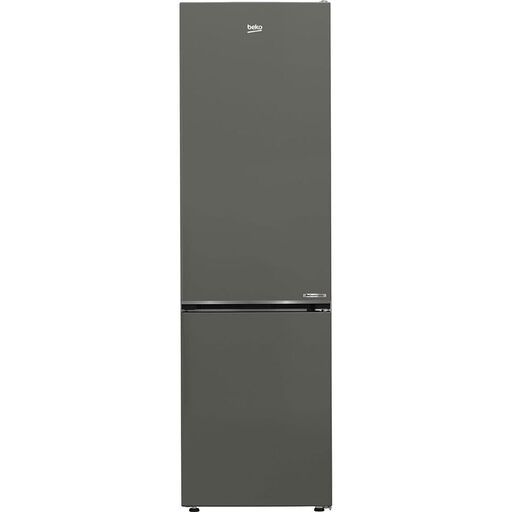 Image unavailable
Worth a look if you want to store fresh meals and frozen portions in a freestanding appliance. This model is listed with Total No Frost and a C energy class. Compare its total 355 L capacity with the space you need in each compartment.
 Image unavailable
Consider this if you’re looking for a fridge freezer to fit into a fitted kitchen. This 249 L model is listed with TwinTech No Frost and an E energy class. Check that it fits the housing, compare the compartment capacities and check the kWh/year figure before weighing it up against a freestanding appliance.
Compare the annual energy consumption in kWh and the compartment capacities, as well as the energy class. The European Commission also says that labels for domestic refrigeration appliances give information about noise. Where possible, compare models of the same type that offer the space you need.
The Anses recommends setting your fridge below 4 °C. Also follow food storage instructions and the appliance manual. This general guideline isn’t a substitute for advice tailored to your individual circumstances.
No. As the DGCCRF points out, a commercial warranty is optional and comes in addition to statutory warranties. If you buy an appliance from a professional seller in France, distinguish the terms of any commercial warranty from your legal rights if the product doesn’t conform to its description.
No. Check the permitted ambient temperature range and installation requirements for the specific model. Beko says that some appliances in its range have a Freezer Guard function that works at ambient temperatures down to −15 °C, but this feature isn’t available on every freezer.