How do the different configurations compare?
For batch cooking, start by choosing based on which compartment fills up and how often you run short of space. You can then compare the options that meet your needs by considering where they’ll go and how much energy they use.
Fridge-freezer
Consider this: if you’re short on space for both fresh and frozen food, and only have room for one appliance.
Bear in mind: freezer capacity varies by model. A large total volume doesn’t necessarily mean large freezer drawers.
Separate fridge and freezer
Consider this: if you regularly need plenty of freezer space and have room for two appliances in your home.
Bear in mind: you’ll need space for two appliances, and should add their annual energy consumption together to assess this setup.
Additional freezer
Consider this: if your current fridge has enough room for fresh food, but its freezer is too small.
Bear in mind: even a compact appliance needs space and runs continuously. Check that its usable capacity will meet your needs.
Reorganise your storage without adding an appliance
Try this: if the drawers only overflow after certain shops, or if your current storage layout wastes space.
Bear in mind: rearranging your food won’t create extra capacity if you’re still short of space.
| Consideration |
What to check |
What matters to consumers |
| Freezer capacity |
Compare the freezer’s usable capacity in litres and the layout of its drawers, separately from the fridge capacity. |
If the meals I’ve prepared regularly fill the drawers, I’d look for more freezer space first. Around 36% of consumers would make this their priority. |
| Space and positioning |
Measure the space and check that the doors can open fully. For a built-in model, also check the required housing dimensions. |
In a kitchen where every bit of space counts, I want to be able to install and open the appliance without blocking the way. This would be the main concern for around 29% of consumers. |
| Energy use and noise |
Check the energy consumption in kWh/year and the noise level in dB for models with a capacity that suits your needs. |
If the kitchen is close to the living area, I want to consider noise as well as continuous energy use. Around 21% of consumers would put these considerations first. |
| How often you run out of space |
Keep an eye on storage over several shopping cycles to tell the difference between a recurring lack of space and an occasional one. |
If the drawers rarely overflow, I’d rather reorganise my storage before adding a permanent appliance. Avoiding an extra appliance would be a priority for around 14% of consumers. |
Brands to compare by model
These brands offer models that are useful for comparing formats. The features below apply to specific models, not their entire ranges.
Bosch
Bosch product details let you compare freestanding and built-in fridge-freezers by the capacity of each compartment, dimensions and noise level.
- Bosch lists 189 L of fridge capacity and 90 L of freezer capacity for the freestanding KGN33NSDB fridge-freezer.
- This capacity split doesn’t apply to other Bosch models. Check both capacities for the model you’re considering.
Liebherr
Liebherr offers fridge-freezers and dedicated freezers, including built-in models to compare according to the space available.
- The brand lists a total capacity of 213 L for its built-in upright freezer, the SIFNdi 5188.
- For a built-in model, check the housing dimensions for the exact model you’re considering; they aren’t interchangeable between formats.
Whirlpool
The built-in WHC18T132FR fridge-freezer is a useful point of comparison if you’re replacing an appliance integrated into your kitchen.
- Whirlpool lists a total capacity of 250 L for this model and describes separate services related to its installation.
- The model’s features and the services offered with it don’t apply to every model or retailer.
Fridge-freezers for fresh and frozen food
These appliances combine fridge and freezer compartments in a single unit. For batch cooking, compare their total capacity with the space you actually need in each compartment. If you regularly run short of freezer space, a separate freezer is another option worth considering.
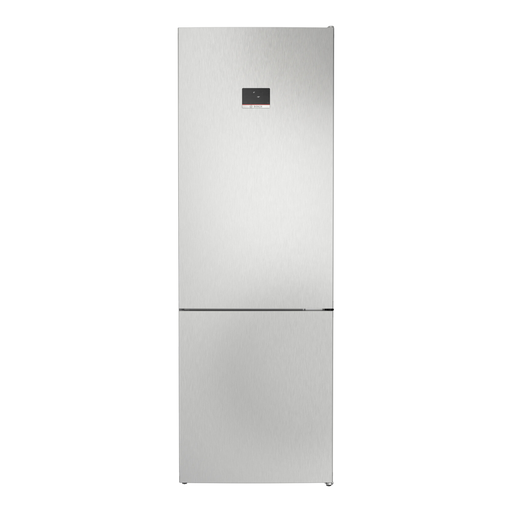 Image unavailable
Bosch KGN497LDF, grey 440 L fridge-freezer, D energy rating
Worth considering if you want to keep fresh food and frozen portions in one appliance. The stated total capacity is 440 L and the energy rating is D. Check how the capacity is split between compartments and how much space you’ll need for installation.
View on Joybuy
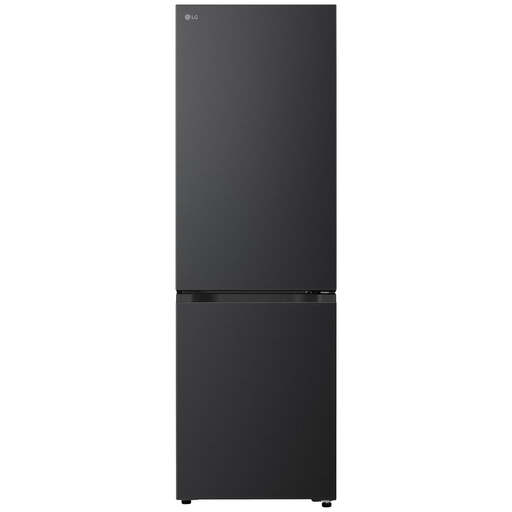 Image unavailable
LG GBBS312CEV, black 333 L fridge-freezer, C energy rating
Worth considering if one appliance needs to hold both prepared meals to keep chilled and portions to freeze. Its name indicates a total capacity of 333 L and a C energy rating. Check the capacity of each compartment against your storage habits.
View on Joybuy
 Image unavailable
Samsung RF50C530EB1, black 495 L multi-door fridge-freezer, E energy rating
This multi-door model is worth comparing if you’re looking for plenty of capacity in one appliance. Its name indicates a total capacity of 495 L and an E energy rating. Make sure the capacity split, overall dimensions and route into your kitchen are suitable.
View on Joybuy
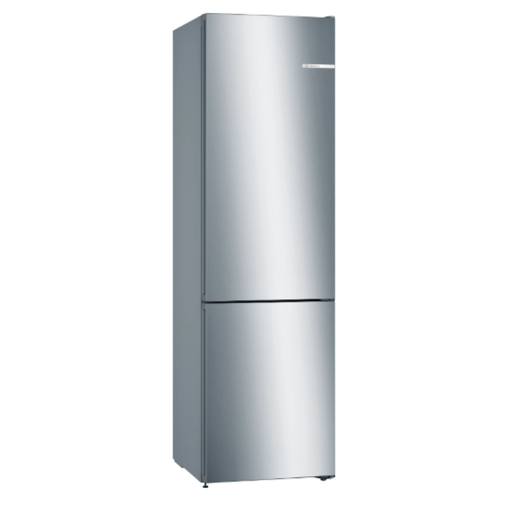 Image unavailable
Bosch KGN39VLEB, 368 L fridge-freezer in stainless steel finish, E energy rating
Worth comparing if you’re looking for a fridge-freezer for your weekly shop and don’t want to choose based on total capacity alone. This model is listed at 368 L with an E energy rating. Check the freezer capacity, dimensions and noise level if your kitchen is close to your living area.
View on Joybuy
 Image unavailable
Bosch KGN33NLEB, 282 L fridge-freezer in stainless steel finish, E energy rating
This bottom-freezer fridge-freezer is worth considering if you want to store fresh and frozen food in one appliance. Its name indicates a total capacity of 282 L and an E energy rating. Check that the freezer compartment is large enough for the portions you prepare and keep each week.
View on Joybuy
Frequently asked questions
Is a fridge-freezer enough if I prepare meals for the week?
Yes, as long as the usable capacity of both the fridge and freezer meets your usual storage needs. Compare the compartments separately. If the freezer regularly fills up while the fridge has enough room, an additional freezer may be a better way to address the problem, provided you have space for it.
How do I compare the energy use of two cooling appliances?
Compare the annual energy consumption in kWh/year for configurations and capacities that suit your needs, rather than relying on the energy rating alone. If you have a separate fridge and freezer, add together the annual consumption of both appliances. ADEME points out that they run continuously.
Is NoFrost essential for batch cooking?
No. It doesn’t replace having enough freezer capacity. If you want to reduce the need to deal with ice build-up, check the defrosting system listed for the freezer compartment of the specific model, then compare its capacity and energy use too.
What’s included when my old fridge is taken back in France?
When you buy a new appliance, the retailer must offer to take back your used one, including for distance sales, according to the Ministry for the Ecological Transition. Ask the retailer how collection is arranged, and check separately what’s included in delivery, installation and set-up.


