When storing batch-cooked meals, start by working out how many portions you have at your busiest, and how often you take them out. An upright freezer makes it easier to organise food and access it regularly; a chest freezer is better suited to larger reserves, if you have the space. Before adding another appliance, check whether better organisation would be enough. And if you’re also replacing your fridge, see whether the freezer compartment in a new fridge freezer can hold your usual stock.
Who are these options for?
Households preparing portions every week
If you often take out frozen meals or sauces, consider how easy it is to reach the drawers and how much room your containers need. An upright freezer lets you organise portions without taking up the floor space required by a large chest freezer.
Households building up a large reserve
A chest freezer is worth comparing if you store lots of batch-cooked meals or bulk-buy groceries and have a suitable space for it. Measure the clearance needed to open the lid, too, and think about how you’ll reach food at the bottom.
Households considering replacing their fridge freezer
If your fridge also needs replacing, compare the usable freezer capacity of a new fridge freezer with your maximum stock of portions. The appliance’s total capacity alone won’t tell you how much space is available for frozen food.
What should you consider before choosing?
First, work out how many portions you store at once, then compare each type of appliance for storage, available space and the information on its energy label.
| What to consider | What to check | What I need |
|---|
| Usable capacity |
Compare the freezer capacity in litres with the amount you store during your busiest weeks. For a fridge freezer, check the freezer compartment rather than its total capacity. |
I want to be able to store my usual portions without having to choose between meals I’ve already prepared and new ones. |
| Access to portions |
Check the drawers or shelves in an upright freezer, or the baskets in a chest freezer. Make sure you can find containers stored at the bottom. |
I often take out a particular meal, so clear organisation matters just as much as capacity. |
| Space and installation |
Measure the appliance, the route it needs to fit through and the space required to open the door or lid fully. If it’s going in a cold room, check the ambient temperature range allowed for that exact model. |
The freezer needs to be accessible in my kitchen, utility room or garage. I shouldn’t assume every model is suitable for an unheated room. |
| Energy use and noise |
According to the European Commission, the energy label shows details including the energy class, annual energy consumption, capacity and noise level. Compare kWh/year between appliances that offer similar storage capacity. |
An extra appliance will run continuously, as the ADEME points out, so I want to consider its stated energy consumption and whether it will be near living areas. |
| Adding or replacing an appliance |
Check whether clearer organisation would free up enough space. If you also need to replace your fridge, compare the freezer capacity of the fridge freezers you’re considering before adding a dedicated appliance. |
I’d rather work out whether I genuinely need more capacity or simply better organisation, then choose between a second appliance and replacing my fridge freezer. |
What pitfalls should you avoid?
-
Choosing capacity based only on household size
How often you batch-cook, whether you bulk-buy and the size of your containers all affect how much space you need. A larger appliance also adds ongoing energy use, as the ADEME points out.
For a few weeks, note how many portions, boxes and bags you have when your freezer is fullest. Then compare that amount with the usable capacity of the models you’re considering.
-
Choosing a chest freezer without considering access
A large capacity doesn’t necessarily make meals easy to find. Food at the bottom of a chest freezer is less accessible than in drawers.
Measure the space needed to open the lid, and plan to organise portions by basket and date if you’ll be storing them regularly.
-
Comparing energy classes alone
The energy class alone doesn’t tell you the annual energy consumption or how much food the appliance can hold. The label described by the European Commission also includes kWh/year, capacity and noise level.
Compare these details across models that can store your usual amount of food, while also taking installation requirements into account.
-
Assuming a freezer will work in a cold garage
Whether an appliance can cope with low ambient temperatures depends on the model, not just its type. For example, Liebherr states that FrostProtect works down to −15 °C for the CFe 2080 Pure, under the conditions specified for this model.
Before installing a freezer in an unheated room, check the ambient temperature range and the instructions for the model you’ve chosen.
Which brands and models should you compare?
These models show a range of capacities and installation options. Their specifications don’t apply to every appliance from the same brand.
Bosch
The range includes upright freezers and fridge freezers.
- Bosch states that the GSN58AWEV upright freezer has a freezer capacity of 366 L and No Frost technology.
- Bosch states that the KGN33NLEB fridge freezer has a freezer capacity of 89 L. The difference between these two models shows why it’s important to compare the relevant compartment, rather than assuming all fridge freezers have the same capacity.
Liebherr
The CFe 2080 Pure chest freezer is an example of a horizontal model to consider if storing larger reserves is a priority.
- Liebherr states that this model has a capacity of 353 L and external dimensions of 82 × 125 × 71 cm.
- Liebherr states that FrostProtect works down to −15 °C for the CFe 2080 Pure under the specified conditions. Check that these suit the location you have in mind.
Electrolux
The EUN7NE18S built-in freezer is worth considering if you’re looking for an appliance that fits into your kitchen.
- Electrolux states that this model has a net capacity of 212 L and uses 236 kWh/year.
- Check the dimensions of the space and the installation instructions before choosing a built-in model.
Appliances for different storage needs
This Joybuy selection includes fridge freezers to consider if you’re also replacing your fridge, as well as upright freezers and a chest freezer for extra dedicated freezer space. For each appliance, compare the stated capacity with the number of portions you need to store, and check that it’s suitable for the space you have in mind.
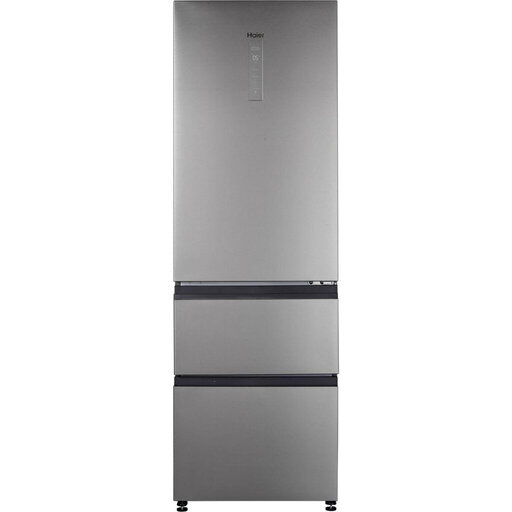 Image unavailable
Haier HTW5618ENMG, 360 L three-door fridge freezer
Worth considering if you’re also replacing your fridge: check that the freezer compartment can hold your maximum stock of portions. The model name indicates a total capacity of 360 L, Total No Frost, an E energy class, Wi-Fi and My Zone. Check the dimensions and clearance needed for installation.
View on Joybuy
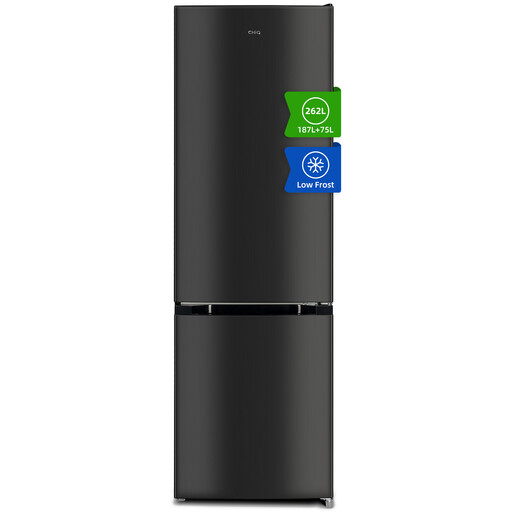 Image unavailable
CHiQ JR263LGE, 262 L Low Frost fridge freezer
If you’re replacing a fridge freezer, first compare the space allocated to frozen food with the number of portions you usually store. This model is listed as a 70/30 configuration, with a width of 54 cm, a height of 176 cm and Low Frost technology. Check the instructions for maintenance requirements and make sure the location is suitable, particularly if it’s unheated.
View on Joybuy
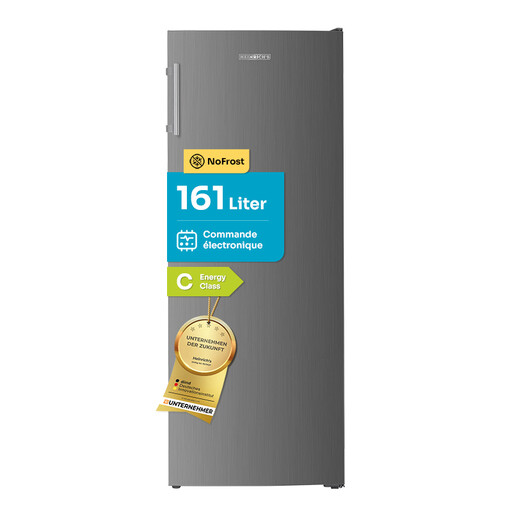 Image unavailable
Heinrich’s, 161 L No Frost upright freezer
A dedicated appliance to compare if you want to keep frozen meals separate from your existing fridge freezer. Its name indicates a capacity of 161 L, No Frost technology and a C energy class. Before buying, compare the capacity with your stock, and check the dimensions, kWh/year and ambient temperature range for the intended location.
View on Joybuy
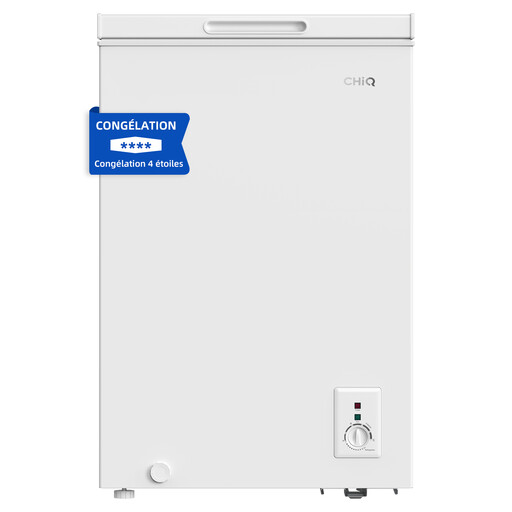 Image unavailable
CHiQ JR99DWE, 99 L chest freezer
This 99 L chest freezer has a removable basket to keep some of your food separate. If you store batch-cooked meals in it, plan how you’ll find portions under the basket, too. Measure the space needed to open the lid, and check the kWh/year and ambient temperature range before choosing a location.
View on Joybuy
 Image unavailable
COMFEE' RCU60WH2(E), 60 L upright freezer
Compare this 60 L upright model with the number of portions you keep at any one time. It has an E energy class and an adjustable temperature setting. The product title and description don’t agree on the number and type of storage compartments, so confirm the layout before buying, along with the kWh/year and ambient temperature range.
View on Joybuy
Frequently asked questions
What should I look for on a freezer’s energy label?
Check the energy class, annual energy consumption in kWh, freezer capacity and noise level. The European Commission says these details appear on the label. Compare them across appliances that can hold your usual stock rather than choosing based on the energy class alone.
Can you put a chest freezer in an unheated garage?
Yes, but only if the ambient temperature range allowed for the model suits your garage. Liebherr states that FrostProtect works down to −15 °C for the CFe 2080 Pure under the conditions specified for this model; this feature doesn’t apply to all chest freezers.
Should I add a freezer if my fridge freezer is short on space?
Not necessarily. Work out the maximum number of portions you need to store and compare it with the freezer capacity of the fridge freezer you’re considering. If you’re also replacing your fridge, a suitably sized fridge freezer may do the job. To illustrate the difference between these particular models, Bosch states that the KGN33NLEB has a freezer capacity of 89 L, compared with 366 L for the GSN58AWEV upright freezer.
Does No Frost mean you never need to maintain your freezer?
No. Follow the cleaning and maintenance instructions for your model, even if it’s labelled No Frost. If ice builds up and takes up storage space, Electrolux says that defrosting can help free up room. Check your appliance’s instructions first.


