How do the different styles compare?
Chest freezer
Consider it: if you want space for large shops or bulky food and have room for a wide appliance.
Bear in mind: the deep compartment and top-opening lid can make items at the bottom harder to reach.
Upright freezer
Consider it: if you want to keep portions separate and regularly access different types of food.
Bear in mind: its drawers may not offer the capacity of a large chest freezer. Que Choisir compares the two styles in terms of capacity and storage.
Under-counter freezer
Consider it: if you want extra freezer space in a small area.
Bear in mind: check its capacity against the amount of food and prepared meals you actually plan to store.
Fridge freezer
Consider it: if you want to combine refrigeration and freezing in one appliance.
Bear in mind: the total capacity isn’t the same as the capacity of the freezer compartment alone, so compare the latter with your needs.
If you regularly store prepared meals or large shops, start with the amount of food you need to freeze. Then consider whether the style suits the room and the way you access your food.
| Consideration |
What to check |
Who this matters to |
| Capacity and bulky food |
Compare the capacity of the freezer compartments and measure the space needed for a chest freezer with its lid open. |
If I want to store large shops without stacking all the food, I prioritise available capacity and room for bulky items; around 33% of consumers put this first. |
| Room temperature |
Note the room’s minimum and maximum temperatures, then check the range permitted for the exact model. |
If my freezer is going in a cellar or a cold utility room, I first want to know whether the appliance is suitable for that space; this is the top priority for around 27% of consumers. |
| Access and maintenance |
Check the compartments, how easy it is to see your portions and how the appliance deals with frost. |
If I often take prepared meals out of the freezer, I want to find them without moving everything else; around 27% of consumers prioritise easy everyday access. |
| Space or a single appliance |
Measure the space and the clearance needed for the doors; with a fridge freezer, check the freezer capacity separately. |
If there’s no room for a second large appliance, I look for a compact extra freezer or one appliance that combines both functions; this is the main concern for around 13% of consumers. |
To narrow down your options, the EU energy label shows details including annual energy consumption, freezer compartment capacity and noise levels. Compare these figures across appliances with similar styles and capacities. If you often add large quantities of food, also check each model’s freezing capacity. The stated storage time during a power cut may be useful if you’re concerned about interruptions to your electricity supply.
Products to suit your storage needs
These appliances show three ways to meet your needs: an upright freezer to organise portions, a chest freezer for separate extra storage, or a fridge freezer to combine both functions. The compact upright freezer featured here is better suited as extra storage. Compare the stated capacity of each appliance with the amount of food you actually want to freeze.
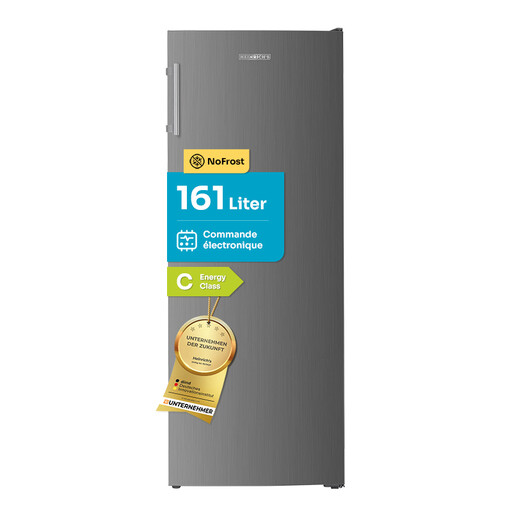 Image unavailable
Heinrich´s 161 L upright freezer, stainless steel
Worth considering if you want to keep prepared portions separate in a dedicated freezer. The product name states a capacity of 161 L, three freezer drawers, two additional compartments, a No Frost function, a reversible door hinge and energy class C.
Before installing it in a cold room, check its permitted ambient temperature range. Also check its dimensions and stated storage time during a power cut if these are important to you.
View on Joybuy
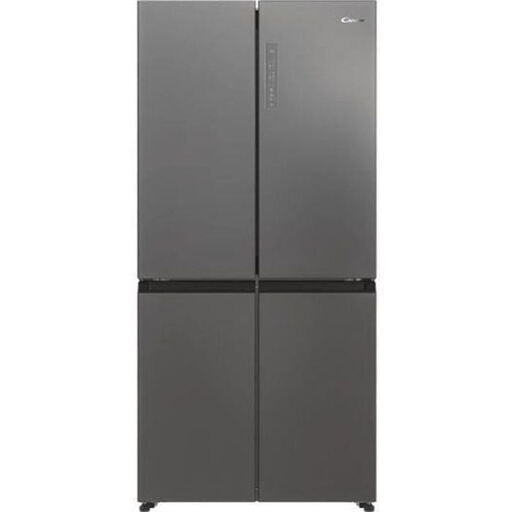 Image unavailable
Candy CFQQ5T817EPS four-door fridge freezer, 467 L
Consider this if you want to combine refrigeration and freezing in one appliance. The product name states a total capacity of 467 L, four doors, Total No Frost and energy class E. This total capacity doesn’t tell you how much freezer space you get.
Check the capacity of the freezer compartment, then measure the appliance and allow enough clearance to open the doors.
View on Joybuy
 Image unavailable
COMFEE' RCU60WH2(E) 60 L upright freezer
This 60 L model is worth considering as extra storage rather than for regular large shops. The product name lists three drawers, adjustable temperature, a reversible door and energy class E.
If you plan to place it under a worktop, check its height, ventilation requirements and door clearance. Also check the permitted ambient temperature for the room.
View on Joybuy
 Image unavailable
AUCMA 291 L convertible chest freezer
Worth considering if you want a separate appliance for storing bulky shops. The product name states a capacity of 291 L, a convertible fridge or freezer mode, a removable basket, five-level digital temperature control and energy class E.
Allow enough room to open the lid and reach the bottom of the freezer. If you plan to install it in a garage or cellar, check the model’s ambient temperature range before choosing a location.
View on Joybuy
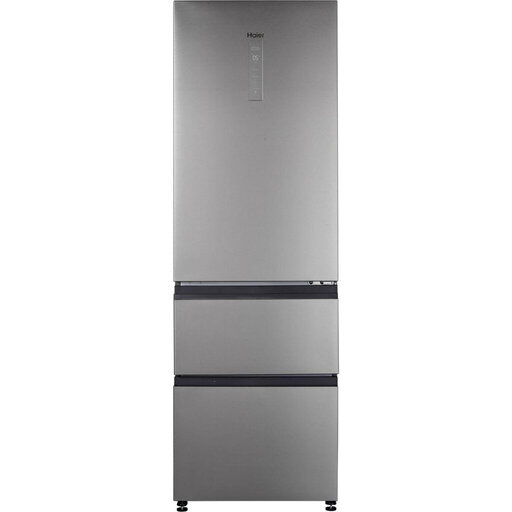 Image unavailable
Haier HTW5618ENMG three-door fridge freezer, 360 L
This fridge freezer is suited to households that prefer one appliance for both refrigeration and freezing. The product name states a total capacity of 360 L, three doors, Total No Frost, Wi-Fi, My Zone and energy class E.
If you’re choosing it to store lots of prepared meals, check the freezer capacity rather than relying on the total capacity. Also check the permitted ambient temperature range if the room isn’t heated.
View on Joybuy
Frequently asked questions
Which climate class do I need for a cellar or utility room?
Choose a freezer with an ambient temperature range that covers the room’s minimum and maximum temperatures. For example, Beko and Liebherr give a range of 10 to 32 °C for SN and 10 to 43 °C for SN-T. If the room falls below 10 °C, look for a model that’s explicitly stated to be suitable and check its rating plate or specifications.
What should I compare on a freezer’s energy label?
Check the A to G energy class, annual energy consumption, freezer compartment capacity and noise level. The European Commission lists these details on the energy label for the household appliances concerned. Compare them across models with similar capacities and styles rather than choosing on the letter alone.
Does an extended warranty replace the statutory guarantee?
No. In France, the statutory guarantee of conformity applies to goods sold by a business to a consumer, whether they’re new, second-hand or refurbished, as the Ministry for the Economy explains. A commercial extended warranty is separate. Read its terms, including the duration, exclusions and service arrangements, and don’t confuse it with your statutory rights.
How should I dispose of my old freezer?
Take it to an appropriate recycling or collection scheme rather than putting it out with general waste. France’s Ministry for the Ecological Transition lists collection points, recycling centres and retailers. If you’re buying an appliance of the same type, ask the seller about take-back and removal arrangements.


