Which households is it for?

Households freezing several batches every week

If you prepare family-sized portions or lots of meals in advance, dedicated freezer space can become invaluable. A chest freezer works well when you have enough floor space, while a large upright freezer makes portions easier to access.

Weekday cooks who want to find every portion easily

If you regularly take out prepared meals, the drawers in an upright freezer and the adaptable layout of a well-designed model can make organising everything much easier. However, check that these features are included on the product page for your chosen appliance.

Small homes with occasional freezing needs

If you only prepare a few meals in advance and do not have room for a second appliance, a fridge freezer may be sufficient, provided its freezer capacity genuinely matches the number of portions you store each week.

Buying priorities

Chest freezer

Consider it: for freezing large batches in a utility room, cellar or another space with sufficient floor area.

Keep in mind: access to items at the bottom is less direct than with drawers, so organising food by category and date is particularly useful.

Upright freezer

Consider it: if you often take out individual portions or flat-packed meals and want to organise them by rotation.

Keep in mind: check the door opening, whether the drawers can be removed and the ventilation clearance around the appliance.

Fridge freezer

Consider it: if batch cooking accounts for some of your meals and there is no room for a second appliance.

Keep in mind: the freezer compartment fills up more quickly; compare its capacity separately from the fridge capacity.

Priority What to check Your needs
Available freezer capacity Compare the capacity of the freezer compartment or compartments in litres with the portions you store at the same time. Keep it separate from the total fridge capacity. Chest freezers can hold up to 600 L, while upright freezers generally offer around 200 L and up to 400 L for the largest models, according to Que Choisir. I want to store my batches without overfilling the existing compartment or buying more capacity than I need.
Portion organisation Look at the drawers, compartments and baskets, and check whether they can be removed. With a chest freezer, plan your own system for organising portions by date or category. I want to find the meals I have planned quickly and avoid leaving portions forgotten at the bottom.
Installation and continuous use Measure the height, width, depth, opening area and ventilation clearance. When capacities are similar, also compare the energy class, kWh/year and noise level on the energy label. For a garage or cold cellar, check the climate class of the exact model. My appliance must fit properly in the intended room and remain suitable for its environment.

Mistakes to avoid

  • Choosing a fridge freezer based on its total capacity

    Total capacity combines the fridge and freezer areas. For your batch-cooked meals, only the capacity of the freezer compartments directly meets your storage needs.

    Make a note of the freezer capacity of your current appliance, estimate how many portions are stored at the same time, then compare this figure with the freezer capacity shown on the energy label and product page.

  • Underestimating the space and clearance needed for a chest freezer

    Chest freezers offer generous capacity but take up more floor space. Que Choisir commonly cites widths of 110 to 140 cm and a depth of around 70 cm; a lid without sufficient clearance makes everyday use more difficult.

    Measure the width, depth, height, opening area and ventilation clearance before choosing a model.

  • Assuming any freezer will automatically work in a garage

    Suitability for a cold room depends on the ambient temperature limits specified by the manufacturer. Beko states, for example, that some Freezer Guard models operate down to -15 °C; this feature is not universal.

    For a cellar, garage or unheated room, explicitly check the climate class or minimum operating temperature in the documentation for the exact model.

  • Forgetting about access and identifying portions

    A chest freezer provides a large open storage area, but an upright freezer generally makes access easier thanks to its drawers. Without an organisation system, portions can be left at the bottom and never used.

    Choose accessible drawers for meals that need to be used quickly, or plan to use baskets and date labels in a chest freezer. Also check that the drawers can be removed in the intended installation space.

Relevant brands for this type of appliance

Bosch

A brand offering freestanding and built-in upright freezers, as well as fridge freezer solutions; worth considering if you prioritise vertical storage and easy access to portions.

  • Bosch states that some upright models offer NoFrost, removable drawers and shelves, as well as a Big Box, depending on the model.
  • These features vary by model and should be confirmed on the product page for your chosen appliance.

Liebherr

A brand offering chest freezers and domestic refrigeration appliances; worth considering when your plans call for generous storage capacity in a suitable room.

  • Across its chest freezer range, Liebherr highlights frost-reduction systems, lighting and lid-closing mechanisms.
  • Check the capacity, dimensions, storage time during a power cut and climate class of the exact model, as these features vary by model.

Beko

A brand offering chest freezers in a range of capacities in France and, on selected models, features designed for unheated rooms.

  • Beko states that some chest freezers feature MinFrost, adjustable shelves, warning lights and Freezer Guard for ambient temperatures down to -15 °C.
  • These features only apply to models that specifically list them; a standard chest freezer should not be assumed to be suitable for a garage or to have the same internal dividers.

Joybuy options for batch cooking

This selection brings together Joybuy options across the three formats considered: an upright freezer for organising portions, a chest freezer for dedicated storage and a fridge freezer where space is more limited.

Heinrich's 161 L No Frost upright freezer

Heinrich's 161 L No Frost upright freezer

Designed for organising portions you need to access frequently, with three drawers and two shelves listed.

The product page lists No Frost, Multi Flow, Fast Freeze down to -22 °C, an LED display, an alarm and a reversible door. Check the dimensions, kWh/year, noise level, clearances and climate class before installation.

Joybuy

CHiQ JR263LGE 262 L fridge freezer

CHiQ JR263LGE 262 L fridge freezer

An option for smaller homes, with 75 L of separate freezer capacity and three listed drawers.

The product page states 187 L of fridge capacity, 215 kWh/year, energy class E, Low Frost, a freezing capacity of 3.5 kg/24 h and a 540 × 550 mm footprint. The stated N-ST range is not suitable if the ambient temperature falls below 16 °C.

Joybuy
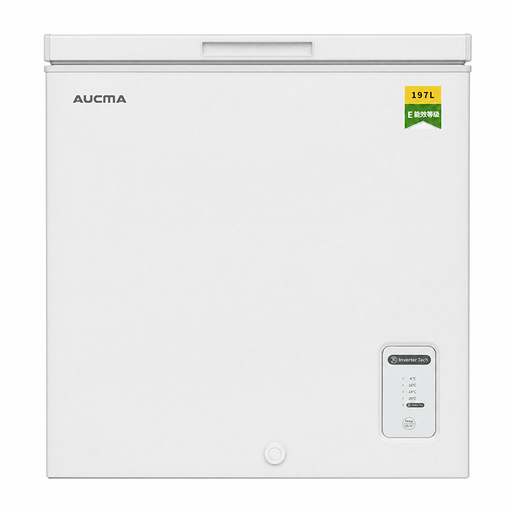
AUCMA 197 L convertible chest freezer

AUCMA 197 L convertible chest freezer

For storing large batches in a dedicated top-opening appliance.

Listed features include a 197 L capacity, a 4-star freezer rating, removable basket, five-level digital control, 197 kWh/year and 38 dB. Defrosting is manual; check the climate class if the appliance will be kept in an unheated room.

Joybuy
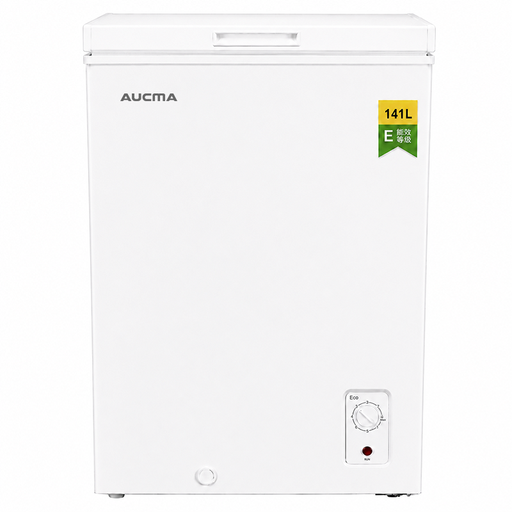
AUCMA 141 L convertible chest freezer

AUCMA 141 L convertible chest freezer

Additional freezer capacity in a 141 L chest freezer designed for weekly meal preparation.

The product page lists fridge/freezer modes, a removable basket, 179 kWh/year, 38 dB, a seven-level thermostat and dimensions of 632 × 554 × 848 mm. The single basket is no substitute for drawers; check the climate class and opening space.

Joybuy

TCL CF182EWE0FR 140 L chest freezer

TCL CF182EWE0FR 140 L chest freezer

For adding dedicated freezer storage, with a basket designed for small bags or portions kept near the top.

The product page lists 140 L, a storage basket, a lid that stays open, castors, a mechanical thermostat and dimensions of 637 × 556 × 846 mm. Check the kWh/year, noise level, climate class and internal layout before buying.

Joybuy

Frequently asked questions

Which information should you compare first between a separate freezer and a fridge freezer?

Compare the capacity of the freezer compartments in litres, not the appliance's total capacity. When freezer capacities are similar, then compare the kWh/year, noise level, dimensions and energy class from A to G shown on the European Union energy label.

Can I install any freezer in a garage or unheated cellar?

No. Check the minimum ambient temperature or climate class specified for the exact model. Beko states, for example, that some Freezer Guard models operate down to -15 °C; this capability does not extend to other appliances.

What rules should I remember for prepared meals that are not frozen?

Anses recommends maintaining a temperature of between 0 and +4 °C in the coldest part of the fridge. For home freezing, it recommends freezing food as soon as it is bought or prepared, rather than waiting until the use-by date.

Can defrosted food be refrozen?

Anses recommends defrosting food in the fridge, in the microwave using the defrost setting, or quickly through cooking or reheating. Defrosted food should be eaten promptly, within no more than three days, and must not be refrozen.

Is No Frost essential for batch cooking?

No. This feature can reduce the need for defrosting on models that offer it, but freezer capacity, organisation and overall footprint remain the main criteria. Always check that No Frost is included on the product page for the exact model.