Households that batch cook
If you regularly freeze portions, think about how you’ll find them again: the compartments in an upright freezer make it easier to organise everything, while a chest freezer needs its open space to be arranged carefully.


If you’re short of space for both fresh and frozen food, start by comparing the capacity of each compartment in a large fridge-freezer or a multi-door model. If frozen meals account for most of the extra space you need, a separate freezer is a more direct solution: an upright model makes sorting and frequent access easier, while a chest freezer prioritises capacity, provided you have room for it and can keep its contents organised. For each model you’re considering, also check its dimensions, the recommended room temperature, annual energy consumption and stated power-cut storage time.
If you regularly freeze portions, think about how you’ll find them again: the compartments in an upright freezer make it easier to organise everything, while a chest freezer needs its open space to be arranged carefully.
If you’re running out of room for both fresh and frozen food, it’s worth comparing a larger fridge-freezer with a multi-door model. Make sure the freezer compartment can hold your usual supply, though, rather than focusing only on the appliance’s total capacity.
A utility room, cellar or garage might have space for a freezer to store extra supplies. Before considering a chest freezer, measure the floor space and check that the model’s recommended temperature range is suitable for the room.
First work out which area is short of space, then compare the appliances that meet your needs with the room you have available and the way you like to store meals.
| Factor | What to check | My needs |
|---|---|---|
| Capacity by compartment | Compare the usable capacity of the fridge and freezer separately. For a standalone appliance, match the stated capacity to your supplies: UFC-Que Choisir says chest freezers can hold up to 600 l, compared with around 200 l for standard upright models and up to 400 l for larger ones. | Are my fridge shelves as full as my freezer, or do I mainly need space for frozen portions? |
| Access to meals | Check how many drawers or compartments there are and how they open. In a chest freezer, plan how you’ll organise baskets and label smaller portions. | I want to find ready-made meals quickly and avoid leaving the oldest portions at the bottom. |
| Installation | Measure the appliance, the route to its location and the space needed to open the doors or lid. If it’s going in a cool or unheated room, check the permitted ambient temperature range for the exact model. | Can my kitchen fit a wider appliance, or could I put a second appliance in a suitable room? |
| Energy use and power cuts | Compare the kWh/year shown on the energy label for appliances with similar capacities and intended uses. Check the stated storage time during a power cut separately: UFC-Que Choisir assesses this as part of its freezer testing. | If I add an appliance that runs continuously, I want to know how much energy it uses and compare its power-cut storage time with other models. |
A larger fridge-freezer may still leave you with too little room for frozen meals. On the other hand, a separate freezer won’t free up space on your fridge shelves.
Estimate separately how much you store in the fridge and freezer during a busy week, then compare the usable capacities for each.
Its open space is useful for bulky supplies, but smaller portions can be difficult to find if they’re stacked on top of each other.
Plan storage categories, date your containers and keep the food you need to use first within easy reach.
The permitted ambient temperature depends on the model. A freezer that can be used in a cold room isn’t necessarily suitable for every chest or upright model.
Compare the manufacturer’s stated operating temperature range with the temperatures the room may reach.
Two appliances with enough room for your supplies may differ in annual energy consumption and stated storage time during a power cut. According to ADEME, fridges and freezers run continuously.
To compare similar models, check the kWh/year on the energy label, usable capacity and the storage time stated for each appliance.
A brand to consider when comparing fridge-freezers with multi-door models.
A brand worth considering if you need a chest freezer for a large amount of frozen food.
A brand to compare if you’re choosing between an integrated appliance and a separate freezer.
These Joybuy models let you consider either more integrated fridge and freezer space in the kitchen or a separate freezer for frozen meals and supplies. Compare their configurations with the type of space you’re actually short of.
 Image unavailable
Worth considering if you want more space for fresh and frozen food in one appliance.
Four doors, Total No Frost and energy rating E. Compare the capacity of each compartment with the amount of frozen food you store.
 Image unavailable
Another integrated option to compare if you need space for both fresh and frozen food.
Total No Frost, energy rating E and Wi-Fi are listed in the model description. Check that the freezer compartment can hold your usual supply.
 Image unavailable
Worth considering if you’re short of freezer space and prefer drawers to one large open compartment.
No Frost and energy rating C are listed in the product description. Check the dimensions and ambient temperature range before choosing where to put it; this appliance won’t provide extra space for fresh food.
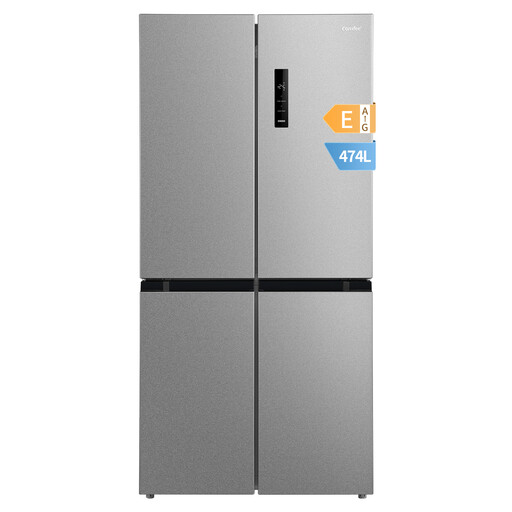 Image unavailable
Compare it with other integrated appliances if you want to keep fresh and frozen food in the kitchen.
The product description lists a total capacity of 474 L and energy rating E. If you store a lot of frozen meals, check the freezer compartment’s capacity separately.
 Image unavailable
This chest freezer gives you a separate space for frozen food. Compare its 140 L capacity with the amount of food you plan to store.
The product description lists energy rating E and a counterbalanced lid. Check the space needed to open the lid and which accessories are actually included.
Yes, if you also need extra fridge space and its freezer compartment can hold your usual supplies. If frozen meals are your main concern, compare the freezer compartment’s capacity with that of a separate appliance rather than relying on the fridge-freezer’s total capacity.
An upright freezer makes it easier to organise and reach portions thanks to its compartments. A chest freezer is a good choice if you want open space for bulkier supplies and can organise the contents using containers and labels.
Measure its width, depth and height, the route to its location and the space needed to open the lid. UFC-Que Choisir says chest freezers generally take up more floor space than upright models. If you’re putting one in a cellar or garage, also check the model’s ambient temperature range.
Compare their annual energy consumption in kWh and energy ratings for similar capacities and intended uses. ADEME reminds us that these appliances run continuously, so check the energy use of the specific model, especially if you’re thinking of adding a second appliance.