Batch cooks building up a long-term stock
You prepare several portions at once or buy in bulk. Your freezer needs enough capacity for this new stock without displacing the food you’ve already stored.


If your batch-cooked portions and bulk buys regularly take up more room than you have available, choose a dedicated appliance based on how much you need to store and how you want to access your food: a chest freezer for a large stock, or an upright freezer for organising it in compartments. A fridge freezer is a good option if you’re replacing your fridge too and its freezer capacity is sufficient. For occasional use, first check how much space is available in your current appliance. Whatever you choose, measure the space and compare the annual energy consumption of models that meet your needs.
You prepare several portions at once or buy in bulk. Your freezer needs enough capacity for this new stock without displacing the food you’ve already stored.
You separate meals and food types so you can get to them often. The layout of the drawers, bins and shelves matters just as much as the stated capacity.
You need to fit the appliance into a specific space, or you’re replacing your fridge as well. Compare the overall dimensions, the capacity of the freezer compartment alone and the annual energy consumption.
Consider this if: you regularly build up a large stock and have enough floor space.
Bear in mind: you’ll need room to open the lid and a storage system that makes it easy to find portions at the bottom.
Consider this if: you want to separate your meals and regularly access portions stored in different compartments.
Bear in mind: the height, the route for getting the appliance into position and the clearance needed for the door to open.
Consider this if: you’re replacing your fridge as well and the freezer compartment can hold your usual portions.
Check: the capacity quoted for the whole appliance isn’t all available for frozen food.
Stick with this if: you only freeze food occasionally and already have enough room for the portions you plan to store.
Limitation: better organisation won’t create extra capacity if the compartment is regularly full.
If you cook in batches, start with the amount you want to store, then compare each type of freezer against the space you have and how often you’ll need to access your portions.
| Factor | What to check | Who is this for? |
|---|---|---|
| Freezer capacity | Compare the capacity dedicated to freezing, not the total capacity of a fridge freezer. If you’ll be adding a lot of food at once, also check the freezing capacity in kg/24 h. | When my batch-cooked meals and bulk buys already fill the freezer, I look for enough room to store a long-term stock. Around 33% of consumers would prioritise this need for capacity. |
| Storing portions | Check the size and layout of the drawers, shelves or baskets against the containers you use. | If I often take out a portion, I want to find it without moving everything else. Easy access and organisation would be the main priority for around 25% of consumers. |
| Space and installation | Measure the space, delivery route and door clearance. If the appliance will be in an unheated room, check the permitted ambient temperature range for the model. | My chosen appliance needs to fit in the room and open properly. These practical considerations would come first for around 25% of consumers. |
| Adding another appliance | Check how much space is free in your current appliance, then compare the kWh/year of models with a similar size and capacity. | If I only freeze food from time to time, I’d rather check whether my current appliance is enough before adding another one that runs continuously. This would be the priority for around 17% of consumers. |
The energy rating doesn’t tell you how much the appliance uses over a year or how much it can hold. ADEME points out that fridges and freezers run continuously.
Once you’ve worked out how much capacity you need, compare the kWh/year of models with a similar size and format.
Whirlpool and Electrolux product specifications list the fridge and freezer compartments separately. The total capacity quoted for the whole appliance isn’t all available for your frozen meals.
Check the freezer capacity on its own and compare it with the stock you plan to keep.
The permitted ambient temperature depends on the model. Liebherr states that FrostProtect works down to -15 °C for the CFe 2500 Pure; this doesn’t apply to other chest freezers.
Check the manual for the permitted ambient temperature for the appliance and the room you have in mind.
An appliance may fit in its space but not through a doorway, or there may not be enough room to open the lid. Replacing an appliance also raises the question of what to do with the old one.
Measure access routes and the clearances specified in the manual, then check the collection options offered when you place your order.
Bosch models available in France let you compare a freestanding upright freezer with a freestanding fridge freezer.
The CFe 2500 Pure is an example of a chest freezer suited to storing a large stock.
The LND5FE18S built-in fridge freezer is a useful comparison if your installation depends on a fitted space.
The WHK2 6493 X4E is worth considering if you’re replacing both your fridge and freezer with a freestanding fridge freezer.
These Joybuy models include chest freezers for extra storage, an upright freezer for keeping portions separate, and fridge freezers if you’re replacing your fridge too. Choose according to the freezer capacity you need, then check the installation requirements for the model you select.
 Image unavailable
Worth considering if you need extra chest freezer space for batch-cooked meals and bulk buys.
Listed capacity of 291 L; switchable fridge and freezer modes, LED lighting, five-level digital control and a removable basket.
Check how much capacity you need for your stock, and make sure the permitted ambient temperature is suitable if the appliance will be installed in a cold room.
 Image unavailable
Worth considering if you’re replacing your fridge too and want a freezer compartment for your frozen portions.
Listed total capacity of 467 L, four doors, Total No Frost and energy rating E.
Compare the capacity of the freezer compartment alone with your usual stock; 467 L is the capacity of the whole appliance.
 Image unavailable
Worth considering if you want to add a dedicated freezer and organise portions by compartment.
Listed capacity of 161 L, drawers, LED display, reversible door, No Frost and energy rating C.
Check the dimensions for delivery access and installation, along with the kWh/year and freezing capacity if you’re comparing several models.
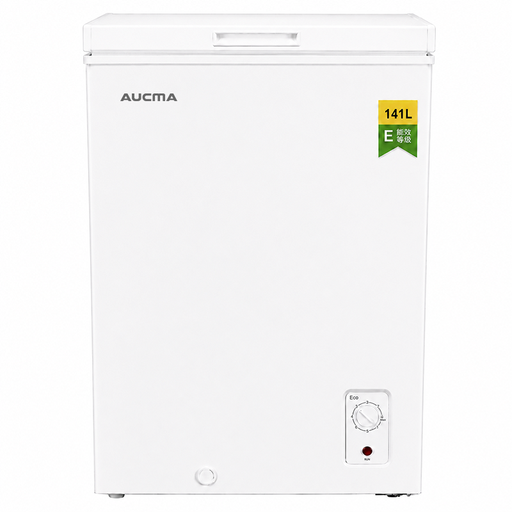 Image unavailable
Worth considering for extra storage if 141 L is enough for the portions you plan to keep.
Switchable fridge and freezer modes, seven-level thermostat, removable basket and energy rating E.
Set the appliance to suit your chosen use. If it’s going in a cold room, check the permitted ambient temperature for this model.
 Image unavailable
Worth considering if you’re replacing your fridge but still need room to freeze your batch-cooked meals.
Listed total capacity of 360 L, three doors, Total No Frost, Wi-Fi, My Zone and energy rating E.
Check the capacity reserved for freezing separately: the total includes the fridge compartment too.
Yes, as long as its freezer compartment can hold your usual portions as well as the food already stored. The Electrolux LND5FE18S and Whirlpool WHK2 6493 X4E specifications give freezer capacities of 73 L and 150 L respectively. Compare the capacity of the freezer compartment, not the total capacity of the fridge freezer.
Compare annual energy consumption in kWh/year, compartment capacities, noise level and energy rating. When choosing between two appliances, consider these details alongside your storage needs and, ideally, compare models with similar formats and capacities.
No. Check the permitted ambient temperature range in the manual for the model you’re considering. Liebherr states that FrostProtect works down to -15 °C for its CFe 2500 Pure, but this feature doesn’t apply to other chest or upright freezers.
Anses recommends picking up chilled and frozen food at the end of your shop, using insulated bags and keeping the journey home as short as possible. Then follow the storage instructions on the food packaging and the guidance for your appliance.
Arrange for it to be collected or take it to a collection point for electrical and electronic equipment. The French Ministry for Ecological Transition describes a ‘one-for-one’ take-back scheme for an appliance of the same type when you buy a new one. Confirm the practical arrangements with the seller before delivery.