For batch cooking, start by considering how much space you need for meals to keep chilled and portions to freeze. A larger fridge mainly meets the first need; a fridge-freezer combines both in one appliance, while an additional freezer is worth considering if your existing compartment regularly runs out of space. Compare the capacity of each section, the space available and the kWh/year shown on the energy label. According to the Ministry of Agriculture, a freezer compartment in a fridge-freezer cannot be used to freeze food.
Who are these options for?
The balance between fresh meals and frozen portions will determine which compartment to prioritise.
Households who eat their meals within a few days
If most of your containers go in the fridge, start by checking its usable capacity and how much shelf space is really available. For cooked meals, ANSES recommends using the coldest part of the fridge, at 4 °C, and not overfilling the appliance.
Households who freeze portions in advance
If you regularly set meals aside for several weeks, compare the freezer capacity and drawer layout with the size of your containers. The Ministry of Agriculture distinguishes between a freezer, which can freeze food, and a freezer compartment in a fridge, which is only for keeping frozen products for a limited time.
Kitchens with space for only one appliance
A fridge-freezer combines chilled and frozen storage in one appliance. Check the capacity of each compartment separately, the dimensions required for installation and the annual energy consumption shown on the energy label.
What should you compare?
Count the containers that need to fit in the fridge and freezer at the same time, then compare this with the specifications of each appliance.
| Criteria | What to check | What suits your needs |
|---|
| Capacity of each compartment |
Compare fridge and freezer capacity separately, then consider the space taken up by drawers, shelves and your containers. The total capacity of a fridge-freezer doesn’t tell you how much space is set aside for freezing. |
I mainly eat my prepared meals within a few days: extra fridge space could be useful. If I regularly freeze batches and my current compartment is full, I’ll also compare an additional freezer. |
| Food storage |
Find the coldest part of the fridge and check that it is at 4 °C for cooked meals, in line with ANSES recommendations. If you want to freeze prepared meals, check the type of compartment: the Ministry of Agriculture says a freezer compartment in a fridge-freezer isn’t suitable. |
My cooked meals need to fit in the coldest part without the containers blocking air circulation. For portions intended for the freezer, I’ll check that the compartment is designed for freezing food. |
| Space and electricity |
Measure the space available and the clearance required. The European energy label shows the capacity of each compartment and annual consumption in kWh. Compare the appliances you’re considering, bearing in mind that an additional freezer will also run continuously. |
I only have space for one appliance: a fridge-freezer could meet both needs if its capacity is sufficient. Before adding another appliance, I’ll check that the portions I want to freeze justify the space it takes up and the energy it uses. |
| Everyday storage |
Check that larger containers fit in the drawers and that the shelves give you easy access to your meals. For freezers, Gifam says No Frost prevents frost build-up, but recommends covering food to stop it drying out. |
If I prepare several meals in advance, I want to find each container easily, without stacking portions in a way that makes them hard to reach or overfilling the fridge. |
What mistakes should you avoid?
-
Looking only at a fridge-freezer’s total capacity
This figure combines two spaces used for different types of storage. For example, Bosch lists 218 l of fridge capacity and 103 l of freezer capacity for its KGN367ICT.
List the containers you need to store in each section at the same time, including food already in the appliance, then compare the capacity and usable dimensions of each compartment.
-
Planning to freeze meals in a freezer compartment
According to the Ministry of Agriculture, a freezer compartment in a fridge-freezer keeps food that is already frozen for a limited time, but cannot be used to freeze food.
If you prepare portions to freeze, check the type of compartment and its capabilities in the manual for the appliance you’re considering.
-
Adding a freezer without checking its energy use
A second appliance solves a lack of space, but it runs continuously. ADEME notes that size and buying more capacity than you need can affect electricity consumption.
Compare the kWh/year shown on the energy labels of the models you’re considering with the freezer capacity you’ll actually use.
-
Filling every shelf without considering the colder zones
ANSES recommends putting cooked meals in the coldest part of the fridge and avoiding overfilling it.
Use the manual to find this area, check its temperature and leave enough room for your containers without blocking air circulation.
A look at selected brand models
These specifications apply to the models listed, not to each manufacturer’s entire range.
Bosch
Bosch lists 218 l of fridge capacity and 103 l of freezer capacity for its KGN367ICT fridge-freezer, which measures 186 × 60 × 66,5 cm.
- The separate capacities make it easy to compare each compartment with the containers you need to store.
- Compare the 103 l of freezer capacity with the number of portions you plan to store, rather than looking at the total capacity alone.
Liebherr
Liebherr lists a capacity of 238 l and dimensions of 165,5 × 59,7 × 67,5 cm for its FNe 5006 Pure NoFrost upright freezer.
- It’s an option for separate freezer storage when your existing compartment no longer has enough room.
- You’ll need to allow space for a separate appliance and check its annual energy consumption on the model’s energy label.
Beko
Beko’s B1RCNA344W fridge-freezer features fan-assisted cooling, a fast-freeze function, an open-door alarm and a reversible door.
- The reversible door and alarm are features worth considering to suit your kitchen layout and how you use the appliance.
- Check the net capacity of each compartment before deciding how much room there is for your portions.
Whirlpool
For its WFNF82EOXFR fridge-freezer, Whirlpool lists 223 l of fridge capacity, 97 l of freezer capacity and three drawers in the freezer section.
- The separate capacities and drawers give you a practical guide to organising your containers.
- Check that the 97 l capacity and drawer dimensions suit the number of portions you want to freeze.
Fridge-freezers available from Joybuy
These models combine fridge and freezer storage in one appliance. To choose between them, check how capacity is split between the two sections: the total capacity won’t tell you how many portions you can freeze.
 Image unavailable
Candy CFQQ5T817EPS, 4-door 467 L Total No Frost fridge-freezer
Keep some meals chilled and freeze others in one appliance with this four-door fridge-freezer, which has a stated total capacity of 467 L. Check the capacity of each compartment, the space needed for installation and the coldest zone before storing cooked meals.
View on Joybuy
 Image unavailable
Haier HTW5618ENMG, 3-door 360 L Total No Frost fridge-freezer
This model combines chilled and frozen storage for a routine that includes fresh meals and frozen portions. Its stated total capacity is 360 L; check the capacity of each section, where your containers will fit and the dimensions required for installation.
View on Joybuy
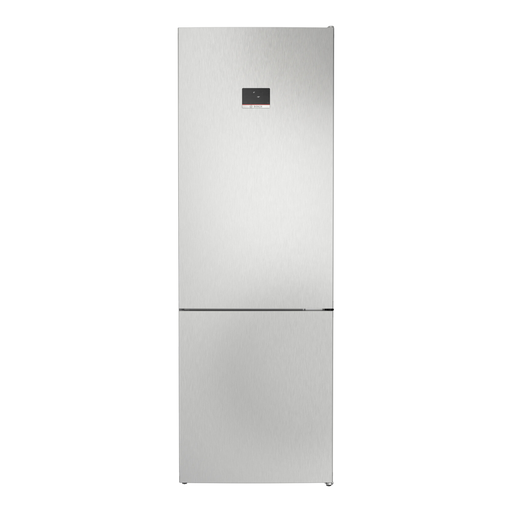 Image unavailable
Bosch KGN497LDF, 440 L class D fridge-freezer
If you’re looking for one appliance for fresh and frozen meals, compare its stated 440 L capacity with the space allocated to each type of storage. Also check the available height, the coldest zone for cooked meals and the freezer’s defrosting requirements in the manual.
View on Joybuy
 Image unavailable
CHiQ JR263LGE, 262 L Low Frost 70/30 fridge-freezer
With a stated width of 54 cm and height of 176 cm, this fridge-freezer combines chilled and frozen storage in a compact space. Check that the 70/30 split suits the number of portions you want to store, allow for defrosting the freezer compartment as described in the manual, and check the coldest zone for cooked meals.
View on Joybuy
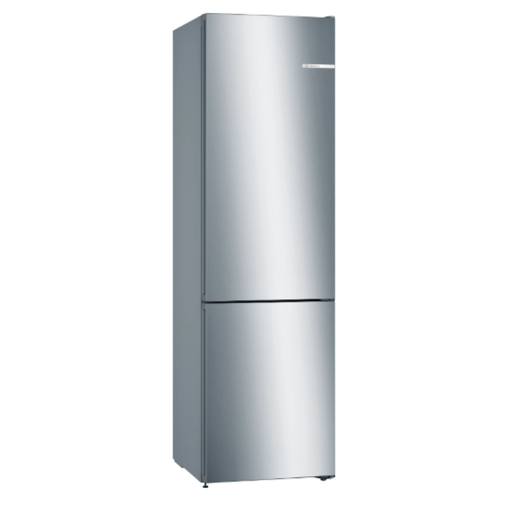 Image unavailable
Bosch KGN39VLEB, 368 L class E fridge-freezer
This fridge-freezer is worth considering if you need space for both chilled meals and portions to freeze. As well as its stated total capacity of 368 L, compare the capacity of each compartment and check the freezing capacity and coldest zone for cooked meals in the manual.
View on Joybuy
Frequently asked questions
Where should you put cooked meals in the fridge?
Put them in the coldest part of the fridge. ANSES recommends checking that it is at 4 °C and avoiding overfilling the appliance. This guideline doesn’t set a storage time that applies to every recipe.
Is a freezer compartment enough to freeze prepared portions?
No. According to the Ministry of Agriculture, a freezer compartment in a fridge-freezer is for keeping food that is already frozen for a limited time. To freeze your own meals, check that the appliance or compartment is designed for this purpose.
How do you compare a fridge-freezer with adding a freezer?
First compare the usable capacity for each purpose, then check the kWh/year shown on the energy label for each model you’re considering. An additional freezer uses energy continuously, on top of the fridge you already have. The European Commission also says that the energy label shows the capacity of each compartment.
Does No Frost mean you don’t need to cover frozen portions?
No. Gifam says No Frost prevents frost build-up, but food should still be covered to stop it drying out. This feature doesn’t replace checking the temperature or organising the drawers properly.


