Anyone who wants to control how much salt they add
You’re preparing a base for several meals and want to take account of the salt in the stock, sauces or toppings you add later. Plain couscous lets you season each portion separately.


To prepare several meals while keeping added salt in check, start with plain couscous and check the salt per 100 g. Auchan lists less than 0.01 g for its organic medium couscous and 0.05 g for its medium couscous, while E.Leclerc lists 0.0 g for Comptoir du Grain. Seasoned sachets and ready meals can save you a few steps, but check the ingredients and nutrition information for each product. Plain couscous does not automatically qualify as “reduced salt”.
You’re preparing a base for several meals and want to take account of the salt in the stock, sauces or toppings you add later. Plain couscous lets you season each portion separately.
You’re looking for a sachet that’s quick to prepare or a meal you can reheat. The trade-off is having less control over the ingredients already included, so check the “salt” line for the product you’re considering.
The plain couscous products mentioned here are made from durum wheat. Before preparing several portions, also check the allergen information for any seasoned version and all the toppings you plan to use.
For batch cooking, first decide whether you want to season a shared base yourself or use portions that are already seasoned or prepared. Then compare the salt content of similar products, without confusing dry couscous with a ready meal.
Choose this if: you want to use the same base in several recipes and season each one separately.
Bear in mind: you’ll still need to prepare the stock and toppings. Some instructions suggest salting the soaking water, which would increase the salt in the meal.
Choose this if: a pre-measured portion would make a quick meal easier to prepare.
Check: the recipe is already seasoned. Carrefour’s listing for Tipiak Couscous Parfumé aux Épices du Monde includes salt among the ingredients.
Choose this if: you need a complete meal rather than a base to add toppings to.
Check: the full ingredients and nutrition information. E.Leclerc lists 0.7 g of salt per 100 g for its Côté Table Couscous volaille merguez. This figure applies to that meal, not to all ready-made couscous.
| Factor | What to check | Who it matters to |
|---|---|---|
| Salt and ingredients | Check the “salt” line per 100 g and see whether salt is listed among the ingredients. Compare dry couscous with other dry couscous, and ready meals with other ready meals. | I want to season several meals without accidentally adding up the salt in the base, stock and sauces. Around 36% of consumers put checking salt at the top of their list. |
| Time and portions | Check the preparation instructions and how many portions the pack will make. | When meals need to be ready quickly, I prefer portions that are easy to divide, even if a seasoned recipe gives me less flexibility. This is a priority for around 29% of consumers. |
| Versatility | Check whether the couscous is plain or already seasoned, then adjust the amount of dry product to suit each recipe. | I plan to use the same base for several meals without giving them all the same seasoning. Around 21% of consumers would put this flexibility ahead of other factors. |
| Pack size and availability | Choose a pack size that suits the number of meals and check that the product is available at your store or through your chosen collection option. | To plan my cooking ahead, I need a pack size I can find again when I’m making more portions. Around 14% of consumers would prioritise this. |
The ingredients list for plain couscous and a nutrition claim do not mean the same thing. The DGCCRF notes that nutrition claims are governed by Regulation (EC) No 1924/2006.
When choosing between two similar products, check their ingredients lists and salt content per 100 g. Don’t apply the “reduced salt” claim to either product yourself.
Some plain couscous instructions suggest using salted water. Any salt added during preparation will come on top of the salt in the stock, sauces and toppings.
If you want to limit added salt, don’t automatically salt the water when preparing the couscous. Adjust the seasoning once you’ve chosen the other components.
Dry couscous and a ready-to-eat meal have different ingredients and different levels of hydration. Their salt content per 100 g therefore doesn’t, on its own, tell you how two equivalent portions compare.
Compare dry couscous with other dry couscous, and ready meals with other ready meals. For the meals you prepare, also take account of the ingredients you add.
The plain couscous products mentioned here are made from durum wheat. Carrefour’s product information for Tipiak Couscous Parfumé aux Épices du Monde also lists celery among the ingredients.
Before preparing several meals, check the allergen information on the exact pack of couscous you’re buying and on the packs of any toppings.
Auchan and Auchan Bio plain medium couscous can both be used as a base to season when preparing meals.
Couscous Grains Moyens is a plain couscous intended to be prepared and seasoned separately.
Carrefour Sensation plain couscous makes it easy to distinguish a base you can season yourself from a couscous that’s already prepared.
Couscous Parfumé aux Épices du Monde is a seasoned sachet recipe, so it’s different from plain couscous from the same brand.
Aldi France lists the medium couscous in this range in a 1 kg pack.
This selection includes medium-grain couscous, a cooking-sachet version and pearl couscous. If you’re preparing several meals and keeping an eye on salt, compare the salt content per 100 g and the ingredients on each pack, then choose a size that suits your portions.
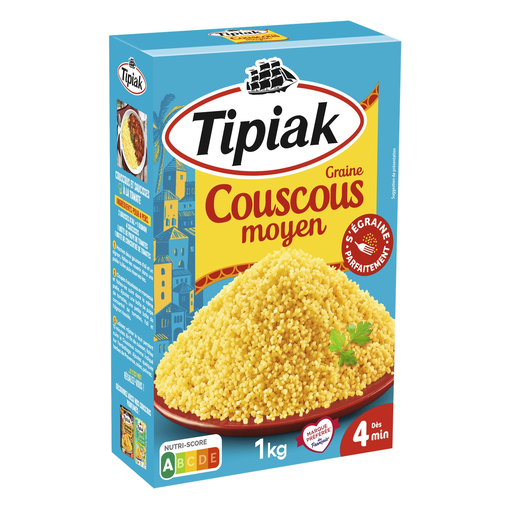 Image unavailable
The 1 kg pack is a good option if you’d like to divide one base between several recipes.
Before deciding how to season the portions, check the ingredients, salt content per 100 g and preparation instructions on the pack.
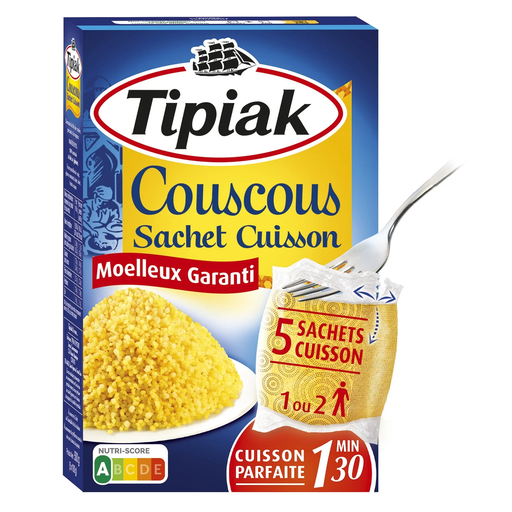 Image unavailable
The five 100 g sachets make it easy to plan separate portions rather than measuring them out of one large pack.
Before adding them to your meals, check the cooking instructions, ingredients and salt content on the pack.
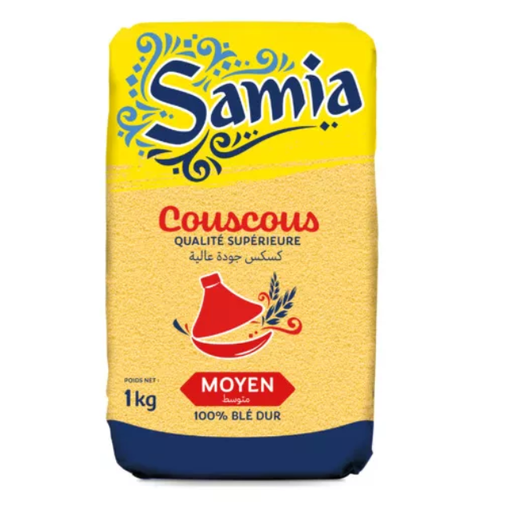 Image unavailable
This 1 kg pack can be divided between several meals.
To plan your meals, check the preparation instructions, ingredients and salt content per 100 g on the pack.
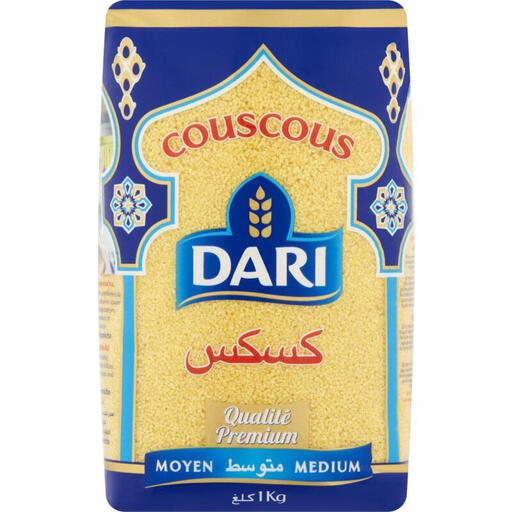 Image unavailable
The medium grain and 1 kg pack are worth considering if you’re planning to make several portions from one pack.
Check the preparation instructions and the “salt” line per 100 g before serving it with your toppings.
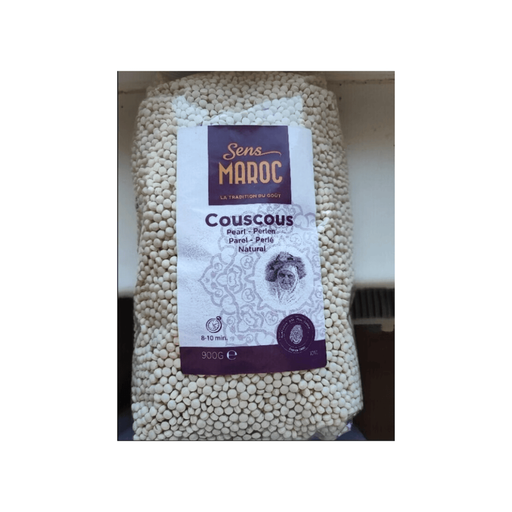 Image unavailable
This 900 g pearl couscous gives you an alternative to medium-grain couscous for your recipes.
Don’t assume that the instructions for medium-grain couscous apply. Check the instructions, ingredients and salt content on the pack.
No. “Plain” describes the recipe, while “reduced salt” is a nutrition claim governed by Regulation (EC) No 1924/2006, as the DGCCRF notes. To make your choice, compare the ingredients and salt content per 100 g of similar products.
Plain couscous lets you decide how to season the base and toppings separately. Still, check its salt content per 100 g and take account of any stock or sauce you add to each recipe.
Not necessarily. Salt suggested in some instructions is an addition to the dry couscous. If you want to control how much you add, don’t automatically salt the water; adjust the seasoning to suit the finished meal.
First check for the wheat in the couscous products mentioned here, then check the ingredients and any “may contain” information on each pack. Carrefour’s product information for Tipiak Couscous Parfumé aux Épices du Monde lists celery, among other ingredients. Always follow the information on the specific product you buy.
It depends on the salt content of the particular recipe, not just the format. E.Leclerc lists 0.7 g of salt per 100 g for its Côté Table Couscous volaille merguez. Compare this meal with other ready-to-eat meals, and don’t assume the same figure applies to the whole category.