
Livraison le jour même ou le lendemain

Qualité garantie

Débloquez vos offres de bienvenue: Livraison GRATUITE | Jusqu'à -80 % | 30 jours d'essai gratuits à JoyPlus
Téléchargez l'application
In a flat, a cramped bathroom or a shared utility room, a foldable clothes airer needs to do more than hold a few garments. It must stay stable when loaded with damp washing, tuck away neatly when not in use and fit around your laundry routine. Disappointments often come from misunderstanding the capacity or from dimensions that don’t make clear how much space the airer actually takes up.
Capacity measured in linear metres refers to the combined length of the rails, not the floor area the airer occupies. So a clothes airer may boast an impressive capacity but still take up a lot of room when fully opened. Always check its dimensions both open and folded, especially if you plan to tuck it behind a door or beside a piece of furniture.
Towels, sheets and jeans become much heavier when wet. A lightweight model may tip over if all the washing is placed on one side. Lockable castors, non-slip feet and a reinforced frame are particularly useful on a mobile clothes airer.
Aluminium, treated steel and some plastics are better suited to the humid conditions of a bathroom or balcony. However, no clothes airer should be left standing in water or on a permanently wet surface. For a foldable wall-mounted airer, the fixings matter just as much as the quality of the rails. Check what your wall is made of, choose suitable wall plugs and follow the stated maximum load.
For one person or a student, a compact model offering 10 to 15 metres of drying space may be enough, depending on how often you do laundry. Families may be better off choosing a large-capacity clothes airer with several tiers, adjustable wings or extendable rails.
It’s also worth checking the maximum load. This is different from the capacity in metres: it tells you how much wet washing the frame can support. Spread heavier items across several levels to put less strain on the joints and help prevent the airer from leaning.
Rails that are too close together slow down drying because air can’t circulate properly between clothes. A well-designed depth, adjustable wings or a multi-tier frame can give you more room to space out your washing.
Measure the available space in three configurations:
Castors are useful if you need to move the airer between the bathroom, balcony and utility room. Choose swivel wheels, ideally with a brake. For a fixed installation, a foldable wall-mounted airer frees up the floor when folded away.
If you’re looking for a space-saving solution, consider other items that could complement your airer, such as a laundry basket, a vertical shelving unit, a storage unit or a compact tumble dryer. They don’t meet exactly the same need, but can work well alongside an airer in a small room.
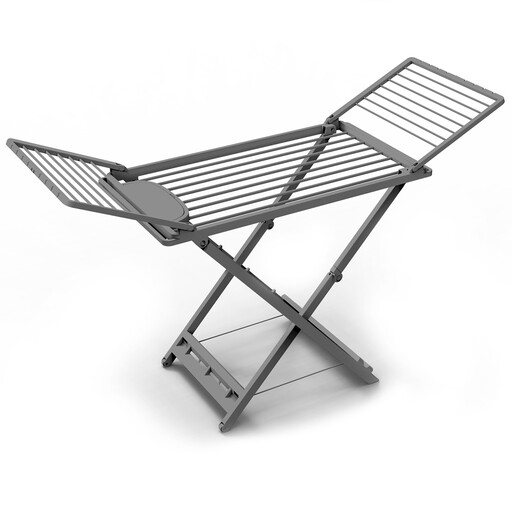
Why it suits this type of user : With 21 metres of drying space, adjustable wings and a stated weight of 4.4 kg, it’s a practical choice for everyday use in a flat or student room.
Its foldable frame keeps it compact after use, while the non-slip feet help stop it moving when you load it up.
Adjustable wings, integrated castors, extra hooks and stated use of recyclable polypropylene.
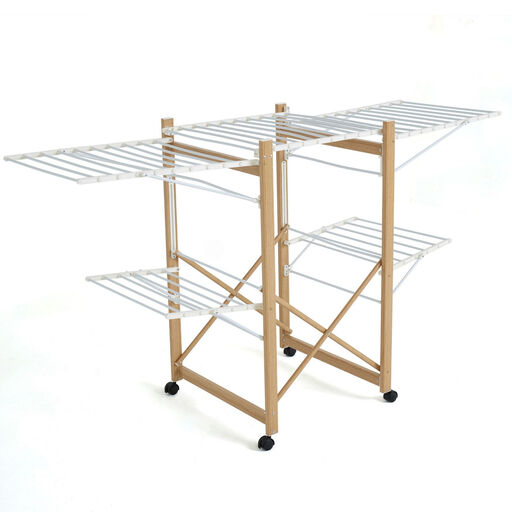
Why it suits this type of user : With a stated 28 metres of drying space, this model is designed for households that do several loads in a row or regularly wash bulky items.
Its capacity comes from extendable rails and a design that helps keep clothes spaced out, rather than simply stacking more tiers on top of each other.
Steel frame, multidirectional lockable castors and a compact fold for easy storage.
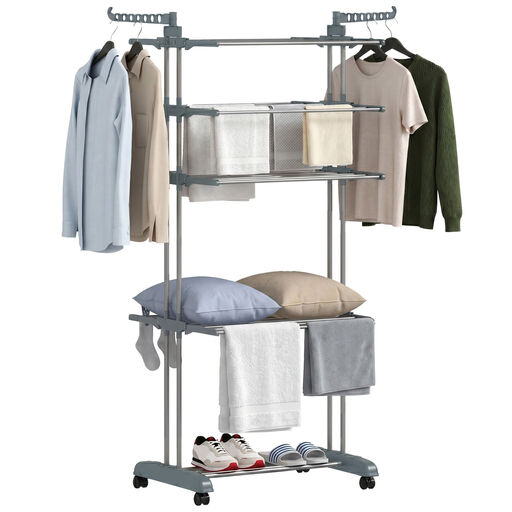
Why it suits this type of user : With five tiers, two side wings and a stated load capacity of up to 55 kg, it’s made for frequent washing and a variety of items.
The castors, two of which have brakes, make it easy to move the airer and then keep it firmly in place. The side supports also add to its stated stability.
Stainless steel frame, side hanger rails, lower shoe shelf and stated tool-free folding.
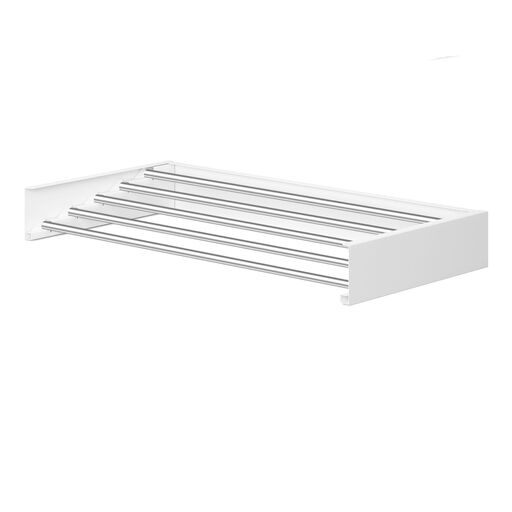
Why it suits this type of user : At 80 cm wide, this model is a good fit for rooms where every centimetre of floor space counts, provided you have a sufficiently sturdy wall.
It folds flat against the wall, so it won’t permanently take up space. The supplied drilling template makes it easier to prepare an even fixing.
Five aluminium alloy rails and a stated total load capacity of 15 kg, with a design suitable for indoor and outdoor use.
We’ve selected a complete range, updated in real time, of products that meet these exacting criteria and European safety standards.
Choose a well-ventilated spot, away from splashes and with enough room to open the airer fully. A covered balcony, a ventilated bathroom or a living area near a window could all work well. Avoid blocking a door, radiator or air vent.
Its lifespan depends on the load it carries, how often you handle it and how well you maintain it. Wipe down metal parts exposed to moisture, don’t exceed the recommended load and regularly check the hinges, screws and castors. With proper use, a model can remain in good working order for several years, although moving parts may need tightening from time to time.
A clothes airer doesn’t use electricity, unlike a compact tumble dryer, which uses energy with every cycle. In return, the appliance cuts drying time considerably and frees up the room sooner. Compare the stated 2,5 kg capacity of some compact models with your laundry habits, then check the power rating and energy consumption figures before deciding.