
Livraison le jour même ou le lendemain

Qualité garantie

Débloquez vos offres de bienvenue: Livraison GRATUITE | Jusqu'à -80 % | 30 jours d'essai gratuits à JoyPlus
Téléchargez l'application
A pen may seem insignificant… until the ink starts skipping, the grip becomes uncomfortable, or the mechanism jams after just a few weeks. For students, professionals, teachers and everyday users alike, choosing ballpoint pens is therefore about much more than comparing the price or barrel colour.
Marketing claims sometimes deserve closer examination. Here are the criteria to check before buying, along with a selection of models suited to different uses.
A tip described as “medium” may measure 0.7 mm, 1.0 mm or more, depending on the manufacturer. The stated measurement generally refers to the diameter of the ball or tip—not necessarily the precise width of the line on paper.
For precise note-taking, a 0.7 mm tip works well for notebooks, forms and annotations. A 1.0 mm tip generally produces a more prominent line, making it comfortable for writing quickly or completing documents that need to remain perfectly legible.
A smooth-ink ballpoint pen delivers an especially effortless writing experience. However, more fluid ink may take longer to dry, depending on the paper being used. This is particularly important for left-handed users and anyone taking notes at speed.
It is also worth distinguishing between traditional oil-based ink, low-viscosity ink and formulas advertised as water- or light-resistant. These descriptions refer to technical characteristics provided by the manufacturer, not a guarantee that applies to every type of paper and every condition.
A pack of 40 pens can make sense in a classroom, shared office or community organisation. For personal use, however, it may simply take up drawer space and leave you with a selection of colours you will never use.
Before choosing ballpoint pens for the office or school, check the number of pieces, the colours you will actually need, whether the pens have caps and whether the refills can be replaced.
The term “medium tip” is therefore far from being a universal standard. Always check the exact dimension stated on the product page.
A retractable ballpoint pen can be operated with one hand and, in most cases, eliminates the risk of losing the cap. It is practical at the office, in class or while travelling. The trade-off is a mechanism with more small components, making it potentially more sensitive to impacts.
A capped model remains simple and dependable, but the cap should be replaced after every use to help prevent the tip from drying out. Twist-action mechanisms, often found on premium ballpoint pens, provide discreet opening and a more refined finish.
Ergonomic ballpoint pens may feature a soft grip, triangular profile, faceted shape or rounded barrel. The right choice depends on your writing style and how long you spend taking notes.
For extended writing sessions, look for:
Plastic models are generally lightweight and affordable. Metal, wood or resin can provide a denser feel and a more sophisticated finish, but these materials alone do not guarantee greater comfort.
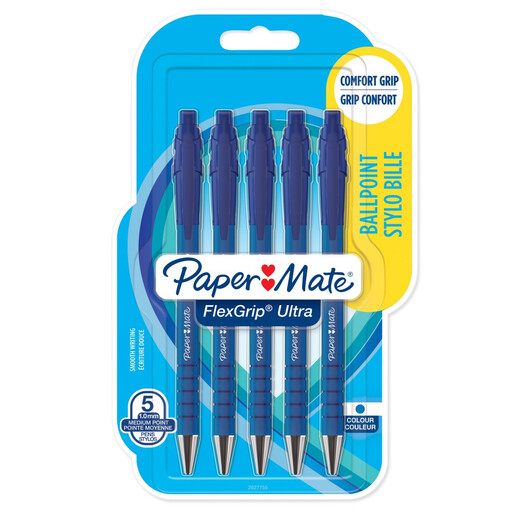
Why this model suits the profile: its rubberised barrel and retractable mechanism make it a practical companion for students and anyone looking for a straightforward pen to take anywhere.
The product page specifies a 1.0 mm tip and a textured grip zone. These concrete details make it easier to assess comfort and line thickness.
A fully rubberised barrel, stainless-steel tip and one-handed operation.
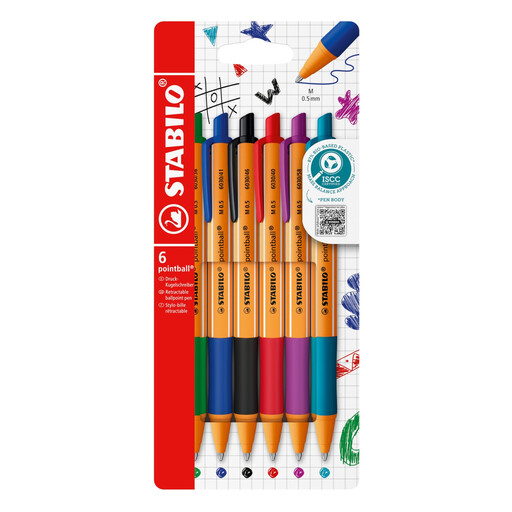
Why this model suits the profile: this multicolour set fits naturally into lessons, meetings or visual note organisation, while allowing the refills to be replaced.
The replaceable refill means you do not have to throw away the entire pen. The product page also specifies a 0.5 mm tip and an advertised writing length of approximately 3.5 km per refill.
Six colours, a non-slip grip, a clip and a refillable design. However, the stated carbon certification should still be verified on the packaging and in the latest product information.
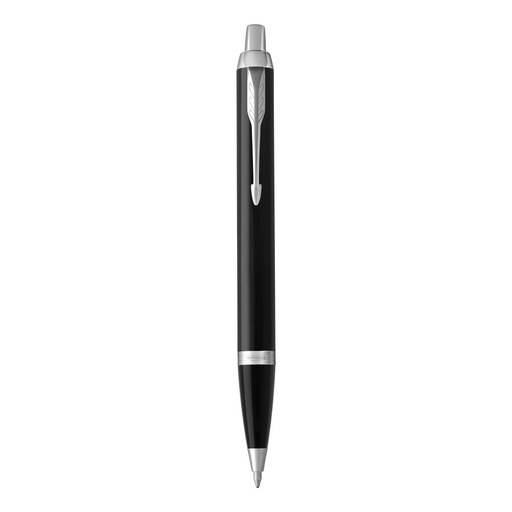
Why this model suits the profile: its presentation box and black finish make it a compelling professional gift, a polished choice for signatures or an enjoyable everyday writing instrument.
The description specifies the retractable mechanism, medium tip, blue ink and included refill. The essential details can therefore be checked before purchase.
A black lacquered barrel, chrome details, an arrow-shaped clip and a presentation box with a blue refill.
Multicolour models help reduce the amount of stationery you need to carry. A four-colour pen such as the M&G 4-in-1 with a 0.7 mm tip features independent selectors for black, blue, red and green ink. It is particularly well suited to organising coursework, marking corrections and managing schedules.
For shared use, a pack of 40 black ballpoint pens may be the more practical option. In an individual office, a set or refillable model generally makes organisation easier and reduces the waste associated with replacing the entire pen.
Explore an up-to-date selection of products suited to different uses, formats, colours and budgets, with information available for France.
It depends on the amount written, frequency of use, type of ink and storage conditions. A refillable pen can remain in service for longer, provided compatible refills are readily available. With capped models, remember to replace the cap after use; with click-action models, retract the tip.
A 0.7 mm tip offers a good balance between precision and visibility. A 1.0 mm tip is better suited to people who prefer more prominent lines. For very fine writing, check the exact measurement: from one brand to another, the term “medium” can refer to noticeably different specifications.
They can reduce replacement costs when refills are readily available and reasonably priced. However, compare the price of the pen, the cost of its refills, their compatibility and your frequency of use before making a decision.