
Livraison le jour même ou le lendemain

Qualité garantie

Débloquez vos offres de bienvenue: Livraison GRATUITE | Jusqu'à -80 % | 30 jours d'essai gratuits à JoyPlus
Téléchargez l'application
A balcony and terrace safety net can stop a cat from escaping, catch small objects or supplement a garden fence. But choosing the right model is essential. Mesh that is too wide, inadequate fastenings or plastic that warps in the sun: mistakes can happen quickly, leaving the net with little practical value.
Before placing your order, make sure you understand the difference between a containment net and a genuine structural barrier. No plastic net should be used as a guard rail, bear a load or enable climbing. In France, making a balcony safe also means checking the layout of the property, the building’s co-ownership regulations and the rules governing the external appearance of the building.
A 1 × 5 m roll may be enough for a small area, but start by measuring the width and height to be covered. Remember to allow for the returns at the sides, corners and any openings. For a large terrace, fence or several areas requiring protection, a 1 × 30 m garden net or 1 × 100 m plastic fencing will reduce the number of joins.
Also allow a few extra centimetres for cutting and fastening. A net cut exactly to the dimensions of the opening may leave gaps at the corners.
The word ‘outdoor’ alone does not guarantee that the material will withstand prolonged exposure to sunlight, wind and temperature changes. Look for a clear indication of UV stabilisation, then inspect the net regularly once it has been installed.
UV protection mainly slows down fading and the ageing of the plastic. It is no substitute for reliable fastening or an inspection after a spell of windy weather.
A poorly tensioned animal safety net can form a pocket that a cat or small animal may try to climb. Fastenings that are too far apart can also create an opening at the sides.
Cable ties, staples or suitable fastenings are not always supplied. The right choice depends on the support: metal railing, wooden posts, existing wire fencing or wall. Fastenings should be close together and evenly spaced, and checked after installation.
For a cat balcony net, the mesh size should match the animal’s size and the intended use. Hexagonal mesh of approximately 19 × 20 mm or 20 mm limits the passage of small animals and may catch some small objects. However, it is not designed to prevent a person from falling.
Measure the space between the bars, the corners and any openings beneath the railing. For an aviary, enclosure or pond, your choice will also depend on the animal being contained and the predators you need to keep at bay.
Polyethylene and polypropylene are lightweight plastics that are easy to cut and clean. A recyclable polyethylene net may be suitable for a temporary or reusable installation, provided you follow the manufacturer’s recommendations concerning heat, flames and fastening.
A flexible net is suitable as supplementary protection, but it is not designed to bear a load. For fencing for domestic animals, attach it to sufficiently stable posts. In a chicken run or enclosure, bury or fold back the lower section if you also want to limit intrusions.
A net that can be easily cut with scissors or secateurs is simpler to fit around a railing and into corners. After installation, rinse it with water if necessary and regularly check the following:
A predator-proof net intended for a garden, aviary or smallholding requires more frequent checks than a simple balcony net. Animals may push against it, chew it or become caught on it.
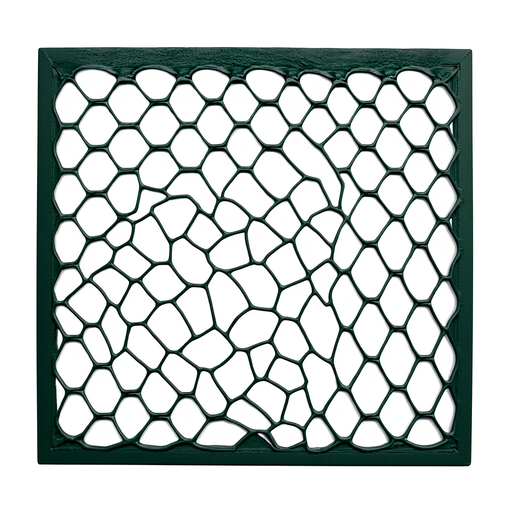
Why this choice suits this user profile : This 1 × 5 m roll is suitable for a small railing, window or section of terrace. Its green colour and 20 mm hexagonal mesh blend easily into an outdoor space.
The mesh and reinforced edge make it easier to achieve a clean cut. However, the product remains a containment solution, not a structural barrier.
UV-stabilised plastic, smooth reinforced edge, easy cleaning with water and a stated 5-year guarantee against fading and deterioration.
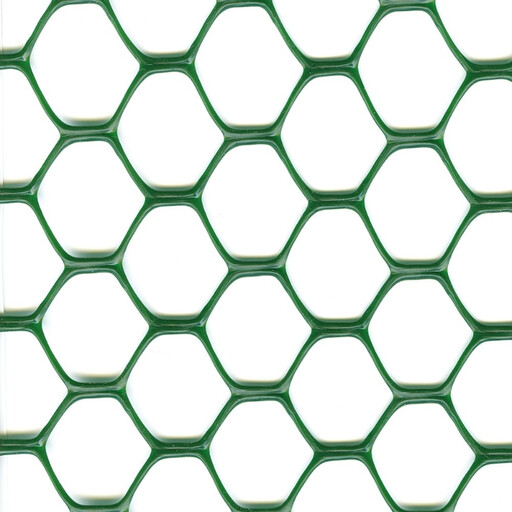
Why this choice suits this user profile : Its 1 × 30 m format is suitable for large terraces, fences, gates or several areas requiring protection with a single material.
Its extra length reduces the number of joins, which are often the cause of gaps and sagging. Even so, use suitable fastenings and maintain even tension.
Polyethylene stated to be non-toxic and fully recyclable, 19 × 20 mm mesh, reusable material and easy to cut.
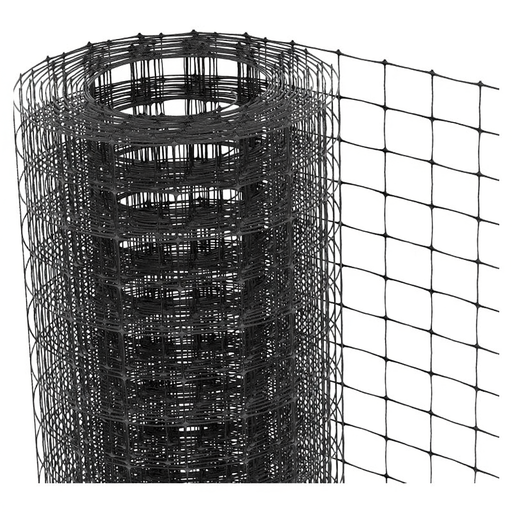
Why this choice suits this user profile : This 1 × 100 m roll is suitable for large enclosures, poultry runs, ponds, aviaries or courtyard divisions requiring numerous cuts.
Its length limits the number of joins on large installations. However, it must not be used as a climbing net, safety barrier or load-bearing structure.
Lightweight, flexible polypropylene, stated UV stabilisation, can be cut with scissors and cleaned with water.
We have put together a complete, real-time updated list of products that fully meet these strict selection criteria and European safety regulations.
On a balcony, do not rely solely on the railing if its openings are wide. For plastic balcony fencing, add anchor points to a stable structure. In a garden or around a pond, adjust the height and tension to suit the intended use.
Its lifespan depends on exposure to sunlight, wind, friction and the quality of the fastenings. A UV-stabilised net will generally retain its properties for longer, but replace it as soon as it becomes brittle, tears or sags significantly.
Cable ties may be suitable for a railing or wire fence, provided the support is stable and the fastenings are close enough together. On a smooth surface, check that adhesive fixings are designed for outdoor use and for the forces they will actually be subjected to. Do not leave a loose edge accessible to the animal.
No. It is supplementary protection designed to contain animals, limit the passage of small animals or catch small objects. It does not replace a compliant guard rail or a barrier designed to restrain a person.