
Livraison le jour même ou le lendemain

Qualité garantie

Débloquez vos offres de bienvenue: Livraison GRATUITE | Jusqu'à -80 % | 30 jours d'essai gratuits à JoyPlus
Téléchargez l'application
The thought of your little one zooming off on their first "bike" is incredibly exciting. A balance bike is often seen as the essential step for developing balance and coordination before moving on to a real pedal bike. But be warned: the market is flooded with models making tempting promises that can quickly turn into costly disappointments.
As the head of product selection for Joybuy, my mission is to help you navigate the options. Let's break down the common traps to avoid and the essential criteria for making the right choice, far from the siren calls of marketing.
The 3 most common mistakes when buying a balance bike:
To make a confident choice, focus on a few key technical points. This is what will make all the difference in day-to-day use.
This is THE number one criterion. For your child to use their balance bike safely and confidently, they must be able to place both feet flat on the ground while seated on the saddle, with their knees slightly bent.
The choice depends on your child's age and comfort level.
EVA foam wheels are an excellent option: they are lightweight, quiet, puncture-proof, and won't damage indoor floors. The perfect combination for use in an apartment.
Here's a detail that changes everything: the steering limiter. This simple mechanism prevents the handlebars from turning more than 90 degrees. In practical terms? It prevents overly sharp turns that end in a sudden fall over the handlebars—a classic beginner's mishap.
Rather than a generic list, here are options that meet specific needs, taking into account the criteria we've just discussed.
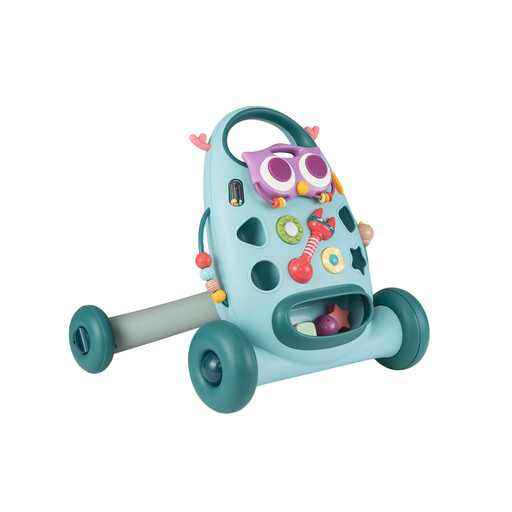
Why this model is a great choice: For toddlers not yet ready for a balance bike, this push walker is a highly relevant alternative. It secures their first steps while stimulating their senses with its activity board. An excellent springboard to walking independently.
It doesn't pretend to be a balance bike. Its mission is clear: to support the process of learning to walk. This avoids the trap of a poorly sized product that's unsuitable for the child's age.
The speed of the rear wheels is adjustable. This allows you to adapt the resistance to the child's pace, offering more safety during their first attempts.

Why this model is a great choice: This is the perfect ride-on for a child who is walking confidently and dreams of riding. Its four wide wheels guarantee rock-solid stability, boosting their confidence so they can focus on pushing and steering. An excellent first birthday gift idea.
Its steel frame is built to last, a far cry from low-end plastics. Its 4 wheels eliminate any risk of tipping, the main flaw of 2-wheel balance bikes that are unsuitable for the youngest riders.
Maximum stability thanks to its 4 wheels and low, easy-to-mount frame. It also includes the crucial steering limiter for enhanced safety.
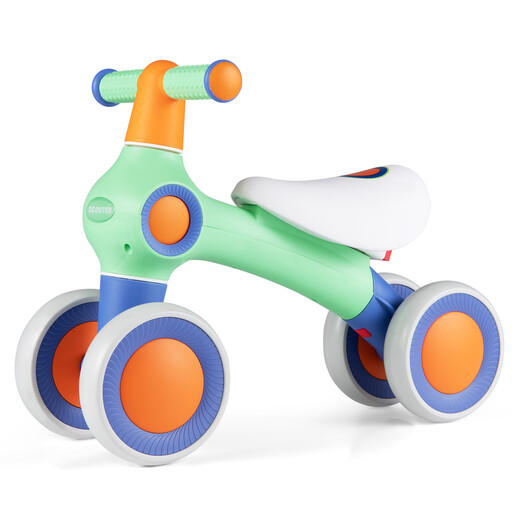
Why this model is a great choice: This is the ultimate adjustable balance bike. Ideal for apartments with its silent wheels, it's also light enough to be taken anywhere. Its adaptability makes it a smart purchase for parents who want a product that lasts more than just one season.
Its height-adjustable saddle avoids the "one-size-fits-all" trap that quickly becomes too small. Its EVA wheels solve the problem of noise and scratches on hardwood floors.
Adjustable saddle, silent wheels perfect for indoors, and a 90° steering limiter for added safety. The ideal compromise between stability and learning.
We have curated a complete range of products that meet our selection criteria and current safety standards.
There's no fixed age; it all depends on the child's development.
Sit your child on the saddle. Their feet should rest flat on the ground with their knees slightly bent. They should be able to push themselves forward without straining, using a solid footing. Adjust the saddle height until you achieve this ideal position. And don't forget to check the adjustment regularly—kids grow in the blink of an eye!