
Livraison le jour même ou le lendemain

Qualité garantie

Débloquez vos offres de bienvenue: Livraison GRATUITE | Jusqu'à -80 % | 30 jours d'essai gratuits à JoyPlus
Téléchargez l'application
3-in-1 dishwasher tablets with bicarbonate of soda have one clear advantage: a single dose cleans, helps with rinsing and limits mineral deposits. But not all products are the same, or suited to the same needs. A large family, someone sensitive to fragrances or a household with a septic tank may not need the same formula.
So before you buy, look beyond the claims on the box and check the ingredients, the number of wash cycles covered and the instructions for use.
A 3-in-1 tablet can combine cleaning, rinsing and water-softening functions. That doesn’t necessarily mean you should stop using dishwasher salt in an area with very hard water. Water hardness, measured in French degrees (°f), and your dishwasher manufacturer’s recommendations are still important.
Some products say that you don’t need to add salt or rinse aid. Others recommend using extra products above a certain threshold, for example above 38 °f. So check your appliance manual before changing your usual routine.
A tablet can claim to be partly made from natural ingredients while still containing oxygen-based bleaching agents, enzymes or surfactants. That isn’t necessarily a drawback, but it’s worth checking the details you can verify:
Fragrance-free dishwasher tablets are particularly suitable for households looking to avoid lingering smells on their dishes. Still, read the whole label: “fragrance-free” doesn’t mean “enzyme-free” or “free from bleaching agents”. These ingredients can help with cleaning, but they should be used in line with the safety instructions.
Bicarbonate of soda generally provides an alkaline action that helps lift greasy dirt. In a dishwasher detergent with bicarbonate of soda and citric acid, citric acid is presented as helping to tackle mineral marks and limescale film. Dishwasher tablets with active oxygen also contain oxygen-based bleaching agents.
No formula can work miracles if the dishwasher is loaded incorrectly. Don’t overload the racks, remove large food scraps and choose a programme suited to how dirty the dishes are.
When comparing phosphate-free dishwasher tablets, look at the ingredients list rather than relying on the front of the pack. Enzymes, surfactants, carbonate salts or silicates may be listed by concentration category, in line with the labelling rules that apply to detergents.
If reducing microplastics matters to you, look for a clear statement that the product does not release microplastics into wastewater. Plastic-film-free dishwasher tablets also need to be handled differently: they generally need to be placed directly in the compartment without removing any wrapper.
Dishwasher tablets for 120 washes are a good choice for households that run their dishwasher several times a week and want to avoid restocking too often. By contrast, a box of 30 or 32 doses lets you try a formula without committing to a large supply.
Always store tablets in a dry, closed place, out of reach of children. Avoid handling them with wet hands: moisture can cause them to start dissolving.
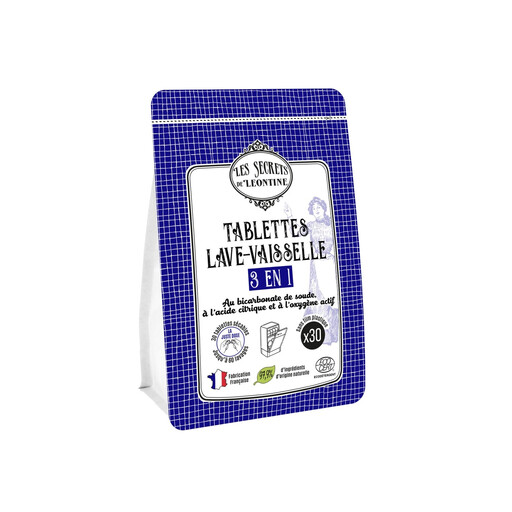
Why this is a good fit for you : The 30-wash pack keeps the upfront cost down and lets you check that it works with your dishwasher before buying a larger pack.
The product listing states that the formula is fragrance-free, phosphate-free and plastic-film-free, and suitable for septic tanks.
Bicarbonate of soda, citric acid and active oxygen; 30 tablets for 30 cycles when used as directed.
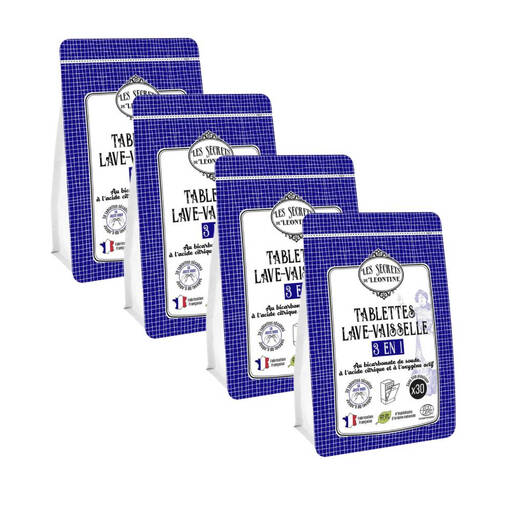
Why this is a good fit for you : The 120-dose pack suits a household that runs its dishwasher regularly and wants to avoid adding rinse aid or salt separately, according to the product listing.
The number of washes is clearly stated, making it easier to compare the cost per cycle rather than just the price of the box.
120 tablets; ingredients stated to be 97.9% naturally derived; surfactants of plant origin, according to the information provided.
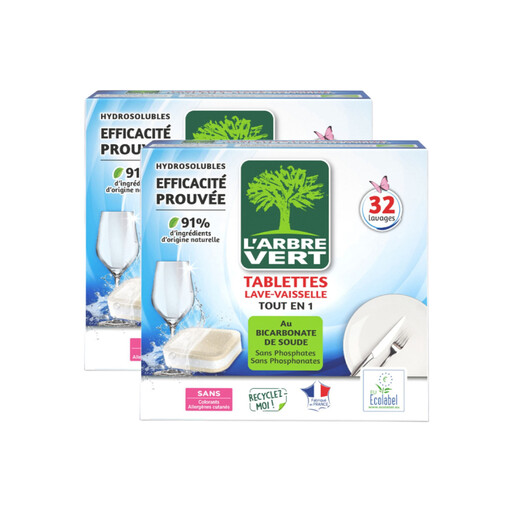
Why this is a good fit for you : This fragrance-free formula suits households looking to avoid lingering smells while keeping a mid-sized supply of 64 doses.
The product listing states that it is free from fragrance, phosphates, phosphonates and colourants, and comes in refillable, recyclable packaging.
Sodium bicarbonate, oxygen-based bleaching agents and enzymes; 64 tablets for 64 washes.
We’ve put together a comprehensive selection, updated in real time, of products that meet these exacting criteria and comply with European safety regulations.
No. Some formulas explicitly state that they do, but water hardness and your dishwasher manual may mean you need to add dishwasher salt or rinse aid. Your appliance manufacturer’s recommendations should always come first.
They generally keep until the date shown on the packaging, provided they are stored in a dry place at room temperature and in a properly sealed pouch. Moisture can cause them to dissolve prematurely and make them harder to handle.
Check the product listing, as being fragrance-free alone doesn’t confirm that a product is suitable. Products explicitly labelled “suitable for septic tanks” provide more reliable information for this type of system.