To melt chocolate and add it to a cake, start by choosing a bar labelled for baking or desserts. A sharing box of chocolates is more suited to enjoying as it is. If you’re thinking of using one in a recipe, check the ingredients for each chocolate, including any fillings and allergens.
Who is this choice for?
For a cake with a rich chocolate flavour
If chocolate is at the heart of your recipe, a baking chocolate bar lets you choose the type of chocolate and the stated intensity. Lindt France, for example, lists DESSERT dark chocolate bars with 51% and 70% cocoa. These percentages apply to those specific products, not to the brand’s assorted boxes.
For a large cake to share
If your recipe calls for several bars, start with the amount of chocolate specified, then compare the products’ net weights. The dessert assortments listed by Carrefour and E.Leclerc include different types and sizes of bars. A box of chocolates for tasting may not serve the same purpose in a recipe.
For cooking with allergens in mind
Check the label on the specific product rather than relying on the brand or the words ‘dark chocolate’ alone. For example, Lindt France states that its DESSERT intense dark 70% bar contains soya and may contain milk and nuts.
What should you check?
For a cake to share, start with how you plan to use the chocolate, then check the quantity you need and the information on the label.
| What to consider |
What to check |
Who is this for? |
| Suitable for baking and flavour intensity |
Whether it says ‘dessert’ or ‘baking’, the type of chocolate and, if stated, its cocoa percentage. |
When the chocolate needs to be melted and added to the cake, I want to choose a product intended for that use and a flavour that suits the recipe. Around 42% of consumers put suitability for the recipe and flavour intensity first. |
| Quantity needed |
The amount required by the recipe and the net weight of each bar or box. |
To make a large cake, I need to get enough chocolate without confusing the weight of an assortment with the amount that can be used in the recipe. Around 33% of consumers say quantity is their top priority. |
| Ingredients and labelling |
The ingredients, allergens and sugars per 100 g in the nutritional information. |
If I’m cooking for someone who needs to avoid an ingredient, I need to check the ingredients of the specific product before using it. Around 25% of consumers prioritise allergens and nutritional information first. |
Mistakes to avoid
-
Melting an assorted box as if it were a baking chocolate bar
A box may contain chocolates with different fillings and ingredients. These can affect the flavour and texture you want in a cake, and you’ll need to check the allergens for the chocolates concerned.
If your recipe calls for chocolate to be added to the mixture, start with a bar labelled for baking. Only use an assortment if its ingredients are suitable for the recipe.
-
Choosing a size without working out how much you need
The weight of a box or bar doesn’t tell you on its own how much chocolate suitable for your recipe you’ll be able to use.
Check how much the recipe calls for, then look at the net weight and type of chocolate in each pack.
-
Relying on Nutri-Score alone
According to the European Commission, simplified front-of-pack nutrition labelling is voluntary. Even when a Nutri-Score appears on the pack, it doesn’t tell you everything about the ingredients or allergens you may need to avoid.
Read the ingredients list and nutritional information on the product you choose, including the sugars per 100 g.
Brands to know for baking
Lindt
Lindt France describes its DESSERT range as baking chocolate for cakes and desserts. It includes dark chocolate bars with 51% and 70% cocoa.
- These two products let you choose the stated cocoa percentage to suit your recipe and the flavour you’re after.
- Lindt states that its intense dark 70% bar contains soya and may contain milk and nuts. Check the label on the product you buy.
Carrefour
Carrefour’s dessert assortment includes dark, milk and praline chocolates.
- You can choose the type of chocolate to match what your recipe calls for.
- Check the ingredients and size of the bar you choose; the recipes are not interchangeable.
E.Leclerc / Tablette d’Or
E.Leclerc sells several types of dessert chocolate under the Tablette d’Or brand. The product listings consulted include a 200 g dark chocolate bar and a 180 g white chocolate bar.
- The listings for these two products provide ingredient information, so you can check each one against your recipe.
- The listed white chocolate bar contains milk; this should not be assumed to apply to other products in the range.
A baking chocolate bar on Joybuy
This white chocolate bar is suited to cake or dessert recipes that call for white chocolate to be mixed in. It is not a substitute for a box of chocolates intended to be served as bite-sized treats.
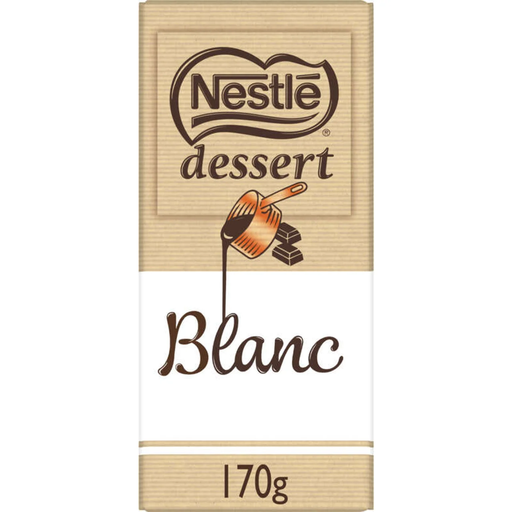 Image unavailable
NESTLÉ DESSERT white baking chocolate, 170 g
For recipes that call for white chocolate to be mixed in. Check that the 170 g size is enough for your recipe; if you have an allergy, check the ingredients and any ‘may contain’ warnings on the exact product packaging.
View on Joybuy
Frequently asked questions
Can a box of filled chocolates replace a baking chocolate bar in a cake?
Not necessarily. The fillings and ingredients in an assortment may not suit the recipe. If your cake calls for chocolate to be melted and mixed in, choose a bar labelled for baking unless the recipe specifically calls for filled chocolates.
Which allergens should you check for in a chocolate cake?
Read the ingredients list and any ‘may contain’ warnings on the specific product. For example, Lindt France states that its DESSERT intense dark 70% bar contains soya and may contain milk and nuts. This does not apply to every Lindt bar or box.
Is Nutri-Score compulsory on a box of chocolates?
No. According to the European Commission, simplified front-of-pack nutrition labelling is voluntary, while most pre-packed foods must have a nutrition declaration. If a Nutri-Score is shown, also check the nutritional values per 100 g and the ingredients list.
Does the French levy on sugary drinks apply to solid chocolate?
No. A box or bar of solid chocolate is not covered by this drinks levy. The French provisions published by Légifrance apply to drinks and liquid drink preparations that meet the conditions set out in the legislation. The sugar content of chocolate is still listed in its nutritional information, but it is not subject to this levy.


