When making biscuits or a cake with children, start with the recipe. A baking chocolate bar or chocolate chips are a good choice if you want to control the size of the chocolate pieces and avoid unexpected extras. A large bar or sharing pouch can also work if the recipe allows for chopped chocolate. If so, check the ingredients, allergens and quantity you need.
Who is this guide for?
Parents baking biscuits or cakes with their children
If the children will be adding the chocolate to the mixture, chocolate chips save you the step of chopping it. A baking chocolate bar is a good choice when the recipe calls for pieces to break up or chocolate to melt.
Families deciding how intense they want the chocolate flavour to be
To choose the right flavour for your dessert, compare specific products rather than relying on the brand name alone. Lindt France, for example, offers two 200 g DESSERT bars: one with 51% cocoa and another with 70%. Each has a different flavour profile, according to the brand.
Households keeping an eye on allergens
Check the packaging of the product you plan to use in your recipe, including any ‘may contain’ warnings. Ingredients and warnings vary from one bar or pouch of chocolate chips to another. The DGCCRF reminds shoppers that allergens present in the ingredients of pre-packed foods must be clearly highlighted.
What should you check before buying?
First, choose chocolate that works with your recipe. Then consider how the children will help with the preparation, check for allergens and make sure you buy the right amount.
| Criteria |
What to check |
Who is this important for? |
| Suitability for the recipe |
Look for ‘for baking’ or ‘baking chocolate’ on the packaging, and check whether a sharing bar contains any extras. |
For a cake, I want chocolate that suits the recipe, without any unexpected biscuit or caramel pieces in the mixture. Around 31% of consumers put suitability for the recipe first. |
| Getting the children involved |
For biscuits or muffins, compare chocolate chips with squares to break up. Leave handling hot chocolate to an adult. |
If the children are adding the chocolate themselves, I prefer a form that doesn’t need chopping. Ease of handling is the top priority for around 25% of consumers. |
| Allergens and ingredients |
Read the ingredients list and any ‘may contain’ warnings on the pack you buy, especially if the recipe includes extras. |
If someone in the household needs to avoid an ingredient, I need to check the exact chocolate before I start baking. Around 25% of consumers prioritise this check. |
| Quantity needed |
Compare the net weight with the amount required by the recipe, and plan how you’ll use any leftover chocolate. |
For a family baking session, I want enough chocolate for the recipe without choosing a large pack just for its size. Around 19% of consumers put getting the right amount ahead of other criteria. |
Mistakes to avoid
-
Assuming the ‘soda tax’ applies to chocolate bars
The French Ministry of the Economy describes this levy as applying to sugary drinks, not chocolate bars.
When comparing chocolate bars, check their ingredients and nutritional information instead, particularly the sugar content per 100 g.
-
Treating Nutri-Score as a compulsory label
According to the DGCCRF and Santé publique France, displaying Nutri-Score is voluntary in France. It doesn’t replace checking the ingredients, allergens and nutritional values.
If it appears on the packaging, use it as extra information when comparing similar products. Don’t rely on it alone to decide whether a bar is right for your recipe.
-
Choosing a large bar without checking what’s in it
Some large bars featured by Carrefour contain ingredients such as hazelnuts, caramel or biscuit pieces. These affect the flavour and texture of your dessert, as well as its allergens.
If your recipe simply calls for chopped chocolate, check that the ingredients in the sharing bar are suitable. Otherwise, choose a baking chocolate bar designed for the job.
-
Choosing by brand rather than by product
Two bars from the same range can differ in their cocoa content, ingredients and weight. Lindt France, for example, offers DESSERT bars with 51% and 70% cocoa.
Compare the labels of the specific products, then check the allergens on the packaging you buy.
Brands to consider for baking
Nestlé Dessert
The range includes bars designed for baking, including a 205 g dark chocolate bar and a 170 g white chocolate bar.
- The white chocolate bar is specifically recommended for making biscuits.
- Depending on the product, check the packaging for milk and any warnings about nuts, egg or gluten.
Lindt
In its DESSERT range, Lindt France offers a dark chocolate bar with 51% cocoa and another with 70%. Both weigh 200 g.
- The brand describes the 51% cocoa bar as milder and the 70% bar as more intense.
- Whichever flavour you choose, check the ingredients and allergens in the bar you pick.
Carrefour Original
Carrefour France’s baking aisle includes milk chocolate chips and dark chocolate chips or discs.
- These are worth considering when your recipe calls for small pieces of chocolate to mix in.
- Check the weight, ingredients and allergens of the specific product.
Milka
Some of the large Milka bars featured by Carrefour, including 300 g Mmmax bars, are primarily designed for sharing.
- A large bar may work if the recipe allows for chopped chocolate and its particular ingredients.
- Check for fillings such as hazelnuts, caramel or biscuit before adding it to a mixture.
Chocolate bars available on Joybuy
These chocolate bars are suitable for baking recipes to make with children. Choose dark or white chocolate to suit your recipe, then check the ingredients on the packaging.
 Image unavailable
POULAIN Extra Dark 200 g
Worth considering for recipes that call for a dark chocolate bar for baking. The bar weighs 200 g. If you need to avoid milk or soya, check the ingredients and any ‘may contain’ warnings on the packaging you buy.
View on Joybuy
 Image unavailable
Nestlé Dessert white chocolate baking bar 170 g
For biscuits or another recipe that calls for white chocolate to be mixed in. This 170 g bar contains milk. Its packaging may also warn that it could contain traces of egg, gluten and nuts.
View on Joybuy
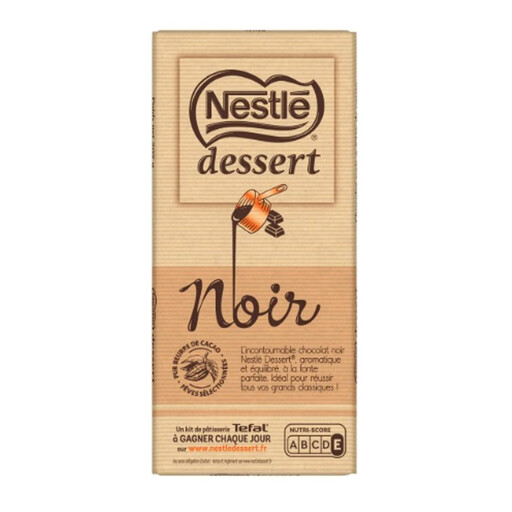 Image unavailable
Nestlé Dessert dark chocolate bar 205 g
For recipes that call for a dark chocolate bar to melt or mix in. This 205 g bar may carry warnings about traces of milk and nuts. Check the pack you’re using before you start baking.
View on Joybuy
Frequently asked questions
Does the ‘soda tax’ apply to chocolate bars in France?
No. The French Ministry of the Economy describes this levy as applying to sugary drinks. When choosing a chocolate bar, check its ingredients and nutritional information instead, particularly the sugar content per 100 g.
Does a chocolate bar have to display Nutri-Score?
No. According to the DGCCRF and Santé publique France, displaying Nutri-Score is voluntary in France. Whether or not it appears on the pack, read the nutritional information and ingredients list for the specific product you’re considering.
What should I check if a child needs to avoid an allergen?
Read the label on the pack you’ll use in your recipe, including any ‘may contain’ warnings. The DGCCRF states that allergens present in the ingredients of pre-packed foods must be clearly highlighted. Any warnings about possible traces should be checked separately.


