If your recipe calls for chocolate to be mixed into a batter or ganache, choose a bar intended for baking rather than a box of assorted chocolates: the fillings and different varieties in the box make it harder to use as a substitute. A 70% cocoa dark chocolate bar is a good choice if you want a pronounced chocolate flavour. For a different level of intensity, check the ingredients and sugars per 100 g too, rather than relying on the cocoa percentage alone.
Who is this guide for?
People who bake cakes at home
If your recipe calls for chocolate to melt into a batter, fondant or ganache, look for a bar labelled “dessert chocolate” or “baking chocolate”. This will help you choose a bar suited to the job. Then check its ingredients and allergens: a box of filled chocolates may not have the composition you need.
Fans of desserts with a rich chocolate flavour
A 70% cocoa dark baking chocolate bar is worth considering if you’re after an intense flavour. Make sure, though, that this profile suits your recipe and the people who’ll be eating the cake.
Cooks who pay attention to pack size and labels
If you bake cakes regularly, choose a bar size that’s close to the quantity required by your recipe. Compare the nutritional information per 100 g and check the ingredients and allergens for the specific product you choose, even if there’s no Nutri-Score on the packaging.
What should you check?
Start with the role of the chocolate in your recipe: a bar to melt, a particular level of intensity or a quantity that suits your bake.
| Criteria |
What to check |
Who is it for? |
| How it’s used in the recipe |
Look for “dessert chocolate” or “baking chocolate” on the label, and read the ingredients before replacing a plain bar with filled chocolates. |
When the chocolate needs to melt into the batter, I want to avoid fillings changing the ingredients the recipe calls for. Around 44% of consumers put a composition suited to baking first. |
| Intensity and sugars |
Compare the cocoa percentage and sugars per 100 g. Also check the ingredients for the specific variety. |
For a dark chocolate cake, I’m looking for an intensity my guests will enjoy while also taking account of the sugars already in the bar. This balance is the top priority for around 33% of consumers. |
| Quantity and format |
Check the weight required by the recipe and choose the type of chocolate it calls for. |
If I’m making several cakes, I want to buy a usable quantity without mistaking the contents of an assorted box for a bar to mix into the batter. Pack size is the main consideration for around 23% of consumers. |
Common mix-ups to avoid
-
Mistaking a gift box for baking chocolate
An assorted box may contain several varieties and filled chocolates. Melting these instead of the plain chocolate called for in a cake changes the ingredients in the recipe and the allergens to consider.
For the batter or ganache, look for a bar labelled “dessert chocolate” or “baking chocolate”. If you’re using chocolates as decoration after baking, check their ingredients for the people who’ll be eating the cake.
-
Assuming every chocolate must carry a Nutri-Score
According to the Ministry of the Economy, displaying the Nutri-Score is voluntary. Its absence alone isn’t enough to assess a bar’s nutritional values.
Check the nutritional declaration and compare sugars and fat per 100 g, then read the ingredients list. The DGCCRF states that a nutritional declaration is compulsory for the prepacked foods covered by the requirement.
-
Choosing based on the cocoa percentage alone
The cocoa percentage doesn’t tell you everything about the ingredients or the amount of sugars. For example, Auchan lists 30 g of sugars per 100 g for the Lindt DESSERT Noir Intense bar, which contains 70% cocoa.
First choose an intensity that suits your cake, then check the sugars per 100 g and the allergens on the label of the bar you buy.
Brands and retailers to know
These examples show the difference between baking chocolate and assorted chocolates. The presence of a brand or retailer here doesn’t mean its products are available on Joybuy.
Lindt
Lindt’s 200 g DESSERT Noir Intense bar contains 70% cocoa and is intended for making desserts. Its assorted Lindor boxes are for a different purpose.
- The DESSERT bar gives a precise cocoa percentage to help you choose the intensity you’re after.
- An assorted box of chocolates isn’t a direct substitute for a plain bar in a recipe that calls for chocolate to be melted.
Carrefour Original
The range includes a 200 g dark dessert chocolate bar to consider for a recipe that calls for this type of chocolate.
- Carrefour’s product information provides details about the ingredients and added sugars in this product.
- This bar contains whey powder. Check the allergens and any traces listed on the packaging before using it.
Tablette d’Or / Marque Repère E.Leclerc
E.Leclerc’s range includes different types of baking chocolate, including dark, milk, white and praline, in sizes listed from 170 g to 200 g.
- Choosing the type of chocolate lets you start with the one your recipe calls for.
- Check the ingredients and allergens for the specific variety, as they can differ from one bar to another.
Auchan
Here, Auchan is a retailer that lists, among other products, a Lindt DESSERT bar with 70% cocoa and a Menier dark baking chocolate bar with a minimum of 50% cocoa. It isn’t the manufacturer of these products.
- These product listings let you check the stated cocoa percentage for each bar.
- To compare their composition, check the nutritional information and ingredients for each bar, rather than inferring the sugars from the cocoa percentage alone.
A dessert chocolate bar on Joybuy
This selection features a dark dessert chocolate bar to consider for a cake recipe that calls for chocolate to be mixed in, rather than a box of assorted chocolates.
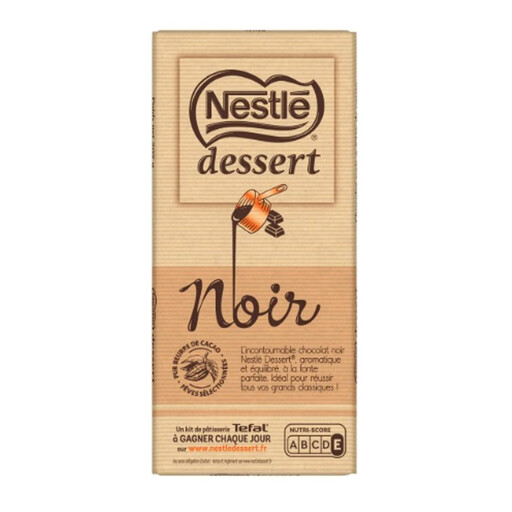 Image unavailable
Nestle Dark Dessert 205 g
Worth considering if your cake recipe calls for dark dessert chocolate to be mixed into the batter. This bar weighs 205 g. Before using it in place of a specific product named in your recipe, check the cocoa percentage, sugars and allergens on the packaging.
View on Joybuy
Frequently asked questions
Can you melt a box of assorted chocolates into a cake?
If your recipe calls for plain chocolate, an assorted box isn’t a direct substitute. Joybuy describes the assorted Lindor box as containing several varieties. Check the ingredients of each chocolate and the allergens before deciding whether to use them in your cake.
Is the Nutri-Score compulsory on chocolate sold in France?
No. The Ministry of the Economy says that displaying it is voluntary. When comparing prepacked chocolates covered by the nutritional declaration requirement, check the values per 100 g and the ingredients list, even if there’s no Nutri-Score on the packaging.
Does France’s levy on sugary drinks apply to solid chocolate?
No. The text of the French General Tax Code published by Légifrance covers drinks and liquid preparations for drinks, not a bar or box of solid chocolates. When choosing chocolate for a cake, check the sugars listed in the nutritional information rather than treating this levy as a relevant criterion.


