Organisers baking several cakes
If you’re melting chocolate for chocolate fondants, mousses or toppings, baking chocolate bars are made for the job. Work out how much you’ll need for your recipes and check the size of each pack.


When baking cakes for a school bake sale, choose dark baking chocolate to melt, or chocolate chips to stir into your mixture, depending on the recipe. A large sharing bag of chocolates is better suited to selling ready-to-eat treats: its weight doesn’t make it interchangeable with baking chocolate.
If you’re melting chocolate for chocolate fondants, mousses or toppings, baking chocolate bars are made for the job. Work out how much you’ll need for your recipes and check the size of each pack.
For cookies, muffins or cakes, chocolate chips or drops save you having to chop up bars. Weigh up the convenience against how much you’ll need for each batch.
A large sharing bag of chocolates could work if you’re selling confectionery separately from the cakes. Check the ingredients, allergens and storage instructions for the product you choose.
First, decide whether you’ll use the chocolate in a recipe or sell it as it is. The product’s format, allergen information and preparation time will help you choose.
| What to consider | What to check | Who is this for? |
|---|---|---|
| How it will be used in the recipe | Choose a bar labelled for baking or, if you’re adding pieces to the mixture, chocolate chips or drops. | If I’m baking the cakes myself, I want chocolate in a format that suits the recipe, rather than a sharing bag of chocolates. Getting the format right for the preparation is the main priority for around 42% of consumers. |
| Allergen information | Check the ingredients for every product and identify the allergens in the complete recipe before the sale. | If I’m selling cakes without individual packaging, I need to be able to tell families which allergens they contain. Around 33% of consumers put this information first. |
| Time and format | Compare the time needed to chop bars with the convenience of using chocolate chips; save sharing bags of chocolates for selling ready-to-eat confectionery. | If I’m short on preparation time, I’m looking for pieces that are easy to stir in, or confectionery that doesn’t need cooking. For around 25% of consumers, convenience comes before other considerations. |
Lindt’s LINDOR Noir 70% bag contains chocolates intended for sharing. It’s not the same format as a bar designed to be added to a recipe.
When baking cakes, start with the recipe and choose a baking bar, chocolate chips or drops depending on how you’ll use them. Keep sharing bags for a separate confectionery sale.
The DGCCRF explains that displaying the Nutri-Score is voluntary. Its absence isn’t enough to judge a product’s labelling or decide whether it’s right for a recipe.
Check the ingredients and available nutritional information, including sugars and fat per 100 g, rather than treating one indicator as dietary advice.
Once a cake has been made, the chocolate packaging alone no longer tells you about all the ingredients used. For non-prepacked foods, information about the allergens they contain must remain accessible to consumers, as explained by Légifrance and Service Public Entreprendre.
Keep the ingredient packaging and make a list of the allergens in each recipe. Clearly display the information on or near the food before purchase.
A bag of chocolates, a bar and chocolate chips are used in different ways. Comparing pack sizes alone could lead you to buy chocolate that isn’t right for the recipe you plan to make.
Add up the quantities in your recipes, then compare the net weight of suitable formats and their price per kilo when you buy.
A range of dark chocolate for desserts, including bars designed for baking.
The range includes baking chocolate and confectionery. Lindt presents its 1 kg LINDOR Noir 70% sharing bag as a format for sharing.
E.Leclerc’s Marque Repère brand offers dark dessert chocolate for baking, including a 200 g bar and a pack of three bars.
Carrefour offers dark chocolate chips and drops in its baking aisle.
The range includes dark baking chocolate with 52% cocoa and strong dark chocolate with 64% cocoa.
These two dark chocolates are presented for baking: they’re for making cakes, not for selling chocolates in a large sharing bag. Check the format and packaging information before finalising your recipes.
 Image unavailable
Worth considering if you’re baking with dark chocolate: this product is presented as suitable for baking.
Pack size: 200 g. Check the information about soya and milk on the packaging you buy, then take all the recipe ingredients into account when informing buyers.
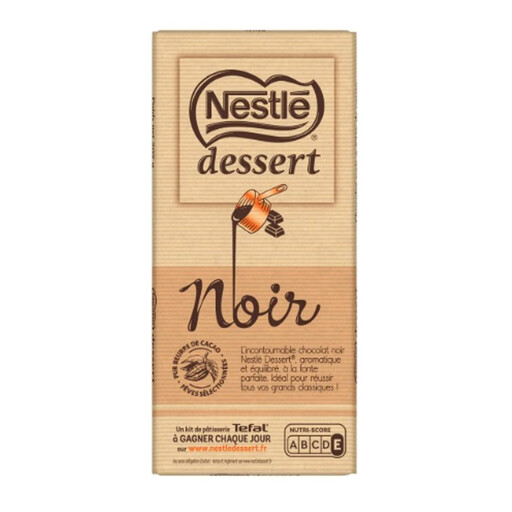 Image unavailable
Worth considering for recipes that call for melted dark chocolate: this product is presented as suitable for baking and melting.
Pack weight: 205 g. If the cocoa content or chocolate format matters for your recipe, check the packaging. Also check the information about milk and nuts, as well as the allergens in the finished cake.
No. The scale published by the Bulletin officiel des finances publiques applies to non-alcoholic drinks containing added sugars or sweeteners, not to chocolate bars, chips or chocolates. When buying, focus instead on the product’s format, ingredients and nutritional information.
No. The DGCCRF says that displaying the Nutri-Score logo is voluntary. It shouldn’t be confused with the nutrition declaration required for most prepacked foods. Check the nutritional values and ingredients rather than assuming that a chocolate is suitable for your recipe based on its score alone.
Identify the allergens in each recipe using the ingredients you’ve used. For non-prepacked foods, Légifrance and Service Public Entreprendre explain that this information must be clearly displayed on or near the food. Keep the packaging so you can check the information before the sale.