Who is this choice for?
A cylinder vacuum can work well as your main cleaner for large areas, as long as you check how it performs on the floors in your home and how easy it is to move around.
Households with a large home and a mix of flooring
If you regularly clean hard floors, rugs, furniture and awkward corners, check the working range and the brushes supplied. UFC-Que Choisir’s tests show that results vary between floor types, so no single specification tells you everything about how a vacuum will perform.
Households with carpets, upholstery or pets
For carpets, sofas or areas where fibres build up, check the accessories included with the exact model and look for relevant test results. UFC-Que Choisir’s test protocol assesses fibre pick-up on carpets separately from performance on other surfaces.
People who care about noise and manoeuvrability
For longer cleaning sessions, compare noise levels alongside weight, wheels and working range. These details matter particularly if you need to manoeuvre around lots of furniture or carry the vacuum up and down stairs.
What should you check?
Bagged cylinder vacuum
Worth considering: if you want a main cleaner for large areas and would rather replace a bag than empty a canister.
Bear in mind: choose a compatible bag and check it’s readily available. You’ll also need to consider the vacuum’s weight when using the stairs.
Bagless cylinder vacuum
Worth considering: if you want to avoid buying bags regularly and don’t mind emptying the canister.
Bear in mind: the canister, filters and brushes still need regular maintenance.
Stick vacuum as a second cleaner
Worth considering: for quick clean-ups in smaller areas or when getting the cylinder vacuum out is inconvenient.
Limitation: don’t assume it will replace your main cleaner for a thorough clean in a large home; UFC-Que Choisir describes cylinder vacuums as suitable for large areas.
Once you’ve chosen the type of vacuum, compare each model with the surfaces in your home and its layout.
| What to consider |
What to check |
Your needs |
| Floors and upholstery |
Look for comparable test results on your flooring. Check which brushes and nozzles are actually included with the model. |
I also clean rugs or furniture, so results on hard floors alone aren’t enough to help me choose. |
| Moving around |
Compare the working range with the location of your plug sockets, then check the weight, wheels and handle, particularly if you have stairs. |
In a large home, I want to avoid changing sockets too often without choosing a vacuum that’s difficult to move. |
| Noise |
Compare stated noise levels measured under specified conditions. Also look at cleaning performance on the surfaces you need to clean. |
If I clean at times when noise could be an issue, it matters—but not at the expense of cleaning the floors in my home. |
| Maintenance |
For a bagged model, check which bags are compatible. For a bagless one, look at how easy it is to access the canister and filters. In both cases, read the care instructions. |
I’d rather choose between replacing bags and emptying the canister with a clear idea of the maintenance involved. |
Ranges worth knowing about
These ranges give you examples of features to compare. Equipment varies by model and variant.
Electrolux
The Pure D8 range includes bagged cylinder vacuums worth considering if working range and accessories for hard floors are important to you.
- For the Pure D8 PD82-4ST, Electrolux lists a 12 m working range, a 3.5 L bag, a noise level of 57 dB and a parquet brush.
- These specifications apply to this specific model, so check the accessories included with the variant you’re considering.
Rowenta
The bagless Silence Force Cyclonic Effitech cylinder vacuums may suit households that would rather empty a canister than replace bags.
- For the RO7935EA model in the range, Rowenta lists a 12 m working range, a 2.5 L canister and a noise level of 59 dB(A).
- These stated figures aren’t enough to judge how well it will clean your rugs or hard floors; compare test results for the model in question.
Philips
The PowerPro range includes bagless cylinder vacuums to consider if canister capacity and working range matter in your home.
- Philips lists a 2 L canister and a 10 m working range for the FC9747/09.
- Check the accessories included and the results that apply to this model on your flooring.
Miele
The bagged Complete C3 range is worth a look if accessories for furniture and awkward corners are among your priorities.
- Miele lists a telescopic tube, upholstery and crevice nozzles, and a round brush for the Complete C3 125 Edition.
- Don’t assume that another Complete C3 variant comes with the same accessories.
Bagged cylinder vacuums available on Joybuy
These two Electrolux bagged cylinder vacuums are options to consider as a main cleaner for a large home. To compare them, check the accessories included, working range and compatible bags for each model.
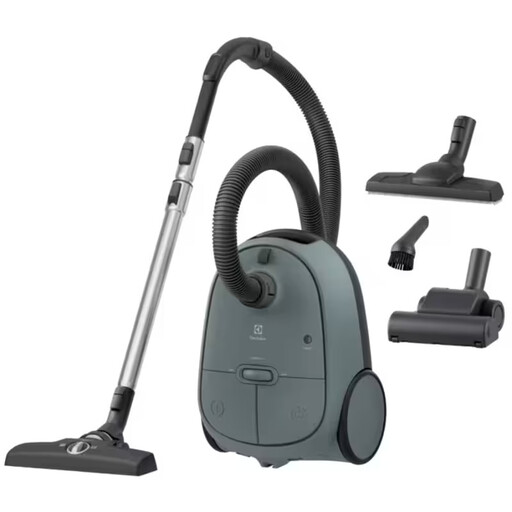 Image unavailable
Electrolux 600 EB61C4OG bagged cylinder vacuum
A bagged cylinder vacuum to consider for regular cleaning across large areas and different surfaces. Check that the brushes included are suitable for your floors and upholstery, and make sure compatible bags are available. If you’ll need to carry it up and down stairs, check its weight too.
View on Joybuy
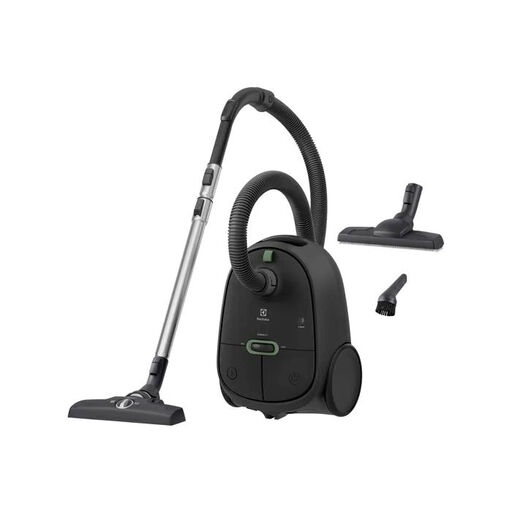 Image unavailable
Electrolux EB61C2GRN bagged vacuum, 550 W, black
This bagged cylinder vacuum is another option for a main cleaner. The 550 W stated in its name isn’t enough on its own to tell you how well it will clean rugs or upholstery. Check the accessories included, working range and compatible bags for your needs.
View on Joybuy
Frequently asked questions
Is wattage enough to help you choose a cylinder vacuum?
No. UFC-Que Choisir distinguishes vacuum performance across different surfaces, so look for test results on your flooring and check the floorhead and brushes included rather than relying on motor wattage alone.
Should you choose a bagged or bagless cylinder vacuum for a large home?
Choose based on the maintenance routine you’re happy with: replacing compatible bags, or regularly emptying a canister and cleaning its filters. Either way, check the working range, accessories and performance on your floors too.
What should you check for rugs, upholstery and pet hair?
Check the accessories included with the exact model and, if possible, look for separate test results on rugs, carpets and fibres. UFC-Que Choisir’s test protocol assesses fibre pick-up on carpets separately, for example, so a “all floors” label alone won’t answer this question.
How should you dispose of vacuum dust and an old vacuum cleaner in France?
ADEME recommends putting vacuum dust in your household rubbish, preferably in a sealed bag. If you have an old appliance, consider repairing it first. Otherwise, ADEME suggests options including returning it to a shop or taking it to a recycling centre that accepts waste electrical and electronic equipment.


