Households that would rather not empty a bin
With a bagged cylinder vacuum, you can remove and throw away the full dust collector instead of cleaning a reusable bin, as Que Choisir explains. You’ll need to make sure you have compatible bags, though.


If you want to minimise contact with the dust you’ve collected, start by comparing cylinder vacuums with bags. According to Que Choisir, you remove and throw away a full bag, whereas a bagless model requires you to empty and clean its bin. A bagless vacuum may still suit you if you’re happy to do this; if you’re considering a stick vacuum with a collection station, also check what you need to do when the station is full.
Your choice mainly depends on which maintenance tasks you want to avoid and which you’re happy to take on.
With a bagged cylinder vacuum, you can remove and throw away the full dust collector instead of cleaning a reusable bin, as Que Choisir explains. You’ll need to make sure you have compatible bags, though.
A bagless vacuum could suit you if you don’t mind emptying the bin and maintaining the filters. Check the exact model’s instructions before deciding this is the right style for you.
A stick vacuum can be handy for quick cleans. Before choosing one, check that its battery life suits how you plan to use it, as well as the bin capacity and how to empty the bin or maintain its station.
Start with the collection method you’re comfortable with, then look at the maintenance involved and whether the appliance suits your home.
Worth considering: if you’d rather remove a full bag than empty and clean a bin.
Bear in mind: you’ll need to buy compatible bags as you use them.
Worth considering: if you’d rather not buy bags and are happy to handle the contents of the bin.
Bear in mind: you’ll need to empty the bin and maintain the parts and filters specified in the instructions.
Worth considering: for quick cleans, if its performance suits the area you need to clean.
Bear in mind: depending on the model, you’ll need to empty the bin or maintain the station’s container.
| What to consider | What to check | What I need |
|---|---|---|
| Disposing of dust | Compare removing a bag with opening and emptying a bin. If the bag is said to seal shut, check that this applies to a bag that’s compatible with the model you’re choosing. | I’d rather throw away a full dust collector than clean a bin containing the dirt I’ve vacuumed up. Que Choisir distinguishes between these tasks for bagged and bagless appliances. |
| Routine maintenance | Check the instructions for how to clean the parts, whether the filters need washing and how long they need to dry before you put them back. Also check how to tell when the dust collector needs emptying. | I want to know what I’ll need to do between cleans, not just how to switch the appliance on. |
| Cleaning your home | Check that the brush is suitable for your floors and the area you need to cover. If you’re choosing a cordless stick vacuum, check its battery life in the mode you plan to use. | How I empty it matters, but the appliance also needs to suit my floors and the length of my cleaning sessions. |
| Consumables | Find the product codes for compatible bags and filters. For a model with a station, also identify the collection container and how to replace or empty it. | I want to compare the cost of consumables with the maintenance tasks required by a bagless appliance. |
Going bagless doesn’t mean you won’t need to empty the bin. Rowenta says that removable parts may also need cleaning and drying before you put them back.
Before you buy, check the instructions for the exact model. Find out how to open the bin, which parts can be washed and what the filter care instructions say.
Allow time to empty the bin and maintain the reusable parts.
A filter alone doesn’t tell you what happens when you open the bin or remove the bag. A claim of ‘easy emptying’ doesn’t mean you won’t have to dispose of the contents.
Check the collection system, emptying method and filter maintenance separately. For a bagged appliance, check which bags are compatible and whether they have a sealing mechanism.
These examples relate to specific ranges or models; they don’t apply to every vacuum cleaner from each brand.
The Guard L1 range includes bagged cylinder vacuums. Miele says its TU HyClean Pure bags are compatible with the Guard L1 and Guard S1.
Two Bosch cylinder vacuums show the different systems to compare: the bagged BGB6SIL0L and the bagless BGS41POW1.
Rowenta’s care advice highlights practical points to check if you’re considering a bagless vacuum cleaner.
When considering a bagless Dyson stick vacuum, look at how it’s emptied as well as how easy it is to manoeuvre.
This selection includes a bagged cylinder vacuum and two stick vacuums with collection bases. Focus on how to remove or empty each one’s container.
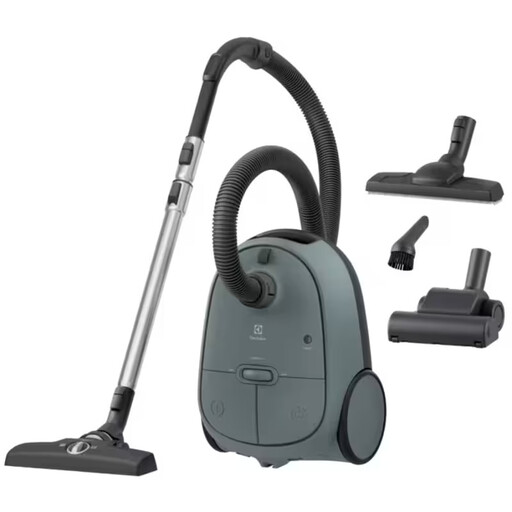 Image unavailable
Worth considering if you’d rather remove a full bag than empty a reusable bin. Before buying, check the product code for compatible bags and how they seal.
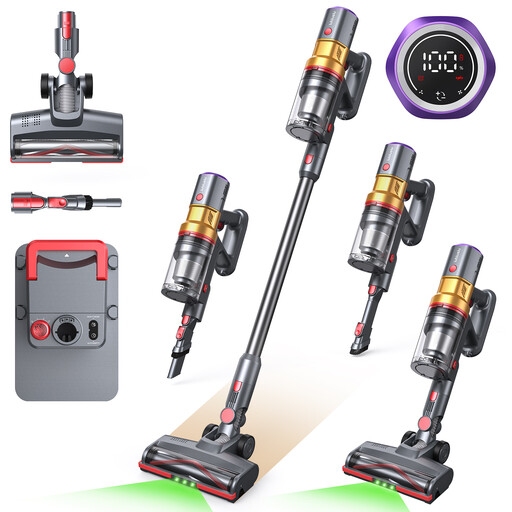 Image unavailable
Its automatic emptying station could suit you if you’d rather not empty the stick vacuum’s bin after every clean. The station uses a disposable bag, so check how to replace it and which bags are compatible.
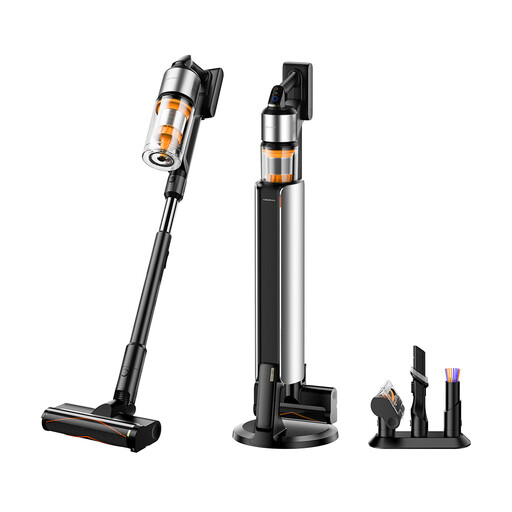 Image unavailable
The automatic collection base is worth considering if you want to empty the stick vacuum less often. Find out what container it uses and how to empty or replace it: that’s what matters when the base is full.
A bagged model is a good starting point if this is your priority. According to Que Choisir, you remove and throw away a full bag, while a bagless vacuum’s bin needs cleaning. Still, check how the bag is removed on the model you’re considering.
First, follow the instructions for your appliance. For bagless vacuum maintenance, Rowenta recommends emptying the bin into a bin bag outdoors. Any cleaned parts should be left to dry before you put them back.
No. A HEPA filter doesn’t remove the need to dispose of the contents of the bin. Check the filtration, how the dust collector opens and what filter maintenance is required separately.
For everyday vacuum dust and waste, ADEME recommends putting it in your household rubbish bin, preferably inside a sealed bag. If you’ve vacuumed up a material that has specific disposal requirements, follow the relevant guidance for that waste.