What should you look for?
For regular cleaning at home, start by considering how you’ll remove the collected dust. Then look at filter maintenance and the design best suited to your surfaces. Choosing between a bag and a dust container doesn’t, on its own, determine whether a stick or cylinder vacuum is right for you.
| Priority |
What to check |
Consumers concerned |
| Removing dust |
How the compatible bag seals, or how the dust container opens. |
I’d rather remove a bag than empty an open dust container after cleaning; around 42% of consumers would make dust removal their main priority. |
| Filter maintenance |
The model’s instructions and guidance on washing or replacing each filter. |
I want clear instructions for maintaining my appliance’s filters; this would be the main priority for around 33% of consumers. |
| Design and frequency of use |
Dust container capacity and, depending on the design, either the operating radius or battery life. |
For frequent cleaning or the areas I need to cover, I first consider whether the design suits me; around 25% of consumers would prioritise this feature. |
Some specific consumables have a seal that makes it easier to remove the bag: Miele describes this feature for the TU HyClean Pure, and Bosch for the BBZ41FK bag. Don’t assume that all bags from these brands have this feature. With a dust container, consider the steps involved in emptying it, then check the filter maintenance instructions. For a cordless stick vacuum, battery life is another factor to consider; for a corded cylinder vacuum, check the stated operating radius.
Vacuum cleaners to consider on Joybuy
These models let you compare two ways of collecting dust for regular cleaning: two bagless vacuum cleaners and one bagged model. Compare how they’re emptied and check which filters or consumables are compatible before you choose.
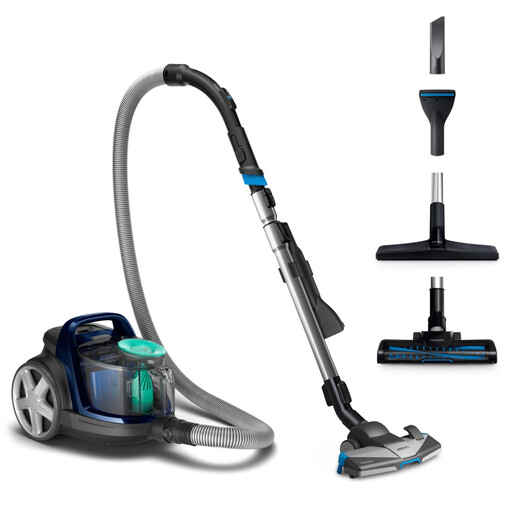 Image unavailable
Philips FC9556/09 Series 5000, blue bagless vacuum cleaner
Worth considering if you’d rather empty a dust container than replace a bag. The product description lists LED lighting and 900 W of power; check the FC9556/09 instructions for details on emptying it and maintaining its filters.
View on Joybuy
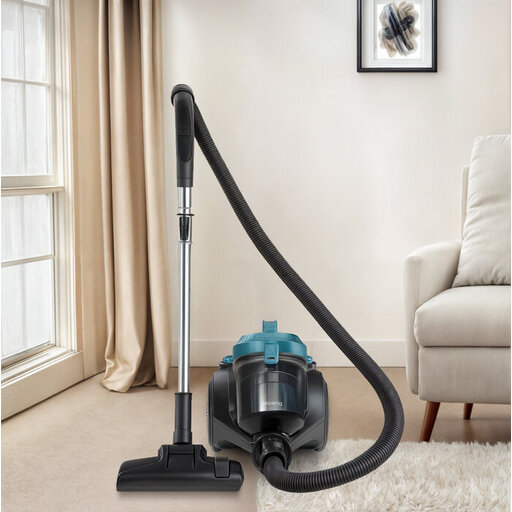 Image unavailable
Hkoenig STC48, black and blue bagless cyclonic vacuum cleaner
Worth considering if you want to avoid using bags and are happy to empty a dust container. Before choosing the STC48, check its instructions for how to open the container and maintain the filter.
View on Joybuy
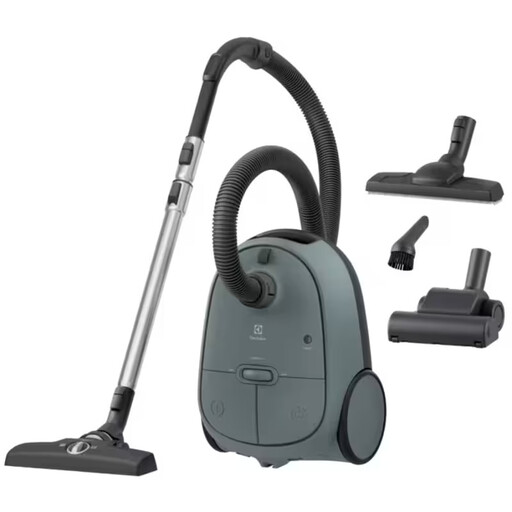 Image unavailable
Electrolux 600 EB61C4OG, bagged cylinder vacuum cleaner
Worth considering if you’d rather remove a bag than empty a dust container. Check the reference for the compatible bag, whether it seals when removed and the filter maintenance instructions for the EB61C4OG.
View on Joybuy
Frequently asked questions
Does a HEPA filter or filter bag protect your health?
A filtration feature alone doesn’t prove that an appliance protects your health or treats allergies. When choosing a vacuum cleaner, check that any HEPA claim relates to a compatible filter and model, and take account of the manufacturer’s maintenance instructions.
Should you air the room after vacuuming?
Yes. ADEME recommends ventilating the room after cleaning and vacuuming, particularly because dust can be stirred up while the appliance is in use. This complements your choice and maintenance of the appliance, but doesn’t prove that a particular type of filter has a medical benefit.
How can you tell if a bagless vacuum cleaner’s filter is washable?
Check the instructions for the exact model before washing it. Rowenta says that some filters in its bagless vacuum cleaners are washable, while non-washable filters need to be replaced. You can’t tell which applies just by looking at the filter.
How do you find the right bag or filter?
Note down the vacuum cleaner’s full model reference, then check it against the manufacturer’s compatibility list. Bosch uses the E-Nr, for example, to help you find parts for an appliance; Miele lists compatible ranges on some of its bag and filter product pages.


