Parents keeping an eye on salt
For back-to-school meals, you want to distinguish between the salt listed on the packet and what you add to the cooking water and accompanying dishes.


When choosing dried pasta for the new school year, first compare the amount of salt listed per 100 g, then pick a shape that suits the dish you’re planning. A low figure on the label does not, by itself, prove that the product is “reduced in salt” compared with a similar pasta. Salt added during cooking and the accompanying ingredients also count towards the meal.
For back-to-school meals, you want to distinguish between the salt listed on the packet and what you add to the cooking water and accompanying dishes.
You’re looking for shapes that work in salads, soups, with sauces or in bakes, without assuming that every product from a brand has the same composition.
You’re thinking of trying wholemeal pasta and want to check fibre and salt separately, while also taking your household’s tastes into account.
For a back-to-school meal, start with the dish you’re planning, then compare the nutritional information for suitable products. The salt content of dried pasta alone does not tell you how much salt is in the meal you serve.
| Criterion | What to check | Who it’s for |
|---|---|---|
| Salt in the meal | Compare the “salt” entry per 100 g for specific products; account separately for seasoning in the cooking water and sauce. | If I want to keep track of the salt in a dish, I need to consider both the pasta and what I add to it. Around 50% of consumers would put this at the top of their list of criteria. |
| Use and shape | Choose a shape that suits the recipe and check the cooking time on the packet. | When organising back-to-school meals, I mainly need a shape that works for the dishes I’m planning and the time I have available. Around 30% of consumers would prioritise this convenience. |
| Fibre and recipe | Check the fibre and salt per 100 g for the same product, and read the ingredients list. | If I want to try wholemeal pasta, I also want to know whether my household will enjoy the taste, without making assumptions about its salt content. This would be the main criterion for around 20% of consumers. |
The amount declared per 100 g does not, by itself, show that the product contains less salt than a similar one.
Compare the figures for pasta of the same type, and check the packaging to see whether the claim “reduced in salt” is actually used.
Salt added to the cooking water, as well as salt in sauces and toppings, also contributes to the dish.
If you’re trying to limit the salt in your meal, use less when cooking and check the accompaniments separately. Manger Bouger advises not adding too much salt to cooking water.
Claims such as “wholemeal”, “organic” or “high-protein” tell you about other aspects of a product; they don’t replace the salt figure for the specific product you’ve chosen.
Check the ingredients, allergens and nutritional information that matter to you separately.
These brands offer different types of pasta. The nutritional figures below apply only to the named products, not to their entire ranges.
The range includes classic and wholemeal pasta.
Panzani offers short and long pasta shapes, as well as pasta designed for dishes such as soups, salads and oven bakes.
Lustucru says its products are made in France using French ingredients.
Carrefour offers pasta under its Carrefour Bio brand, among other products.
E.Leclerc’s range includes several Marque Repère pasta shapes, including spaghetti, coquillettes and wholewheat penne.
Two Auchan spaghetti products provide an example of how classic and wholemeal pasta compare.
These three products offer different shapes and styles for back-to-school meals: konjac and oat spaghetti, Hello Kitty macaroni and Farfalle Integrali. If you’re focusing on salt, compare the nutritional information on each packet and consider how you plan to season the dish. None of these product names is enough to establish a “reduced in salt” claim.
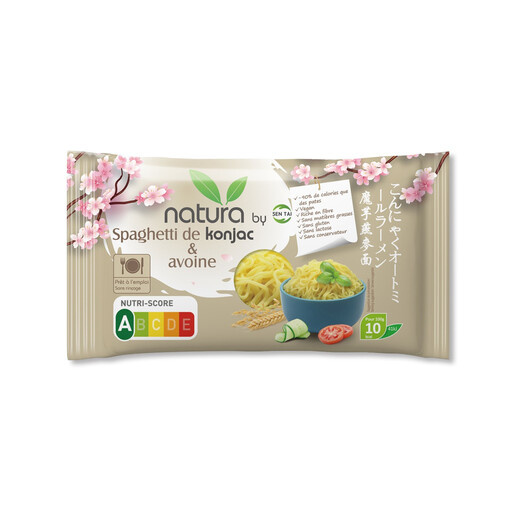 Image unavailable
A spaghetti option to consider if you’d like to try something different as the base for your back-to-school meals.
The packet is listed as 250 g. If the presence of oats or gluten matters to you, check the ingredients and allergen information on the packaging.
 Image unavailable
Hello Kitty macaroni may be worth considering if the look of the pasta matters for a meal for children.
The packet is listed as 120 g, so check whether that’s enough for your meal. Also check the “sugars” entry on the packaging before comparing its nutritional values with those of other macaroni.
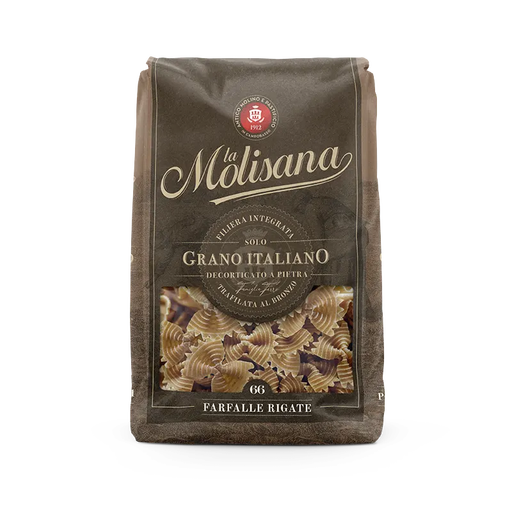 Image unavailable
These farfalle are worth considering if you’re looking for a wholemeal pasta shape for back-to-school meals.
The packet is listed as 500 g. Compare fibre and salt per 100 g separately, then take account of any salt added during cooking.
No. A low figure per 100 g does not, by itself, show that the product contains less salt than a similar one. If this claim matters to you, check that it appears on the product and look at the comparison it refers to.
You can reduce or leave out the salt added to the cooking water if you want to keep track of the salt in your dish. Manger Bouger advises not adding too much salt to the water. Remember to consider the sauce and toppings before adding any more salt.
No. According to Auchan’s product information for the products mentioned, wholemeal spaghetti contains 0,03 g of salt per 100 g, compared with less than 0,01 g for classic spaghetti. So compare the salt in each product separately from its fibre content.
Start with the ingredients list and allergen information for the product you’re buying: the wheat pasta featured here contains wheat. Also check the packaging for “may contain” warnings, as these can vary between products.