
Livraison le jour même ou le lendemain

Qualité garantie

Débloquez vos offres de bienvenue: Livraison GRATUITE | Jusqu'à -80 % | 30 jours d'essai gratuits à JoyPlus
Téléchargez l'application
Taking a baby’s temperature should be simple, quick and reassuring. Yet some purchases disappoint from the very first use: difficult measurements on a wriggling child, a screen that is hard to read at night, batteries that are difficult to find or advertised features that ultimately prove almost useless.
Before choosing a baby thermometer, it is therefore worth looking beyond the promise of a “one-second reading”. The measurement method, cleaning, power supply and precautions for use often matter more than a long list of features.
A baby infrared thermometer can display a result almost instantly, but positioning, distance and the selected mode directly affect the reading. A no-contact forehead model should generally be used on unobstructed skin, in a room with a stable temperature and at the distance specified in the instructions.
A quick measurement is convenient, but it does not remove the need to follow the manufacturer’s procedure. If the result seems unusual, it is best to repeat the measurement under the correct conditions and seek advice from a healthcare professional if necessary.
Some devices measure body, bath, milk, food or room temperature. This versatility can be useful, but a model that does not offer the right mode for your main use may simply end up forgotten in a drawer.
In particular, check that the product clearly distinguishes between body mode and object mode. The temperature of bath water or a baby bottle must never be interpreted as body temperature.
Tips, caps and batteries must be kept out of children’s reach. Even if it has a water-resistant probe, an electronic device must not be immersed. For a children’s medical thermometer, also check the recommended cleaning method and whether the battery can be replaced.
A “whole-family” device can save you from buying several models, but make sure that each of its modes genuinely matches your habits.
The product description may mention a measurement range, a resolution of 0.1 °C or a specific tolerance. These figures only apply under the conditions specified by the manufacturer: distance, ambient temperature, body area and probe care.
A large backlit screen, a visual or audible fever alert and a silent mode are especially useful at night. A colour alert indicates a result based on a predefined threshold; it is not a diagnosis.
Most models use AAA batteries or a button cell. Check that they are readily available and make sure they are included. Memory for 30 to 35 readings can also be useful for monitoring changes over time.
The connected thermometer generally adds an app and family profiles. This option may appeal to parents who want to keep a history of temperatures and symptoms, but it requires Bluetooth setup, a compatible phone and data management within the app.
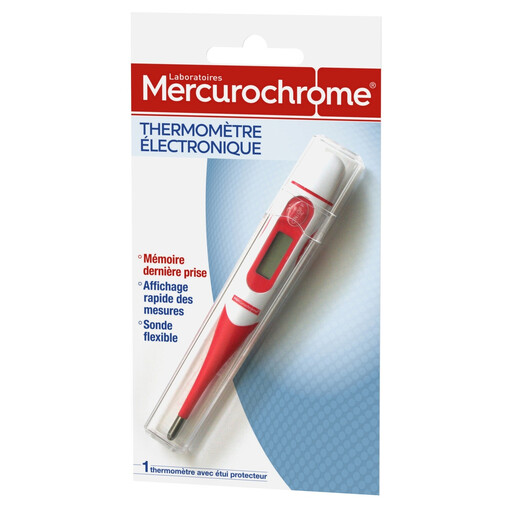
Why this choice suits this profile : A straightforward model for families looking for a digital thermometer without an app or complicated settings. It can be used for underarm, oral or rectal measurements, according to the instructions.
Its design focuses on the essentials and avoids unnecessary features. The flexible tip and water-resistant probe make it easier to use and clean, without immersing the device.
Automatic shut-off after approximately 10 minutes, LCD screen and replaceable LR41 or SR41 battery.
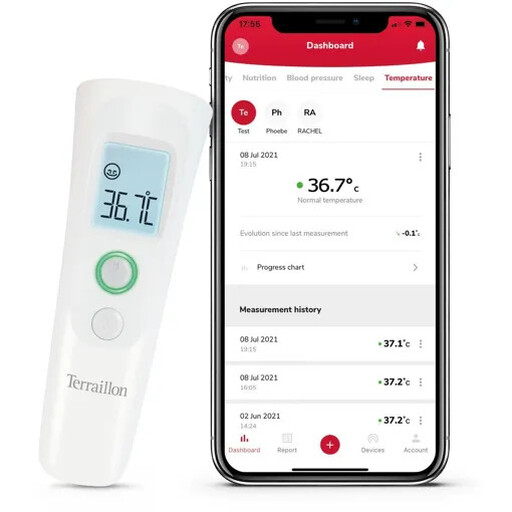
Why this choice suits this profile : This connected model is designed for households that want to keep readings for several people together in one app, with up to eight profiles according to the product description.
The positioning sound helps you maintain a distance of 3 to 5 cm. Object mode is separate from body mode, helping to prevent selection errors.
One-second reading, memory for 30 measurements, Bluetooth, and body, liquid, object and ambient temperature measurement.
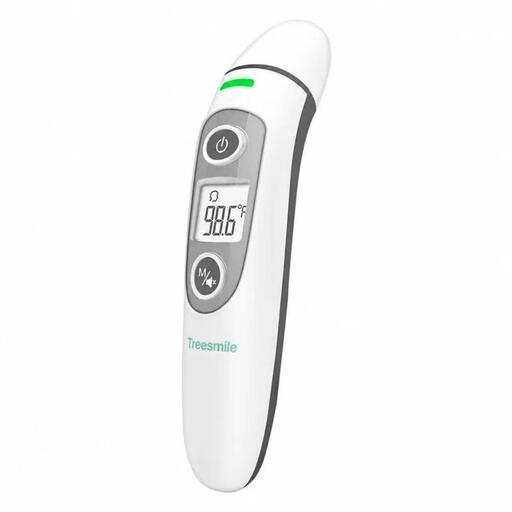
Why this choice suits this profile : Its three-in-one operation is ideal for families who want to switch between forehead, in-ear and object measurements.
Separate modes reduce the risk of using a body setting to measure bath water or milk. The silent mode is particularly practical for taking readings at night.
35-memory storage, colour alert, reading in approximately one second and operation with two included AAA batteries.
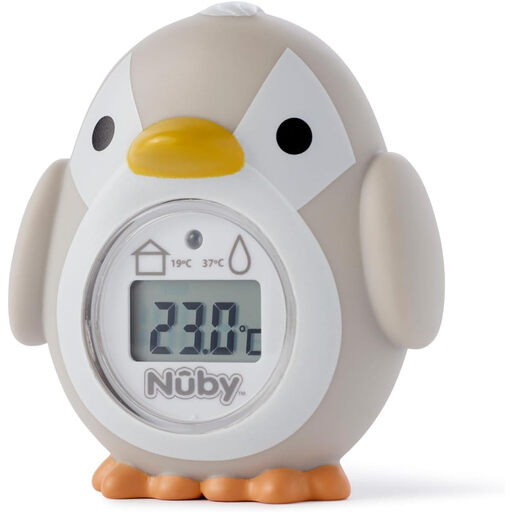
Why this choice suits this profile : This baby bath thermometer is designed for parents who want to check the water temperature before placing their child in the bath.
Designed to float, it has a red indicator that signals water is too hot, according to the product description. However, it does not replace manual checking or constant supervision.
Suitable from birth according to the product description, LCD display and BPA-free design.
We have put together a complete, real-time updated list of products that fully meet these strict selection criteria and European safety regulations.
A thermometer is a measuring tool and does not replace medical advice. If you are concerned about your child’s temperature, if they have persistent symptoms or if their general condition deteriorates, contact a healthcare professional.
A no-contact forehead thermometer with a silent mode helps minimise handling and noise. However, the distance, positioning and room temperature must comply with the instructions. If in doubt, repeat the measurement using a suitable method.
It depends on the condition of the probe, screen, buttons and battery. Replace the device if it is cracked, displays inconsistent results or its water resistance has been compromised. Also consult the instructions and warranty terms.
They can make it easier to track multiple readings, particularly at night or when several family members use the same device. A fever alert remains an indicator defined by the manufacturer; it is not a medical interpretation of the situation.