
Livraison le jour même ou le lendemain

Qualité garantie

Débloquez vos offres de bienvenue: Livraison GRATUITE | Jusqu'à -80 % | 30 jours d'essai gratuits à JoyPlus
Téléchargez l'application
Babybio organic baby food can make mealtimes simpler, but the packaging doesn’t always tell the full story. With labels like “organic”, “no added sugar”, “gluten-free” and age recommendations, it’s easy to pick a product that doesn’t quite match your child’s needs.
Here are the key things to check before you stock up on organic baby food jars, fruit purées and cereals.
A baby fruit purée with no added sugar contains the natural sugars found in the fruit, but no extra sugar has been added to the recipe. For example, Babybio’s apple and mango purée is made from 50% mango and 50% apple, and contains 11.4 g of sugar per 100 g. That doesn’t mean sugar has been added.
The smart move is to check the ingredients list and the nutritional table, rather than relying solely on the front of the jar.
A baby meal from 4 months doesn’t have the same texture or composition as a dish for a 15-month-old. The first purées are usually perfectly smooth, while recipes for older toddlers may contain chunks, pasta or a thicker consistency.
The age on the packaging is a useful guide. You should also follow the advice of your child’s healthcare professional, especially when introducing allergens.
A recipe can be gluten-free or dairy-free while still stating that traces of other allergens may be present. Rice and quinoa-based cereals, for example, may mention possible traces of gluten, lupin, milk, mustard or soya.
If your child has an allergy or intolerance, always check the label on the product you receive. The information shown on an online listing can change.
For baby food during weaning, start by comparing:
A selection of four 130 g vegetable jars can be really handy at the start of weaning. The 2 × 200 g dishes are better suited to family life where portions are already a bit bigger.
Organic doesn’t automatically mean the product meets all your criteria. Look out for:
The Babybio dishes shown here carry a “no added salt” label on several savoury recipes. That doesn’t mean they’re completely sodium-free, as some ingredients naturally contain it.
Organic baby food jars need to be handled carefully. Depending on the product, an opened portion that hasn’t been eaten directly from the jar can be kept in the fridge for up to 48 hours. Some individual products state a shorter time, sometimes just 24 hours.
Don’t put a glass jar directly in the microwave. Instead, use a bain-marie or transfer the amount you need into a suitable container. Stir well and always check the temperature before serving.
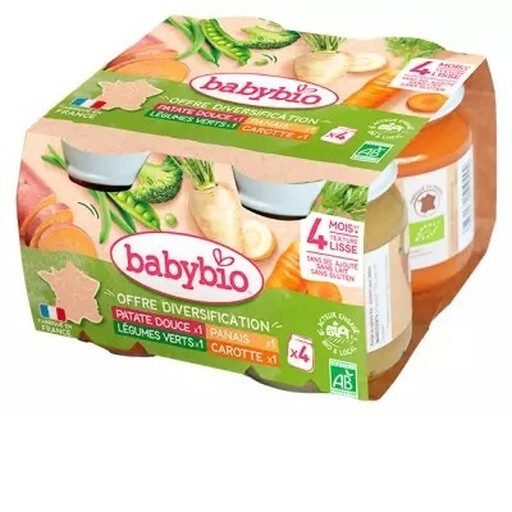
Why this is a good choice: With four 130 g jars, you can introduce several vegetables without cluttering the cupboard with lots of different products.
The multi-pack stops you buying lots of different items, and the recipe is stated as no added salt, dairy-free and gluten-free.
From 4 months, 4 × 130 g, vegetable selection and made in France as stated.
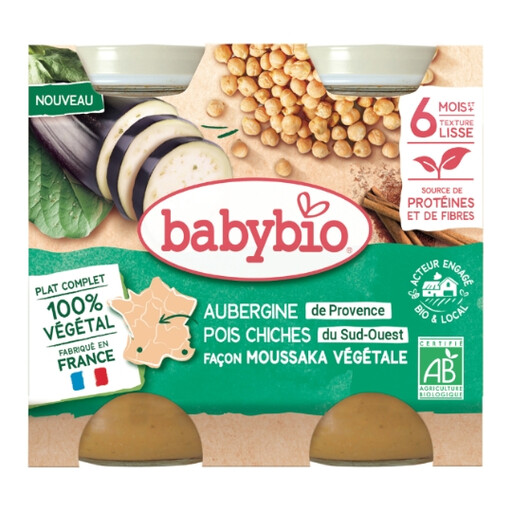
Why this is a good choice: This vegetarian recipe inspired by moussaka adds variety from 6 months, perfect for families who want to move beyond basic purées.
The listing clearly states the age, size and declared exclusions: no added salt, dairy-free and gluten-free.
2 × 200 g, chickpeas and vegetables, vegetarian recipe and FR-BIO-01 organic certification stated.
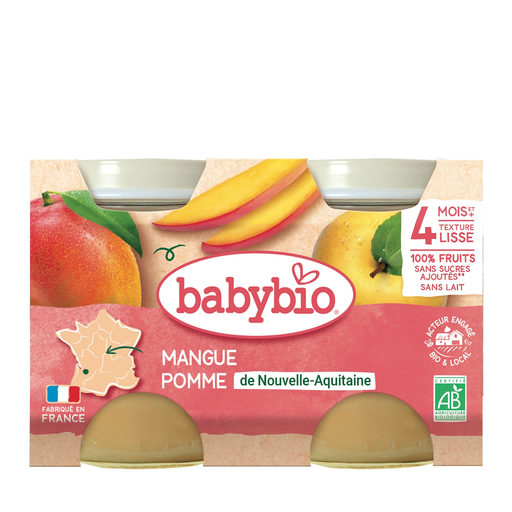
Why this is a good choice: The two 130 g portions slip easily into a bag for a day out, nursery or travelling.
The “no added sugar” label matches an ingredients list made up of fruit, with no added milk or gluten.
From 4 months, 100% fruit as stated, 2 × 130 g, serve at room temperature or chilled.
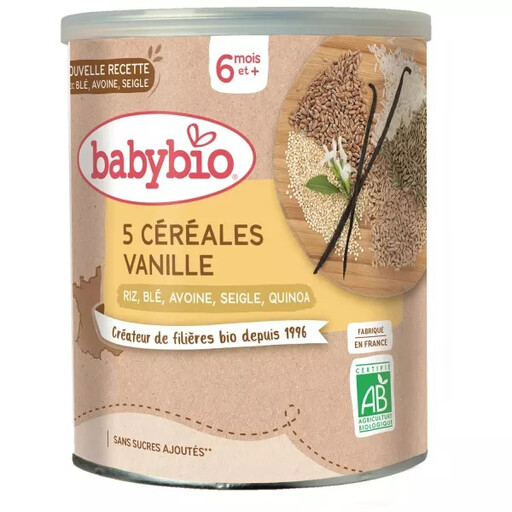
Why this is a good choice: Instant cereals are a handy standby when you don’t have time to prepare a meal.
The preparation instructions state the usual amount of water or milk, an approximate temperature and that it should be eaten straight away.
From 6 months, rice and quinoa flour, no added sugar as stated and added vitamin B1.
For a gluten-free baby meal, check not only that there are no wheat-based cereals, but also any mention of possible traces. According to the label, recipes made with vegetables or rice, as well as some fruit purées, may be suitable.
For a dairy-free baby meal, carefully check the ingredients list and allergens. Biscuits, milk-based desserts and some cereal preparations may contain dairy. The Babybio savoury recipes stated as dairy-free offer several options, but the product packaging remains the final reference.
Organic baby biscuits also deserve a close look. The orange-flavoured sponge finger, recommended from 8 months, contains wheat and egg. The petit-beurre biscuits, from 12 months, contain milk and gluten. Only serve them at the stated age, under supervision and with your child sitting up.
We’ve put together a full, real-time list of products that fully meet these strict selection criteria and European safety regulations.
Some products are recommended from 4 months, particularly purées made with apple and other fruits. Always follow the age stated on the product and introduce foods gradually, in line with the advice of your child’s healthcare professional.
The time varies depending on the product. Several dishes can be kept for 48 hours in the fridge if they haven’t been reheated and your child hasn’t eaten directly from the jar. Always check the product label.
The quinoa and vanilla recipe is mainly made from rice flour and quinoa, but the listing mentions that traces of gluten may be present. So it shouldn’t be considered guaranteed gluten-free without checking the packaging.