Parents just starting weaning
You’re looking for a dairy product with age guidance and a texture suited to your baby’s stage. Ameli says that weaning a healthy baby should start between 4 months completed and 6 months.


When starting weaning, Manger Bouger recommends plain, unflavoured dairy products. A fruit dairy dessert labelled as suitable from 6 months may be an option, depending on its recipe and texture. However, the word “mild” alone does not mean it is suitable at this stage: check the age guidance, ingredients, milk content and whether it contains any pieces.
You’re looking for a dairy product with age guidance and a texture suited to your baby’s stage. Ameli says that weaning a healthy baby should start between 4 months completed and 6 months.
You want to offer a fruity flavour without confusing “no added sugars” with “sugar-free”. Read the packaging claim alongside the ingredients list.
You’re comparing a dairy dessert for babies with a fruit yoghurt for children or the whole family. The age guidance, texture and recipe of the specific product matter more than its presentation.
To get started, Manger Bouger’s recommendation to choose “plain, unflavoured” dairy products is a helpful guide. For a fruit-flavoured recipe, also check the age guidance, texture and ingredients.
Choose this if: you’d like to follow the guidance to offer plain, unflavoured dairy products and serve fruit separately.
Bear in mind: prepare the fruit in a texture suited to your child’s abilities.
Consider this if: the specific product has suitable age guidance and a texture that works for your baby.
Check: if the product says “no added sugars”, this does not rule out sugars naturally present in milk and fruit.
Consider this later: check the recipe and any pieces it contains against your child’s abilities.
Worth noting: the Danonino fruit products and Panier de Yoplait products reviewed contain added sugar; Panier de Yoplait is described as containing pieces.
| What to check | What to look for | Who is it for? |
|---|---|---|
| Age and texture | Check the age guidance on the specific product and whether it contains any pieces; choose a texture suited to your child’s abilities. | At the start of weaning, I want to avoid a texture my baby can’t manage yet. Around 42% of consumers prioritise age guidance and texture. |
| Sugars and ingredients | Read the ingredients list and, if it appears on the pot, the “no added sugars” claim; this does not mean “sugar-free”. | I want to tell the difference between a fruit recipe with no added sugars and one that contains added sugar. This is the priority for around 33% of consumers. |
| Introducing fruit | Compare a fruit recipe suited to the stated age with a plain dairy product served with fruit prepared to an appropriate texture. | I’d like to offer a fruity flavour while going at my child’s pace. For around 25% of consumers, introducing fruit gradually is the main consideration. |
These words are no substitute for age guidance on the product. A recipe for children may also differ from a dairy dessert for babies in its ingredients or texture.
Check the age guidance on the product you’re considering, then look at its texture and ingredients list.
Milk and fruit can contain naturally occurring sugars, even when a fruit dessert says “no added sugars”.
Read this claim alongside the ingredients list and nutritional information for the specific pot.
A fruit recipe with pieces may not have a texture that your baby can manage at the start of weaning.
Gradually introduce textures that match your child’s abilities, and stay with them during meals.
A dairy dessert may contain milk, even if the packaging puts the fruit front and centre.
Check the allergens highlighted on the packaging. If your child has a known allergy or you suspect a reaction, speak to the healthcare professional who looks after them before offering a dairy product.
Carrefour France lists P’tit Brassé Fraise Banane as a dairy dessert for babies, labelled as suitable from 6 months and “with no added sugars”.
Carrefour France also lists a Baby Bio Banana Blended Dairy Dessert labelled as suitable from 6 months.
This range for children includes fruit products. The listing for one product checked at Auchan France describes it as sweetened fromage frais.
Yoplait describes Panier de Yoplait as a range of fruit yoghurts with pieces.
E.Leclerc lists, among other products, blended fruit yoghurts with no pieces in its range of yoghurts for children.
These dairy desserts include plain options and an apricot option labelled as suitable from 6 months. If you’re looking for a fruit yoghurt with no added sugars, compare the ingredients of each product rather than assuming all three recipes meet the same criteria.
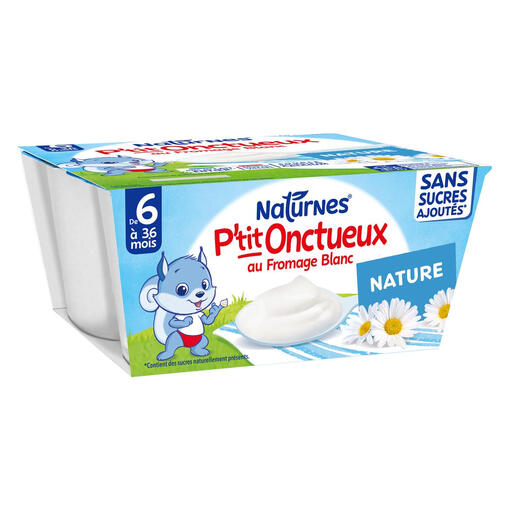 Image unavailable
An option to consider if you’d prefer a plain fromage frais dessert to a fruit recipe. The product is labelled as suitable from 6 months and comes in four 90 g pots.
If you’d also like to offer fruit, prepare it separately in a suitable texture. Check the ingredients and milk allergen information on the packaging.
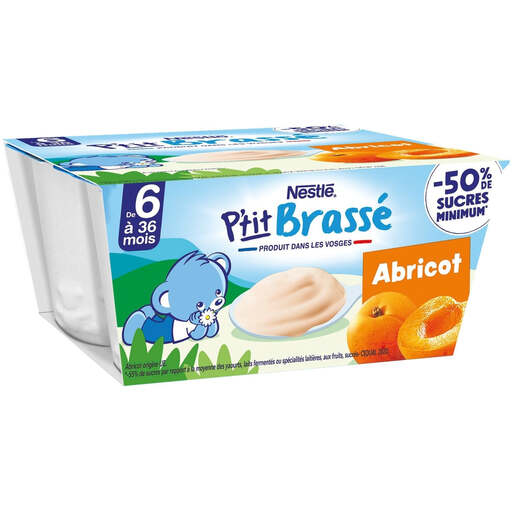 Image unavailable
A fruit recipe to consider if you’re looking for an apricot dairy dessert and the age guidance is right for your child. The product is labelled as suitable from 6 months and comes in four 100 g pots.
The recipe described contains added sugar, so don’t treat it as a “no added sugars” option. Check the ingredients and milk allergen information on the product you buy.
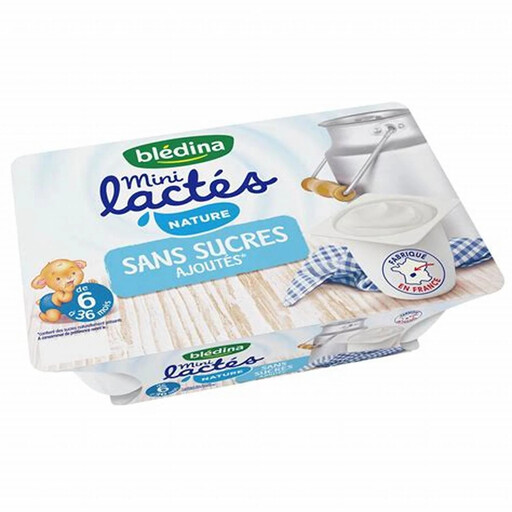 Image unavailable
A non-fruit dairy dessert to compare if you prefer smaller pots. The product is labelled as suitable from 6 months and comes in six 55 g pots.
If you’re looking for a strictly unflavoured recipe, check the ingredients list for this product; also check the milk allergen information.
According to Ameli, weaning a healthy baby should start no earlier than after 4 months completed and no later than 6 months. Then choose a product with age guidance that matches your child’s age, and make sure the texture suits their abilities. The “suitable from 6 months” label does not replace these checks.
No: a fruit dairy dessert carrying this claim may contain sugars naturally present in milk and fruit. Read the ingredients list and nutritional information for the product you choose.
Don’t automatically assume it’s the same as a baby dessert. Manger Bouger recommends plain, unflavoured dairy products; the Danonino fruit products and Panier de Yoplait products reviewed contain added sugar, and Yoplait describes its Panier range as containing pieces. Check the age guidance, recipe and texture of the specific product.
Read the ingredients list and the allergens highlighted on the packaging for each recipe. In France, the Directorate-General for Competition Policy, Consumer Affairs and Fraud Control reminds consumers of this labelling rule for prepacked foods. If your child has a known milk allergy or you suspect a reaction, speak to the healthcare professional who looks after them.
No: Ameli advises continuing infant milk until the age of one. A dairy dessert can be part of weaning; follow the storage instructions on its packaging and choose a consistency suited to your child’s abilities.