
Livraison le jour même ou le lendemain

Qualité garantie

Débloquez vos offres de bienvenue: Livraison GRATUITE | Jusqu'à -80 % | 30 jours d'essai gratuits à JoyPlus
Téléchargez l'application
A newborn's delicate skin requires constant attention. Choosing the right care products is therefore a top priority for parents. Faced with an overwhelming number of options, baby water wipes stand out as an essential solution for their simplicity and gentleness. But how do you navigate the different formulas, certifications, and marketing claims?
This guide is here to help. We'll explain how to decode labels and what key criteria to check to make an informed choice, perfectly suited to your child's sensitive skin and your values.
Before diving into our top picks, let's review the essential criteria to ensure you make the right choice.
The golden rule for baby skin is simple: the fewer ingredients, the better. A short ingredient list is the best way to minimise the risk of skin reactions.
The ecological impact of wipes is an increasingly important factor for many parents. More and more brands are offering more environmentally friendly alternatives.
Not all wipes are suitable for every purpose. Baby cleansing wipes are versatile, but for the particularly sensitive nappy area, an ultra-pure formula is recommended, especially in cases of nappy rash. For the face and hands, a gentle, non-greasy wipe will be more pleasant.
We have selected a few products that stand out from the crowd for their ingredients and commitments, to help you find the perfect match.
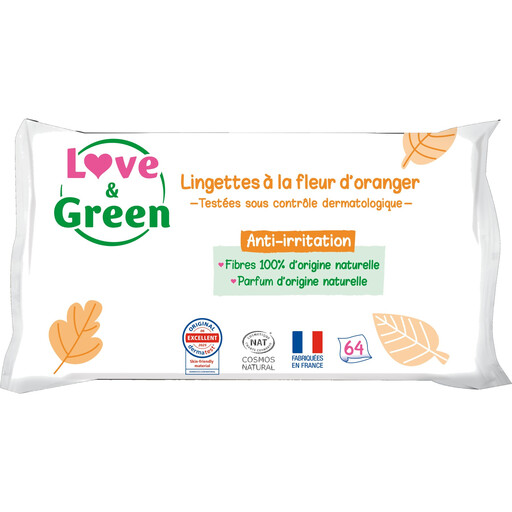
What sets it apart These wipes combine an eco-friendly commitment with a pleasant user experience. They are COSMOS NATURAL certified by ECOCERT, which guarantees their natural composition. The patented Tricell fibre is 100% natural and biodegradable, with no plastic materials.
Pros
Who is it for? For parents looking for certified eco-friendly baby wipes who don't mind a subtle, natural scent for cleaning baby from head to toe.
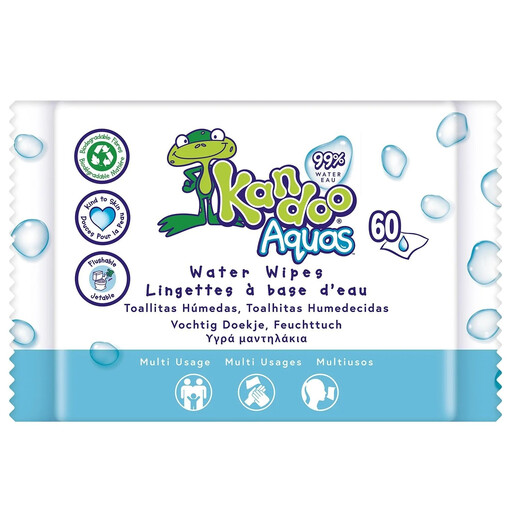
What sets it apart The key principle behind Kandoo Aqua wipes is convenience. As they are flushable, they are the perfect ally for outings and potty training. With their 99% water formula and no dyes, they get straight to the point and are suitable for the whole family.
Pros
Who is it for? For on-the-go families or those in the midst of potty training who want an ultra-practical solution without compromising on a simple formula.
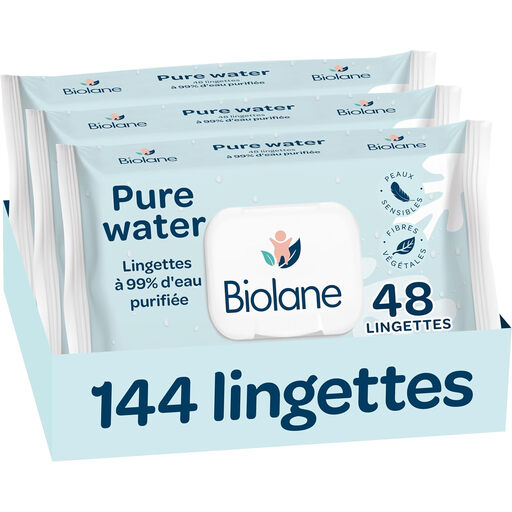
What sets it apart Biolane takes minimalism to the next level with a record-breakingly pure formula: 99.9% purified water and just one preservative. Period. It's the safest choice for the most fragile and reactive skin. Another major plus: they are OK COMPOST HOME certified and can therefore be added to your home composter.
Pros
Who is it for? Ideal for parents of newborns, babies with very sensitive or atopy-prone skin, who demand the purest formula on the market, with the added ecological bonus of being compostable.
Your baby's care routine evolves as they grow, and each stage of their development calls for specific products. Now that you're an expert on wipes, why not explore other areas?
Discover our selection of Educational Toys for Four-Year-Olds to nurture their curiosity and creativity.
Absolutely. Most water wipes are designed to be gentle enough for use on the face, hands, and nappy area. Their pure composition is what makes them so versatile. As a precaution, always check the manufacturer's recommendations on the packaging, especially if your baby's skin is very reactive.
Absolutely not! This is a crucial point to remember. Compostable wipes are designed to break down under the specific conditions of a composter. If flushed down the toilet, they do not disintegrate quickly enough and can cause blockages in the pipes. Only wipes explicitly labelled as "flushable" can end up in the toilet bowl, and always sparingly.
The organic label on wipes guarantees that certain ingredients in the lotion (like a floral water, oil, or plant extract) are from organic farming. The term eco-friendly is broader: it can refer to the material of the wipe itself (plant-based, biodegradable fibres), a less energy-intensive manufacturing process, or recyclable packaging. Therefore, a product can be eco-friendly without being organic, and vice versa. Or it can be both