
Livraison le jour même ou le lendemain

Qualité garantie

Débloquez vos offres de bienvenue: Livraison GRATUITE | Jusqu'à -80 % | 30 jours d'essai gratuits à JoyPlus
Téléchargez l'application
A baby walker can support floor play, those first attempts at getting around and periods of exploration. However, not every model meets the same needs. From wheeled walkers with seats to a push-along baby walker and a walking-learning toy, the differences in stability, suitable age and size are far from negligible.
Some marketing claims also deserve a degree of caution. Here are the main pitfalls to avoid before making a purchase.
A seated model places the child inside a mobile structure. By contrast, a push-along baby walker is designed for a child who can pull themselves up and move forwards while holding on to a handle. These two products are therefore intended for different stages of development.
Always check the age recommended by the manufacturer, any weight limits and whether adjustment features are included. A model marketed as a baby walker from 9 months will not necessarily be suitable for every child of that age.
A musical and light-up baby walker can make activities more appealing, but an abundance of buttons guarantees neither stability nor ease of use. Sound features can also mean changing the batteries more often and may quickly become tiring in a small home.
It is better to prioritise easy-to-reach activities, a reasonable sound level and, where possible, a removable panel. This allows you to switch from play mode to movement mode without electronics taking over the whole product.
On a smooth floor, a baby walker can pick up speed. Stairs, thresholds, thick rugs, open doors and uneven surfaces must therefore be considered before first use.
Even with braked wheels or an adjustable speed setting, the walker must be used on a flat, clear surface under constant adult supervision. The CE marking and instructions do not replace these basic precautions.
Examine the width of the base, weight distribution and quality of the handle. On a push-along walker, rubberised wheels can reduce noise and improve grip on some surfaces, but they do not eliminate every risk of slipping.
An adjustable resistance or speed setting can prove useful as your child becomes more confident. It should, however, remain easy to operate and not change at the slightest movement. Remember to check the wheels, screws, axles and various fastening components regularly.
A baby walker from 12 months may take the form of a wooden push-along walker equipped with several activities. Your child should be able to reach the handle without leaning forwards excessively and maintain a stable posture. With a seated model, the seat height and position of the feet should correspond to the instructions.
Do not rely solely on the age shown on the packaging. Also take your child’s height, confidence when standing and the space available at home into account.
The wooden baby walker is appealing thanks to its rigid, durable-looking structure. Nevertheless, check the condition of the surfaces, ensure there are no accessible sharp edges and confirm that the joints are sturdy. Plastic models are often lighter and may include more activities, but they must remain stable and easy to clean.
Look for instructions in French, age-related warnings, information about the maximum weight capacity and care guidelines. For products with a seat, also check the standard references provided by the manufacturer, particularly where it is a convertible baby high chair.
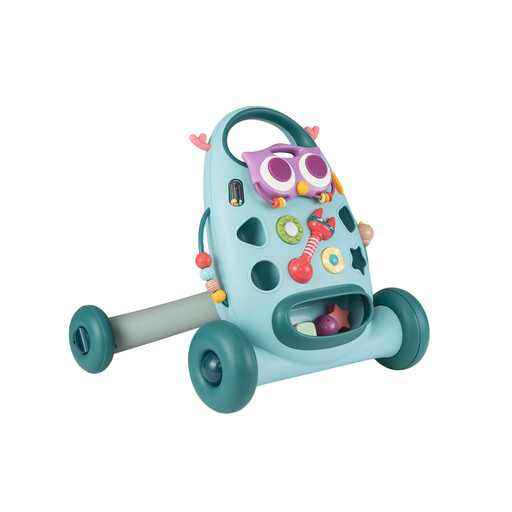
Why this choice suits this profile : Its removable play panel provides an engaging activity without adding more equipment – a real advantage in a flat or a bedroom with limited space.
The removable feature means you do not have to pay for equipment permanently packed with electronic or difficult-to-maintain elements.
Removable oval panel and shape-sorting toy, with a design well suited to everyday play and exploration.
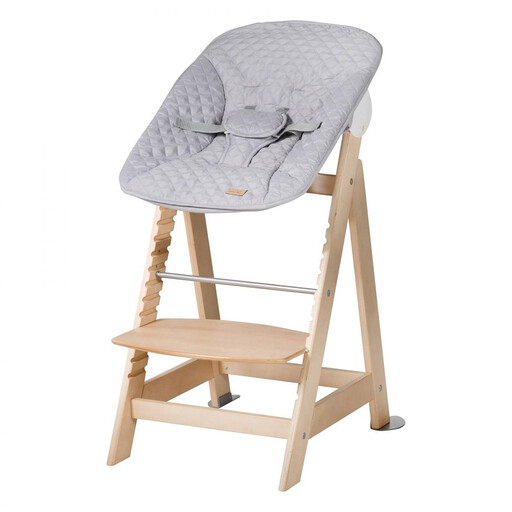
Why this choice suits this profile : This set is designed for families looking for adaptable equipment that can be used with a newborn, then as a high chair and junior chair.
Its adaptable design avoids having to buy a baby chair, then a high chair and finally a junior seat.
Reclining newborn lounger, adjustable seat and footrest, 5-point harness on the lounger and 3-point harness on the high chair. The manufacturer states that it meets EN 12790:2009 and DIN EN 14988:2017 standards.
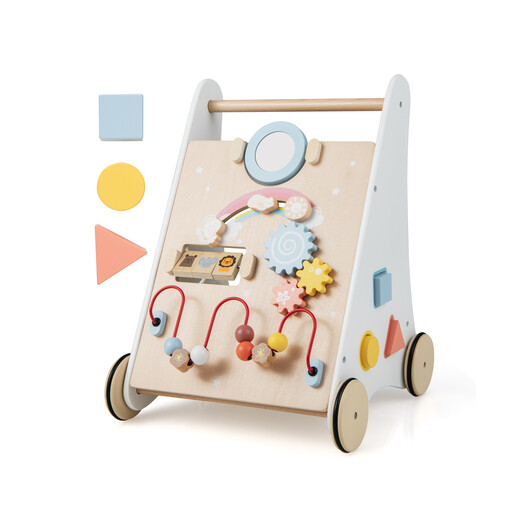
Why this choice suits this profile : This wooden walker is suitable for children from 12 months and for families who value hands-on play, simplicity and a battery-free design.
Its rubber-edged wheels are designed to reduce noise and minimise marks on the floor. It is still essential to check their grip on your flooring.
Wooden structure, seven advertised activities, ergonomic handle, storage basket and assembly instructions included.
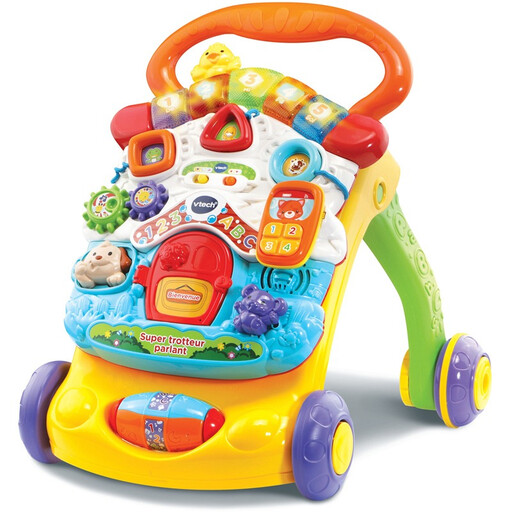
Why this choice suits this profile : Its activity centre with seat can later be converted into a push-along walker, allowing play to adapt to your child’s progress from 9 months, in line with the stated guidance.
The wheel speed adjustment means you do not have to keep the same setting as your child grows in confidence. Supervision remains essential.
Two modes, removable panel, light-up buttons, gears, shape sorter, phrases, songs and melodies. The product runs on batteries.
We have compiled a complete, real-time updated list of products that fully meet these strict selection criteria and European safety regulations.
It depends on the product category. Some activity models are suitable from 9 months, while a wooden push-along walker is generally intended for a child aged at least 12 months. Depending on the model, your child may need to be able to sit or stand unaided. Read the instructions and follow the stated limits carefully.
Assemble it according to the instructions, check every locking mechanism and place it on a flat floor, well away from stairs, windows, heat sources and water. Remove all packaging and small parts before use. Regularly inspect the wheels, handle, seat and fastenings.
A wooden model with hands-on activities generally does not require batteries. A musical and light-up baby walker may use several sets, depending on how often it is used and how many functions are activated. The total cost should also take account of maintenance, the storage space required and the period of use you realistically expect.