
Livraison le jour même ou le lendemain

Qualité garantie

Débloquez vos offres de bienvenue: Livraison GRATUITE | Jusqu'à -80 % | 30 jours d'essai gratuits à JoyPlus
Téléchargez l'application
That's it. Your child is pulling themselves up, grabbing onto anything they can find to take their first steps. It's a magical moment! To support them in this new adventure, a multi-activity baby walker is an excellent companion. But be careful—faced with a jungle of available models, it's easy to make the wrong choice. As the Head of Product Recommendations at Joybuy, I'm here to guide you and help you sort through the options.
Before you decide, watch out for these 3 common pitfalls?:
To make the right choice, focus on these essential points. They are your guarantee of a toy that is safe and genuinely beneficial for your child's development.
Safety is the non-negotiable criterion. A good baby walker must be perfectly stable, with a wide base and a low centre of gravity to prevent any risk of tipping. The crucial point to check?? The presence of a system to control the wheel speed. This could be adjustable brakes or rubber seals that slow down rotation. The idea is to adapt the resistance as your child gains confidence. Models with rounded corners and a sturdy build, like a wooden baby push walker, provide added peace of mind.
A multi-activity baby walker should be more than just a support. Take a close look at the games it offers. Activities that stimulate fine motor skills are the most valuable?: turning gears, an abacus, shape sorters, mazes... This type of wooden or interactive activity centre develops hand-eye coordination, logic, and an understanding of cause-and-effect relationships far better than a simple series of light-up buttons.
The handlebar height is a detail that makes all the difference. It must be adapted to the child's height so they can stand up straight, with relaxed shoulders, and adopt a natural walking posture. A good push walker guides the child forward, encouraging them to find their balance and strengthen their legs. This is the complete opposite of sit-in walkers, which can hinder the development of a proper gait. It's the ideal first steps developmental toy for a push walker for a 1-year-old.
Every family has different expectations. Here are a few options that meet our criteria for safety and development, while also suiting various profiles.
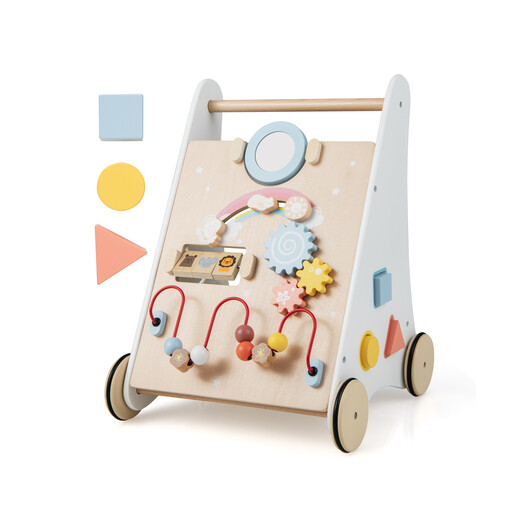
Why we love it : Perfect for parents seeking a toy made from premium materials with a timeless design, focusing on motor skill development without the avalanche of electronic sounds.
Its solid wood structure ensures rock-solid stability. The purely mechanical activities prevent overstimulation and encourage the child to think for themselves.
Its durability and timeless look. The rubber-coated wheels protect hardwood floors and reduce noise.
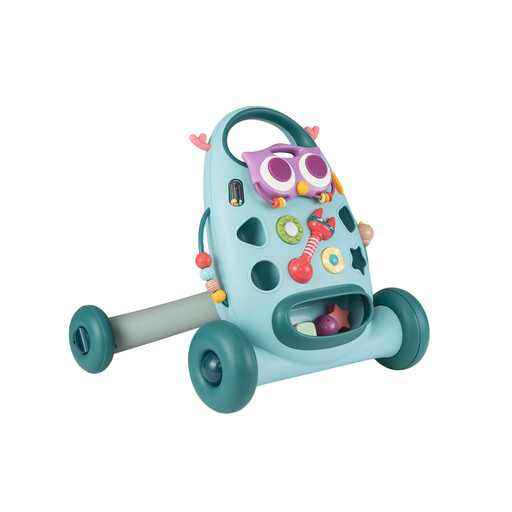
Why we love it : The ultimate 2-in-1 toy. It serves as both a walking aid and a standalone activity panel for floor play. Its electronic features are a plus for capturing attention.
It features an adjustable brake on the rear wheels to match the child's pace. The removable play panel allows for a clear separation between walking time and floor play.
Its 2-in-1 versatility and highly stable triangular structure. The lights and sounds are only activated when the child interacts with the toy.
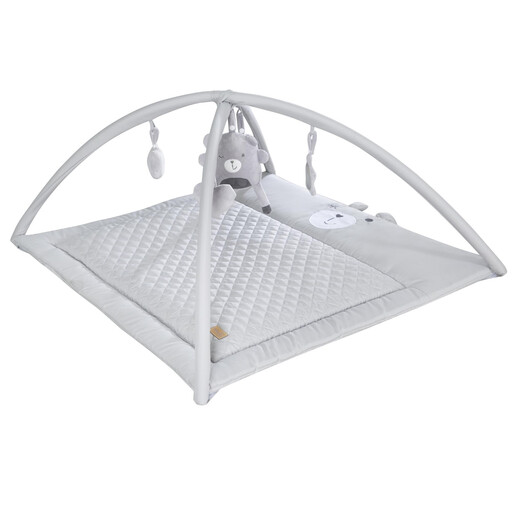
Why we love it : An excellent option for younger babies (from birth) to strengthen core muscles and gross motor skills, long before the walking phase begins.
It focuses on fundamental developmental stages (tummy time, grasping, rolling over) that are crucial for stable walking later on, without skipping any steps.
Usable from birth to strengthen the back and neck. The hanging toys stimulate coordination and a baby's natural curiosity.
Explore our complete collection of developmental toys, all tested and approved according to our safety and educational value criteria.
A baby walker is generally recommended as soon as your baby starts pulling themselves up to a standing position, often between 10 and 12 months. It is crucial that they can stand up on their own before being introduced to a push walker. Don't rush the process, and always supervise them during their first uses.
It all depends on your priorities.
Yes, provided you choose a "push" type model. Unlike a sit-in walker where the child is suspended, a push walker encourages them to stand up straight, find their own balance, and engage their leg and core muscles. It supports the learning of a natural gait because the child controls their own speed and movements.