
Livraison le jour même ou le lendemain

Qualité garantie

Débloquez vos offres de bienvenue: Livraison GRATUITE | Jusqu'à -80 % | 30 jours d'essai gratuits à JoyPlus
Téléchargez l'application
A baby's first steps: an unforgettable moment for the whole family. As a parent, you naturally want to support them with something that is fun, safe, and beneficial for their development. The baby walker, also known as a push cart, is designed for precisely this purpose: to offer stable support that encourages your child to gain confidence and independence.
Faced with an overwhelming number of options, it can be difficult to know where to start. This guide is here to help you see things more clearly by breaking down the essential criteria and presenting our selection of the best models to help your baby explore the world in complete safety.
Before diving into our selection, let's review the key points for a successful purchase.
Stability is THE number one criterion. A good baby walker must have a wide base and a solid, often triangular, structure to prevent any risk of tipping over. For materials, opt for BPA-free PP or ABS plastics and certified wood. Also, check that the finishes are smooth and free of any sharp edges.
A feature that has become almost essential is the walker with a brake or a wheel speed adjustment system. This mechanism allows you to slow the cart's speed to prevent it from running away and pulling the child along, especially during their first attempts. It's a real plus for reassuring both parents and children.
A developmental walker transforms a walking aid into a complete play station. These models, often called multi-activity push carts, integrate a host of features designed to stimulate the child's cognitive development and fine motor skills.
They frequently include:
A musical and light-up walker will motivate the child to move while capturing their attention, making learning to walk a truly fun experience.
A good investment is a first-steps toy that grows with the child. Some models offer an adjustable-height handle or a removable activity panel. This modularity extends its lifespan and makes your purchase more worthwhile.
The recommended age range generally starts when the child can stand up on their own, often around 12 months. A well-designed walker for a 1-year-old will therefore be a play companion for many months to come.
To guide you, here are a few models that caught our attention for their design and features.
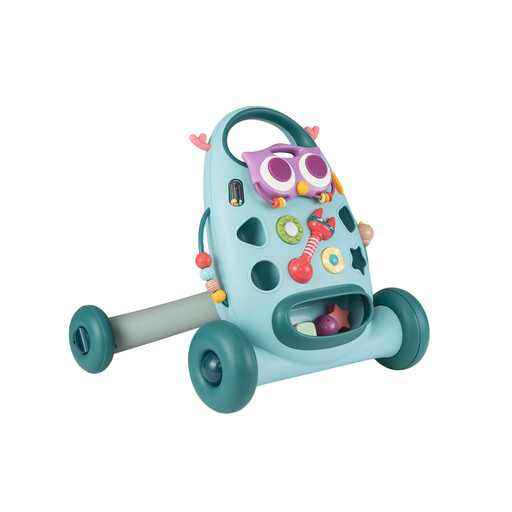
Key features?: This 2-in-1 model combines a sturdy baby walking aid with a removable activity center. Its design, inspired by active learning methods, promotes autonomy. The play panel can be used on the floor, allowing the baby to play even before they can walk.
Benefits?:
Who is it for? Ideal for parents looking for a complete and versatile product that combines walking support with a variety of developmental activities for children aged 12 to 36 months.
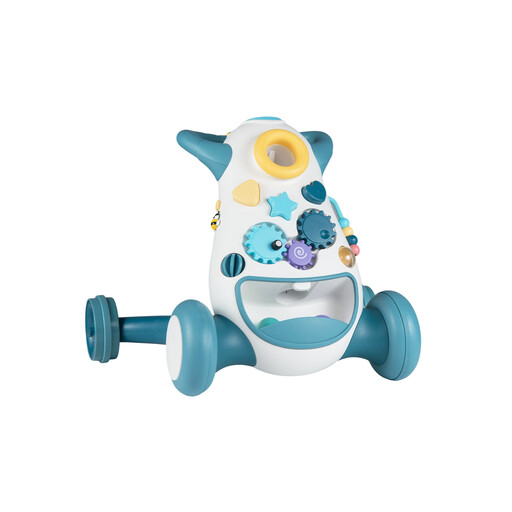
Key features?: This push walker focuses heavily on sensory stimulation. The idea is to transform the effort of walking into a fun and motivating exploration.
Benefits?:
Who is it for? Perfect for babies who need stimulation from sound and light. It's an excellent first-steps toy to capture their attention and encourage movement.
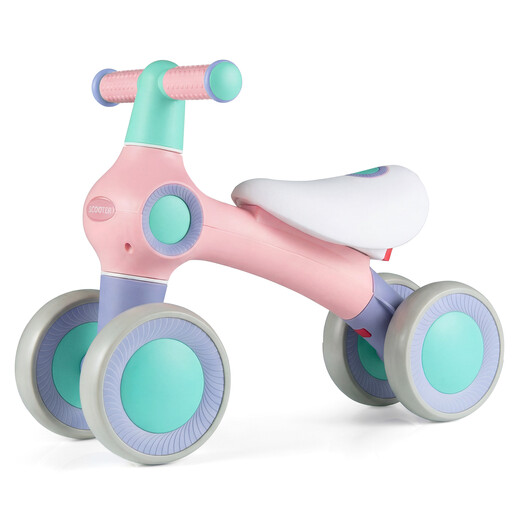
Key features?: While not a baby walker in the traditional sense, a toddler balance bike is an excellent alternative (or a follow-up). It doesn't help a child stand up, but once walking is mastered, it becomes a fantastic tool for developing a sense of balance.
Benefits?:
Who is it for? For children who are already walking confidently (from around 18 months) and whose parents want to gently prepare them for learning to ride a bike.
The world of developmental toys is a vast universe, and every child is unique. Ride-ons, rockers, building blocks... If you want to explore other ways to support your child's motor development, our selection is just the beginning.
? Explore our full range of baby motor skills toys
There's no magic age: every child develops at their own pace. As a general rule, a baby walker becomes relevant as soon as the child starts to pull themselves up to a standing position by holding onto furniture, often between 9 and 12 months. The key is that they should already be able to stand with some confidence before starting with a push cart.
Be careful not to confuse them! These two products are radically different.
The golden rule: constant adult supervision is essential. Make sure the play area is clear: no thick rugs, door thresholds, or, of course, nearby stairs. If your model is equipped with a brake or speed reducer, don't hesitate to use it to adapt the cart's pace to your child's progress.