
Livraison le jour même ou le lendemain

Qualité garantie

Débloquez vos offres de bienvenue: Livraison GRATUITE | Jusqu'à -80 % | 30 jours d'essai gratuits à JoyPlus
Téléchargez l'application
By the Joybuy Team, Childcare ExpertsPublished July 28, 2026
Is your little one starting to pull themselves up, gripping onto furniture with fierce determination? That's the sign that the incredible adventure of their first steps is just around the corner. To support them during this decisive stage, a baby walker is an invaluable tool. Far more than a simple toy, it provides secure support to help them build confidence and independence, all while stimulating their development.
Our mission at Joybuy is to guide you in making the best choice. This guide breaks down the essential criteria for choosing the right walking aid and presents our selection of the most compelling models for 2026.
Before diving into our top picks, let's review the key points for making an informed choice that perfectly suits your child's needs and your expectations.
The primary purpose of a baby walker is to offer reliable and secure support. Opt for models with a wide base or a triangular structure, which provide excellent protection against tipping over. A crucial aspect is the wheels: many models are equipped with wheels featuring non-slip rubber strips. These ensure better grip, reduce noise on hardwood floors, and protect your flooring. Some walkers go a step further by offering a brake system or adjustable speed—a highly valuable feature for adapting the pace to your child's progress.
The wooden push toy is often favoured for its sturdiness, its weight (which gives it excellent stability), and its timeless aesthetic. The wood typically comes from sustainably managed forests, and the paints are water-based—an essential safety guarantee for little ones who put everything in their mouths.
Plastic models, on the other hand, are lighter and often include electronic features like lights and sounds. They may also incorporate removable activity panels, offering dual functionality. The choice will therefore depend on your preferences regarding design, durability, and the type of stimulation you wish to provide for your child.
A good baby walker should also be a fantastic developmental toy. Many models double as true activity walkers. An abacus, spinning gears, shape sorters, a mirror... these fun elements capture a child's attention and invite them to play, even when they aren't yet on the move. They contribute to the development of their fine motor skills, hand-eye coordination, and logical thinking. A walker with a small storage bin is also a real plus, allowing your child to transport their favourite stuffed animals and treasures.
Here are a few models that stand out for their features and their well-thought-out design for toddlers.
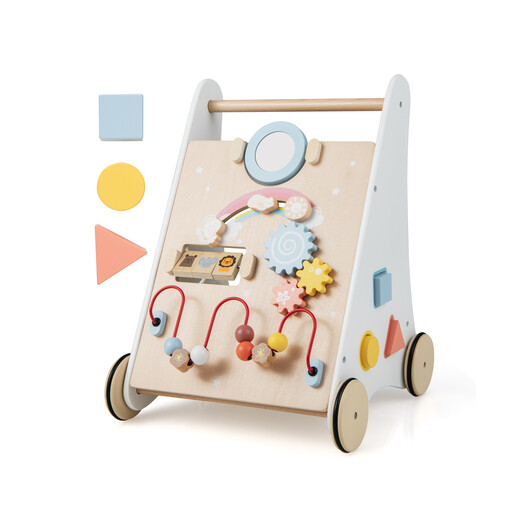
Key Features
This wooden model brilliantly combines a walking aid with a play centre. Its 7-in-1 design integrates a host of manual activities to stimulate your child. Made from basswood and MDF, it boasts a robust structure and meticulous finishing, with rounded corners for maximum safety. The storage basket at the back is a detail that is as practical as it is fun.
Highlights
Who is it for? Ideal for parents looking for a wooden push toy with a classic design that is both durable and multifunctional. An excellent first birthday gift idea that combines utility with enjoyment.
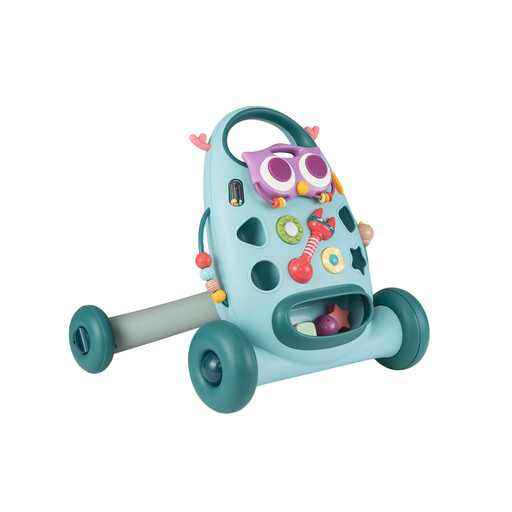
Key Features
This push walker stands out for its great versatility. Its standout feature: a removable oval play panel, which allows the child to play directly on the floor. Inspired by the Montessori method, this panel offers a shape sorter, gears, and beads, as well as music and lights for complete sensory stimulation. The speed of the rear wheels is adjustable, a real bonus for securing those first hesitant steps.
Highlights
Who is it for? Perfect for families who love developmental toys that are rich in features. The adjustable speed and removable play panel make it a highly adaptable product that will grow with the child from sitting up to walking confidently.
Supporting your child's growth is a constant adventure. Beyond their first steps, monitoring their development is essential. For instance, if you want to track their weight curve accurately, discover our selection of baby scales.
1. At what age can a baby use a baby walker? There is no specific age, as every child develops at their own pace. Generally, a baby walker becomes relevant as soon as a baby can stand up on their own while holding onto furniture, which often happens between 9 and 12 months. The key is that they have enough muscle tone to pull themselves up.
2. Is a baby walker beneficial for a baby's development? Yes, when used correctly, a push walker is an excellent tool. It helps the child develop their balance, coordination, and leg strength. Unlike a "sit-in" walker (in which the child is seated and suspended), a push walker encourages a natural walking posture. It leaves the child in control of their movements, allowing them to fall and learn to get back up, which is fundamental for building self-confidence.
3. What is the difference between a push walker and a "sit-in" walker? The distinction is crucial. A baby walker, or push walker, is a toy that the child pushes in front of them while standing on their own two feet. This helps them master their balance and footing. A "sit-in" walker, in contrast, is a seat on wheels in which the child is suspended. Many pediatricians and physical therapists advise against its use because it can hinder the learning of a natural gait (by encouraging the child to push off on their tiptoes) and create a false sense of security. The push walker is therefore the recommended alternative for safely supporting a child's first steps.