
Livraison le jour même ou le lendemain

Qualité garantie

Débloquez vos offres de bienvenue: Livraison GRATUITE | Jusqu'à -80 % | 30 jours d'essai gratuits à JoyPlus
Téléchargez l'application
A baby's first steps are a magical and long-awaited moment. When your child pulls themselves up, ready to conquer the living room, you want to encourage them while ensuring their safety. This is where the baby walker comes in, becoming an indispensable companion.
Unlike the seated "baby bouncer" style walker, which is often criticized for the passive posture it encourages, a push walker prompts the child to take an active role in their development. They work on their balance and coordination, and gain confidence. But with a plethora of options available, how do you make the right choice? This guide is here to help you navigate the options and find the perfect model to support your child on this great adventure.
Before you commit, a few criteria deserve your full attention to ensure your purchase is both safe and suitable.
Stability is paramount. A good baby walker must have a wide base to prevent any risk of tipping over. Models with a triangular structure are often a safe bet. When it comes to materials, vigilance is key: a wooden baby walker should use non-toxic, water-based paints, while a plastic model must be certified BPA- and phthalate-free, in accordance with European standards (EN 71). Wheels with rubber strips are a real bonus: they are non-slip, quieter, and won't scratch your floors.
A baby walker with activities is not just a simple walking aid; it's a mobile play center. Integrated activity panels stimulate fine motor skills (abacuses, gears, shape sorters) and sensory development (mirrors, sound elements, varied textures). This type of push toy captures a child's attention for much longer and encourages them to stand up to explore all its features.
Some models include a brake system or wheel speed adjustment. This feature is particularly useful at the beginning, around 1 year of age, as it allows you to slow the pace when the child lacks confidence. You can then release the wheels once they become more comfortable. The durability of the materials (solid wood or high-quality plastics) ensures the walker's longevity, and it can even be passed down to siblings.
To help you finalize your choice, here are a few products that have caught our eye.
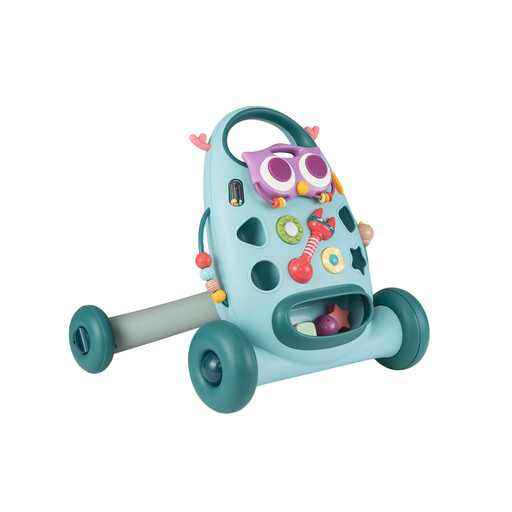
Our verdict?: This 2-in-1 model is an excellent all-rounder, combining a stable push walker with an activity center that can be detached. This allows the child to enjoy it on the floor long before they can stand. Its wheel speed adjustment system is a great safety feature.
Key features?:
Who is it for? Ideal for parents looking for a first grow-with-me toy that can adapt to their child's progress, from floor play to confident walking.
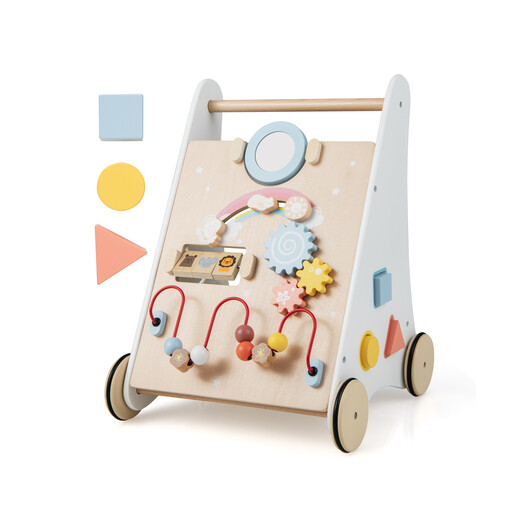
Our verdict?: Made from high-quality wood, this baby walker impresses with its timeless design and unbeatable durability. It features 7 developmental activities and a very practical storage basket at the back.
Key features?:
Who is it for? Families who appreciate natural materials and timeless design, and who prefer a toy that promotes motor development without the overwhelming electronic stimuli.
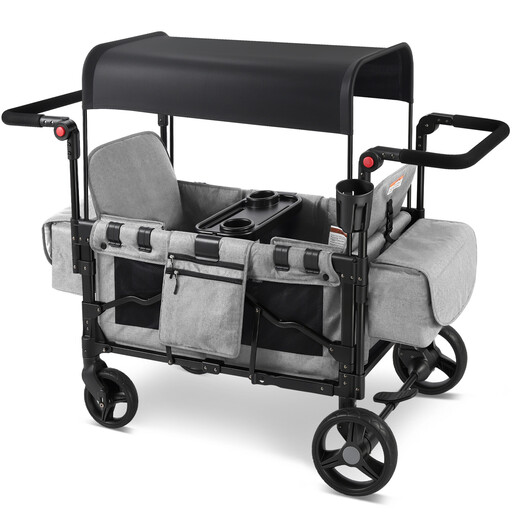
Our verdict?: Please note, this is not a walking aid in the traditional sense. It's an ultra-practical transport wagon for families with two young children, serving as a convenient replacement for a double stroller.
Key features?:
Who is it for? Families who need an alternative to a double stroller for outings, once the children can sit up well or have mastered walking.
Once walking is mastered, the exploration continues! Push and pull toys remain essential for refining your child's coordination and gross motor skills.
Does your child love carrying their toys everywhere? Discover our complete selection of pull-along toys for kids to continue stimulating their motor skills while having fun.
There's no hard and fast rule; every child develops at their own pace. A baby push walker becomes relevant as soon as the child starts to pull themselves up and stand with support, usually between 9 and 12 months. The key is that they have enough strength in their legs and core to support themselves.
The difference is crucial, and most pediatricians are firm on this point. The push walker is placed in front of the child. The child actively pushes it, controlling its speed and direction. It helps them find their balance, coordinate their movements, and adopt a natural walking posture. Conversely, a seated "bouncer" style walker suspends the child in a seat. The child is passive and often moves on their tiptoes, which can delay the acquisition of a proper walking pattern. This is why it is widely discouraged by early childhood professionals.
For a confident purchase, here is a checklist of points to verify: